DbcultAccessing Vault...
Cult Review
Senior Film Conservator
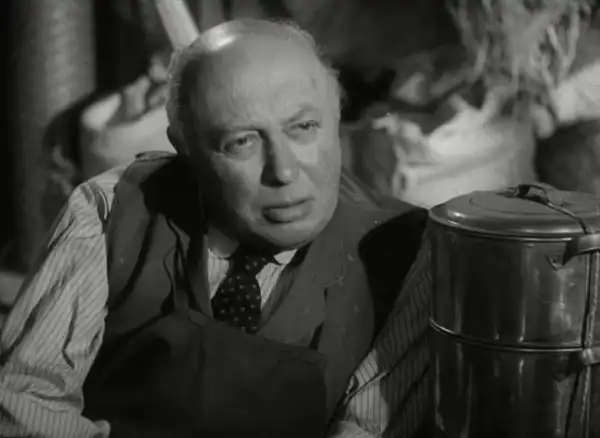
If you're a fan of those old, low-budget British noirs that feel like they were filmed in someone's basement, you might get a kick out of The Bank Messenger Mystery. It’s definitely not for anyone who needs high-octane action or, you know, a coherent script that doesn't drag its feet.
If you enjoy seeing people in suits looking stressed out for eighty minutes, pull up a chair. Otherwise, maybe skip it.
The whole thing kicks off with a firing that feels suspiciously personal. Paul Neville plays the guy who gets the boot, and you can see the exact moment he decides he’s done playing by the rules. It’s a bit dramatic, honestly.
The pacing is all over the place. One minute they’re planning the heist like it’s a surgical operation, and the next, they’re just standing around looking at doors. It reminded me a bit of the slow burn in The Dead Line, where the tension just sort of hangs there, waiting for someone to actually do something.
There’s this one sequence where they’re measuring the safe that goes on for, I kid you not, an eternity. You can literally watch the dust motes dancing in the light while they fumble with a ruler. It feels less like a crime thriller and more like a documentary on banking hardware from the thirties.
Francesca Bahrle is doing some heavy lifting here, trying to make the heist logistics sound interesting. She’s got this look on her face like she’d rather be literally anywhere else. Same, Francesca. Same.
The movie doesn't really try to be smart, which is probably for the best. It’s just a story about a guy who got mad and made a terrible life choice. Sometimes that’s enough. Other times, you just want the credits to roll so you can get a sandwich.
It’s nowhere near as clever as Nothing But the Truth, which keeps you guessing in a way this one just... doesn't. You know exactly where this is heading from the first act. 🙄
Still, there’s something charming about how earnest everyone is about robbing a bank. Nobody is winking at the camera. They are very, very serious about these stacks of paper.
1926