
Cult Cinema
50 Primitive Shadows: How Carnival Parades, Boxing Rings and Factory Floors Secretly Wrote the DNA of Cult Cinema
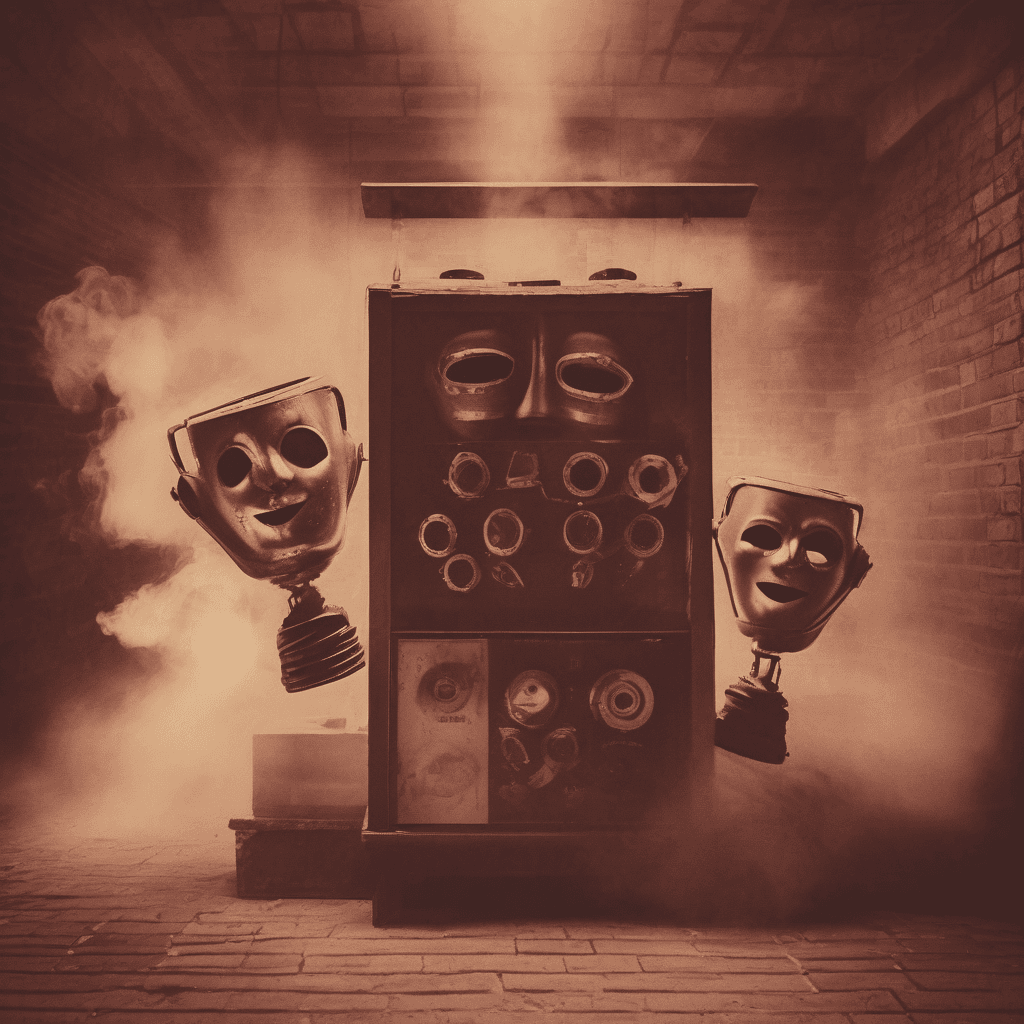
“Before midnight movies, nickelodeon oddities like carnival reels, prizefight footage and Westinghouse workers forged the first cult canon through sheer novelty, scandal and obsession.”
Long before the term cult cinema was whispered in dorm rooms or flashed across neon marquees, the medium was already breeding its own shadow religion of outcasts, thrill-seekers and repeat-viewing zealots. In the flickering twilight between 1895 and 1910, fifty forgotten frames—carnival processions, boxing bloodbaths, factory panoramas—smuggled the genetic code of underground film obsession into the global bloodstream. These are not the polite histories of Griffith or Méliès; they are the primitive shadows that secretly wrote the DNA of modern cult cinema.
Carnivals, Corbett and the First Cult Shockwaves
Consider El carnaval de Niza (1898), a 45-second burst of confetti, masks and swirling petticoats shot on the Riviera. Contemporary reviewers dismissed it as a "travelling curiosity," yet fairground showmen looped the reel all summer, charging pennies for repeat glimpses of anonymous revelry. The hypnotic repetition—an early proto-music-video—foreshadows the midnight-movie habit of watching the same hypnotic ritual until it becomes private mythology. The carnival footage was scratched, spliced and hand-coloured by itinerant projectionists, turning documentary into personal hallucination: the first fan-edit.
The same year, The Corbett-Fitzsimmons Fight stretched past the 100-minute mark, making it the longest commercially released film of its era. Shot on a sweltering St. Patrick’s Day in Carson City, the bout delivered scandal (Fitzsimmons’ infamous solar-plexus punch), celebrity (Gentleman Jim’s matinee-idol mug) and the tantalising possibility that cinema could sell forbidden bloodsport to the masses. Bootleg prints toured mining camps from Alaska to Melbourne; saloon owners froze frames of Corbett’s knockout and auctioned the stills as holy relics. The film’s outlaw afterlife—banned in several states, duplicated without copyright—mirrors every future cult print that slips the studio leash.
Factory Floors as Sacred Text: The Westinghouse Revelation
While carnival crowds gasped at confetti, Westinghouse Works (1904) quietly manufactured a different ecstasy: industrial sublime. Twenty-one silent shorts, shot inside Pittsburgh plants, linger on molten steel, humming dynamos and women winding coils with surgical grace. Factory operatives became accidental stars; their repetitive gestures prefigure the mechanical ballets that future cultists would obsess over in Metropolis or Koyaanisqatsi. College projectors in the 1960s re-discovered these reels, splicing them with Situationist slogans and Velvet Underground drones—an alchemical transformation from corporate promo to avant-garde totem.
The Birth of the Repeat-Viewing Ritual
What turned Westinghouse workers into icons? The same obsessive re-watching that later blessed Eraserhead or The Rocky Horror Picture Show. Engineering students froze individual frames to study piston rhythms; art students traced the silhouettes of turbine rotors. In that freeze-frame trance, the first cult hermeneutic was born: the belief that hidden messages—numerical, sexual, esoteric—pulse beneath the surface of ordinary footage if you simply watch it enough times.
Boxing Rings and Bushrangers: The Global Outlaw Canon
Australia answered America’s Corbett craze with The Story of the Kelly Gang (1906), a 70-minute epic about the armoured outlaw Ned Kelly. Only seventeen minutes survive, yet fragments still circulate like smuggled samizdat in Melbourne cinematheques. Bushranger mythology—already taboo in polite society—became an addictive counter-narrative: the criminal as folk saint. British colonial censors banned bushranger films, ensuring that every clandestine screening carried the perfume of danger. The surviving stills—Kelly’s homemade armour silhouetted against dusty bush—are the first fan-tattoo icons, the equivalent of today’s Rocky Horror lips or Big Lebowski bathrobe.
The Corbett-Fitzsimmons Knockout as Meme Template
Across the Pacific, World's Heavyweight Championship Between Tommy Burns and Jack Johnson (1908) restaged the cult recipe: sport + race + scandal. Jack Johnson, the first Black heavyweight champ, taunted white America with every jab. Prints circulated through Black theatres, basement speakeasies and, later, civil-rights fund-raisers. The footage became a secret handshake among audiences who knew they were watching more than boxing—they were witnessing the cinematic shattering of racial myth. Projectionists looped Johnson’s victory smile; jazz musicians riffed off its cadence. The same reel that mainstream newspapers condemned as "primitive" was already achieving the subcultural sacred status that future cultists would grant Pink Flamingos or Do the Right Thing.
Religious Ecstasy and Medical Gore: The Shock Doctrine
Cult cinema has always thrived on transgression, but transgression needs fresh flesh. Enter La neuropatologia (1908), a clinical record of patients suffering hysterical convulsions under the gaze of Turin’s pioneering neurologist Camillo Negro. Shot in a hospital ward, the film lingers on spasming limbs, anguished grimaces and the invasive stare of the camera. Bourgeois audiences fainted; medical students cheered. Fast-forward to the 1980s: the same reel surfaces on VHS bootlegs traded among gore-hounds who splice it into mondo mixtapes. The hospital gurney becomes the ancestor of every cult atrocity exhibition from Faces of Death to Traces of Death.
Passion Plays and the Sacred Profane
Equally potent, S. Lubin's Passion Play (1903) re-enacts the crucifixion with cardboard Jerusalem sets and a bewigded Christ. Church groups booked it for Sunday fundraisers, but midnight entrepreneurs soon realised that devout spectacle + low production values = accidental camp. By the 1920s, Greenwich Village bohemians screened it between burlesque acts, howling at the Disciples’ vaudeville timing. The same dichotomy—sacred text vs. ironic spectacle—would later feed midnight revivals of Reefer Madness and Godspell.
Asian Shadows: From Kabuki Serpents to Chinese Battlefields
Cult cinema is often framed as a Western phenomenon, yet Asia’s first reels already carried the mutation. Hidaka iriai zakura (1909) adapts a 1759 kabuki play in which a spurned woman metamorphoses into a giant serpent. Shot in single-take long shots, the film’s theatrical stylisation and monstrous femininity anticipate the surreal j-horror cults of House (1977) or Tetsuo. Meanwhile, China’s first film, Dingjun Mountain (1905), records an opera performance of a battlefield victory. Only stills survive, yet those stills—warriors in ornate armour frozen mid-gesture—fuel collector obsession akin to missing Dr. Who episodes. The scarcity itself becomes sacramental; fans trade 3D-printed miniatures based on the lone surviving photograph.
Travelogues, Tournaments and the Lure of the Exotic
Cult audiences crave the unfamiliar, the elsewhere. Early travel shorts like Trip Through America (1906) or Mallorca (1904) functioned as armchair tourism for provincial viewers, but they also planted the seed for future mondo fantasies. When 1950s beatniks unearthed these reels, they projected them on coffee-house walls while bongo poets chanted improvisations. The grainy palms of Mallorca became the proto-psychedelic backdrop for every underground happening that would culminate in Easy Rider or Koyaanisqatsi.
Sports as Avant-Garde Ritual
Athletic shorts—A Football Tackle (1899), Jeunes gens du Stade Montois... (1907)—offer repetitive motion studies that prefigure structural cinema. Stan Brakhage himself cited the stuttering gait of early football footage as inspiration for his hand-painted experiments. The same principle—ritualised bodies in space—drives cult classics from Kon Ichikawa’s Tokyo Olympiad to Shaun of the Dead’s zombie-sync choreography.
Comedy of the Avant-Clown: Solser en Hesse and the Birth of Irreverence
Dutch duo Solser en Hesse debuted in 1906 with a one-act sketch that lampooned social pretensions through slapstick and cross-dressing. Critics dismissed them as provincial vaudevillians, but their anarchic timing—accidentally out of sync with hand-cranked projection—created staccato rhythms that later delighted surrealists. Luis Buñuel kept a 9.5 mm print in his pocket, claiming it proved "the unconscious is edited at 16 fps." The same comedic shards echo through Eraserhead’s Lady in the Radiator and every Adult Swim stutter-bump.
The Passion of Princess Marie: Royalty, Eroticism and the Micro-Gaze
Danish actuality Prinsesse Marie til hest (1906) lasts barely a minute, showing the princess on horseback. Yet early cinema’s fetishistic magnification—every fold of riding habit, every twitch of horseflesh—turned royal pageantry into proto-voyeuristic obsession. Later avant-gardists mined the same micro-gaze: Warhol’s imperially bored monarchs, Anger’s occult projections. The royal body, stripped of narrative, becomes pure iconography, the same alchemy that transmogrifies Rocky Horror’s Tim Curry into eternal trans glam.
From Dream Miracles to Neurotic Dances: The Latin Surrealist Thread
Spanish fantasy El sueño milagroso (1908) stages a sleeping gypsy who dreams his blanket transforms into a magic carpet. The oneiric logic anticipates Buñuel’s Un Chien Andalou by two decades. Likewise, La danza de las mariposas (1909) overlays documentary footage of butterflies with hand-tinted colour, creating a psychedelic ballet long before the term existed. When Latin American surrealists rediscovered these reels in the 1970s, they projected them in cinder-block galleries while acid-rock bands improvised soundtracks. The lineage is direct: from miracle dream to Jodorowsky’s Holy Mountain.
Resurrection, Revolution and the Apocryphal Reel
Russian spiritual drama Voskreseniye (1909) dramatises redemption through suffering, while Mexican pageant El grito de Dolores o La independencia de México (1909) stages revolutionary ecstasy. Both films survive only in tantalising fragments, fuelling archivist legend: rumours of完整 prints hidden in monastery vaults or revolutionary basements. The missing footage operates like the excised chapters of The Magnificent Ambersons—a gap that cultists fill with speculation, fan fiction, ritual reenactments. The apocrypha becomes more potent than the canon.
The Eternal Return: How Primitive Shadows Still Warp Modern Cult Cinema
Fast-forward to 2024: TikTok users overlay Steamship Panoramas (1903) with slowed-down synthwave, creating liminal vibes playlists that rack up millions of views. The same ship smoke that once thrilled nickelodeon crowds now fuels Gen-Z nostalgia for an era they never knew. The mechanism is identical: strip context, amplify texture, repeat until hallucination. From Fourth Avenue, Louisville’s ghostly streetcars to A Procissão da Semana Santa’s hooded penitents, the primitive shadows persist as raw material for every future cult mutation.
The 50-Frame Canon: A Living Grimoire
These fifty reels are not museum relics; they are open-source code. Each scratch, missing frame or mis-printed title card is an invitation to re-cut, re-score, re-ritualise. The same impulse that drives Don Quijote enthusiasts to re-dub the windmill scene with industrial noise or Faust’s 22 opera vignettes into a techno suite ensures that cult cinema will never ossify. As long as someone can thread 16 mm through a hand-cranked projector, the primitive shadows will keep multiplying, forever birthing new obsessions from the forgotten flicker.
Community
Comments
Log in to comment.
Loading comments…