DbcultAccessing Vault...
Film vs Film
Select two cult films to compare side by side.
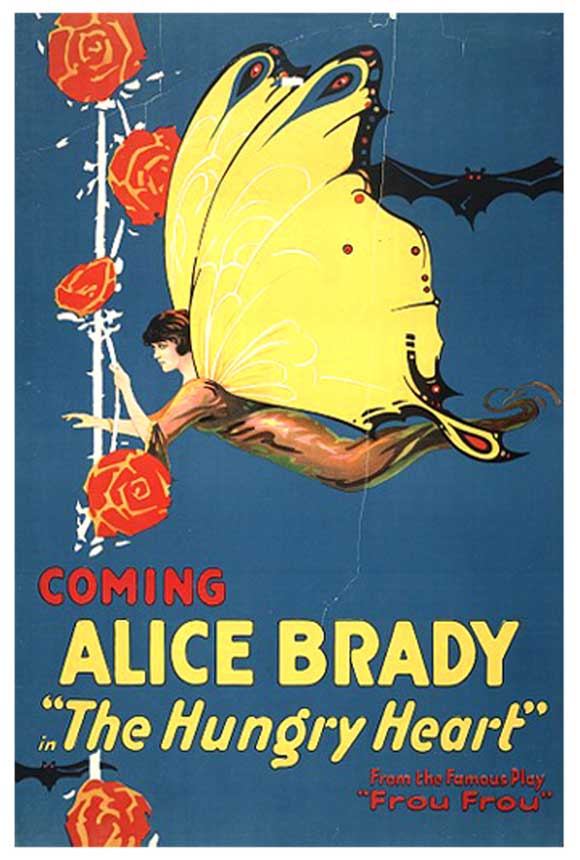
A Hungry Heart Synopsis
Vivacious little Gilberte, known as Frou Frou, is the daughter of M. Brigard, a retired merchant, who has as his companion in a life of gaiety, Comte Paul de Valreas, a much younger man. Both the Count and Henry de Sartorys are in love with Frou Frou, and when De Sartorys asks for the hand of Frou Frou, M. Brigard refers him to Louise, the elder daughter, who is in charge of the household. To Louise, who loves de Sartorys, comes the first anguish of her life, when he confides his love for Frou Frou. However, she confers with her little sister who agrees to marry De Sartorys. Paul also asks for Frou Frou's hand, but Brigard refuses, stating he is too jolly a companion to be trusted as a son-in-law. Five years pass, and although Frou Frou adores her son Georgie, the calm role of a homemaker does not suit her, and on one of Louise's visits she realizes her own place has been usurped, as both De Sartorys and Georgie go to her for advice. Paul still loves Frou Frou, but she fights against her growing attraction for him, and begs him to go away. Finding she is no longer necessary for the happiness of her husband and son, after a furious tirade against Louise, she leaves and joins Paul in Venice. Paul's mother receives her, and the next day, De Sartorys, who has followed, finds her, and despite her pleas, fights a duel with Paul, in which Paul is killed. Out of the loneliness and sorrow of the ensuing months her soul is chastened, and she returns to ask her husband one last favor, that she be allowed to die in the house she entered as a bride. Although Louise also pleads for her he at first refuses; but when Frou Frou, formerly so light-hearted and care-free, pleads on her knees, he can no longer deny her, and the two meet in a tearful embrace. Her life closes with a semblance of happiness, as she gives to Louise the two that are closest to her, her husband and son.
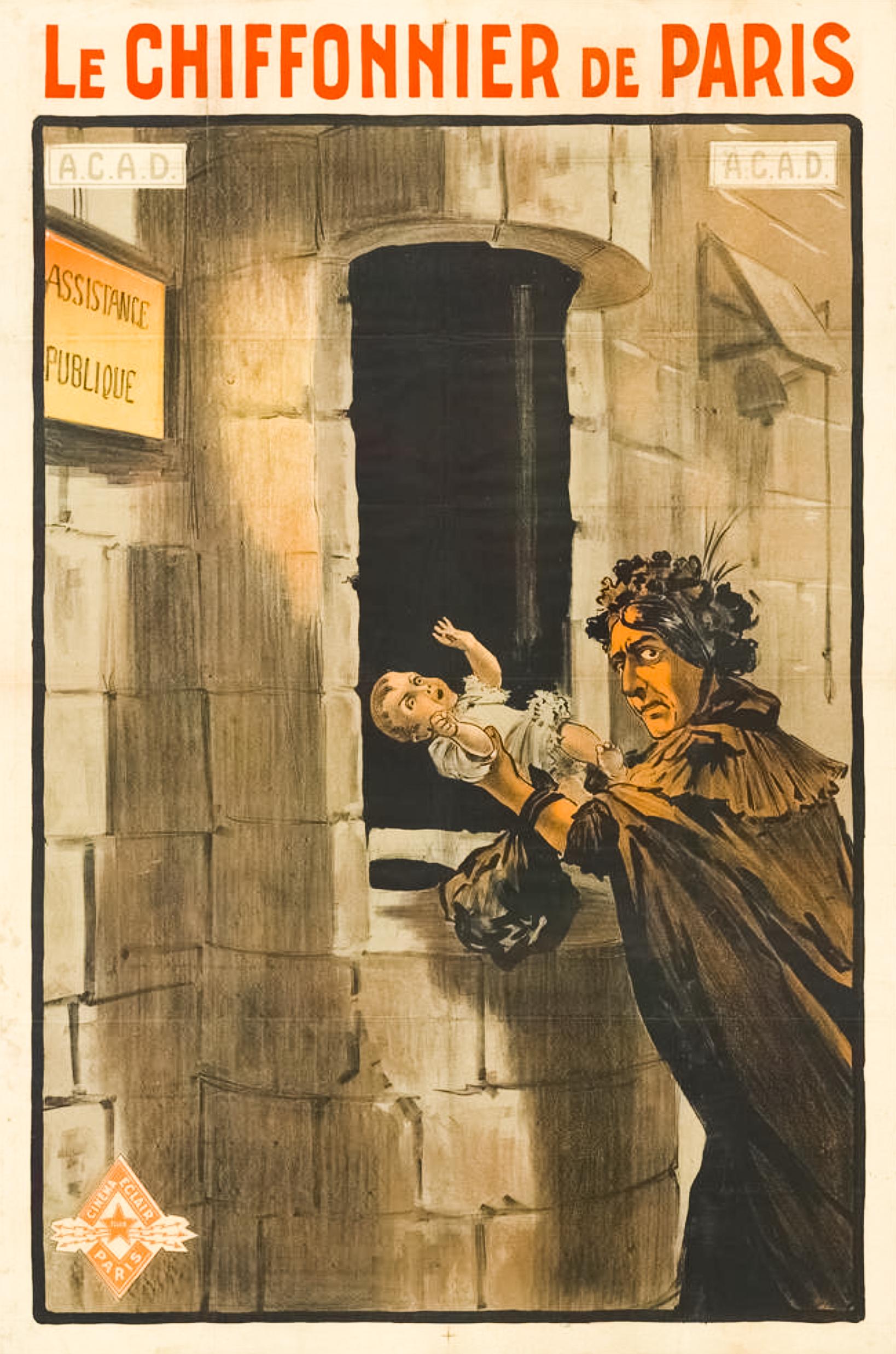
Father John; or, The Ragpicker of Paris Synopsis
Father John is a rag-picker, well known at the Halles. A good man with many good qualities he has but one defect; he is fond of the bottle. He is intoxicated when he meets Garousse, a man ruined by gambling and reduced to the humble trade of a rag-picker. He will not listen to Father John's exhortations. As it happens, a collection clerk, Didier is returning from his round. Garousse does not recoil from murdering the man and makes off with the money. It is in vain that John tries to interfere; Garousse pushes him off, half strangles him and runs away. In front of Didier's body, John swears to keep away from drink forever, and takes home with him. Marie Didier, the grandchild of the victim. Fifteen years later. Father John lives a happy life with Marie, now a dressmaker. Garousse, by means of the stolen money, has become the Baron Hoffman. He has a daughter whom he wishes to wed to Henry Berville, his partner's son. Claire Hoffman has a child from some illicit love, and she has him brought up secretly. By chance, Henry Berville, while out for a walk, comes across Marie Didier, giving alms to poor women. Baron Hoffman is informed by a telegram that he is a ruined man. He informs his daughter of the disaster and she declares she will do all she can to save him. Unfortunately. Henry Berville does not love Claire. Baron Hoffman is soon satisfied as to the reason of his refusal when, on Marie Didier being introduced, he notices the tender intimacy that seems to exist between the two young people. He decides to see to it and to put Marie out of the way of Berville. Baron Hoffman secures the assistance of Mme. Patard, a midwife, and orders, in return for 10,000 francs, the disappearance of the child; but Mme. Patard prefers to hand over the child to Marie Didier, in whose kindness she has confidence. Marie not being at home, Mme. Patard leaves the child in her place. Marie was then at a masked ball, where, insulted by some man, she had been protected by Henry. When she returns home, she finds the child. It never entered her mind to take it to the Foundling Hospital, and keeps it with her. The same night, Father John finds in his basket, the rolls of bills lost by Patard. Baron Hoffman calls on Marie, whom he has followed after a meeting with Henry, and asks her to give up the young man. Learning that the young girl has a child with her, he seeks information and soon learns, by the coincidence of dates, who it is. He writes to Mme. Patard, stating that he knows he has been duped and that her only chance of pardon lies in the disappearance of the child. 50,000 francs is to be the price of that disappearance. As soon as he is satisfied that the midwife has secured the child, he writes to the magistrate and informs him that Marie Didier has done away with the child, whom, she states, has been stolen from her. Marie is arrested. On reading the paper, Father John learns of Marie's arrest, and also the name of the person who has lost 10,000 francs in notes. He sees that it is a plot against the girl. He endeavors to find the author of that vengeance, and calls on the midwife. After some prolonged questioning, John gets hold of the facts; he understands the part played by Mme. Patard and knows that the money was paid out by the baron. He calls on him and the two men, without seeming to do so, recognize each other. Garousse-Hoffman recollects that Father John was formerly fond of drink. Forgetting his oath, Father John gets intoxicated and Garousse steals the papers containing the proof of the crime. This, however, does not deter Father John, and his desire to save Marie is not to he swerved. He finds the means to enlist the sympathy of the magistrate, and, by the aid of a detective, Mme. Patard makes a full confession. She is arrested. Accompanied by two policemen, he repairs to the baron's house, who, by means of stratagem, is made to confess that he really is the murderer of Didier. Marie Didier, upon being set free, weds Henry Berville.
"A Hungry Heart" holds a slight edge in general audience appreciation, but "Father John; or, The Ragpicker of Paris" offers its own unique cult appeal.
Suggested Watch:
A Hungry Heart