DbcultAccessing Vault...
Film vs Film
Select two cult films to compare side by side.
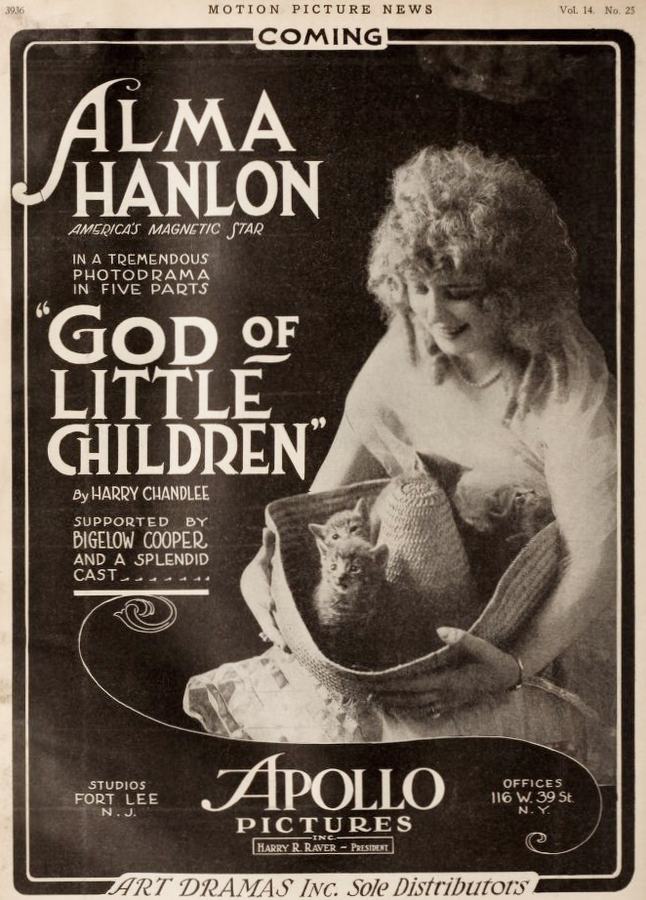
God of Little Children Synopsis
Mary Keene did not realize that when placed in the office of John Ingalls to assist in carrying out Robert Moran's plot to secure Ingalls' money she would spoil the whole scheme of things by falling in love with her big-hearted employer. Mary had always been "straight" in spite of her association with Moran and his band of blackmailers. But she had erred against man-made laws, though innocently, and fearing disgrace and prison if exposed by Moran she was compelled to assist in his nefarious schemes. Moran discovered that Ingalls loved children, and that he lived a secluded, lonely life. Mary's advent in John Ingalls' life was for the purpose of introducing a supposed little sister of hers into the Ingalls' home and through this child, thoroughly trained for the task assigned her, ultimately reach Ingalls' store of wealth. Moran's plans were successful until Mary began to realize she loved Ingalls and rebelled against further deception. Ingalls loved Mary and offered her his hand. The wedding ceremony was simple but pretty. Meanwhile, Moran had been planning along different lines. Why not force Mary to get a large sum from her husband and leave with him for foreign shores? Moran has long coveted Mary and he believes this his opportunity. Mary, for once in her bitter life, enjoys the utmost happiness. This joy is increased by the realization that she is soon to become a mother. Time has flown backward ten years in the life of John Ingalls. He feels the blood of young manhood coursing through his veins. Soon Moran presents his plan to Mary, who pleads with Moran to have pity and leave her in peace; but there is no alternative, she must go or see herself and husband disgraced by Moran's exposure. At home, Mary ponders long over her duty. She looks out on the placid lake from her window and with a prayer to the "God of Little Children," decides to give up the struggle and end her life, Moran, meanwhile, has plotted carefully. For a few dollars "Hard Tack," his willing accomplice, will put John Ingalls out of the way. The public will believe he committed suicide because his wife deserted him. The note she writes upon leaving will be found beside the body. Then with John Ingalls' widow in his power nothing shall come between Robert Moran and a fortune. Seated in his library, John Ingalls little dreamed that the hand of an assassin was near. Beside the lake Mary is about to end her life. She looks up at the library window with a silent prayer to Ingalls not to misjudge when she sees a crouching figure holding a pistol, silhouetted against the blind. Mary rushes into the house and reaches his side just in time to divert the bullet from Hard Tack's weapon. Ingalls conquers Hard Tack, who is hurled through a window. He is killed by his fall. Moran, waiting outside for Mary to meet him according to promise, overhears the pistol shot and, becoming alarmed at Hard Tack's long absence, boldly comes into the library, revolver in hand. Mary, seeing Moran and believing Ingalls' life again in danger, takes aim with the gun she picks up and fires at Moran. He falls dead, the bullet piercing his heart. The story ends happily.
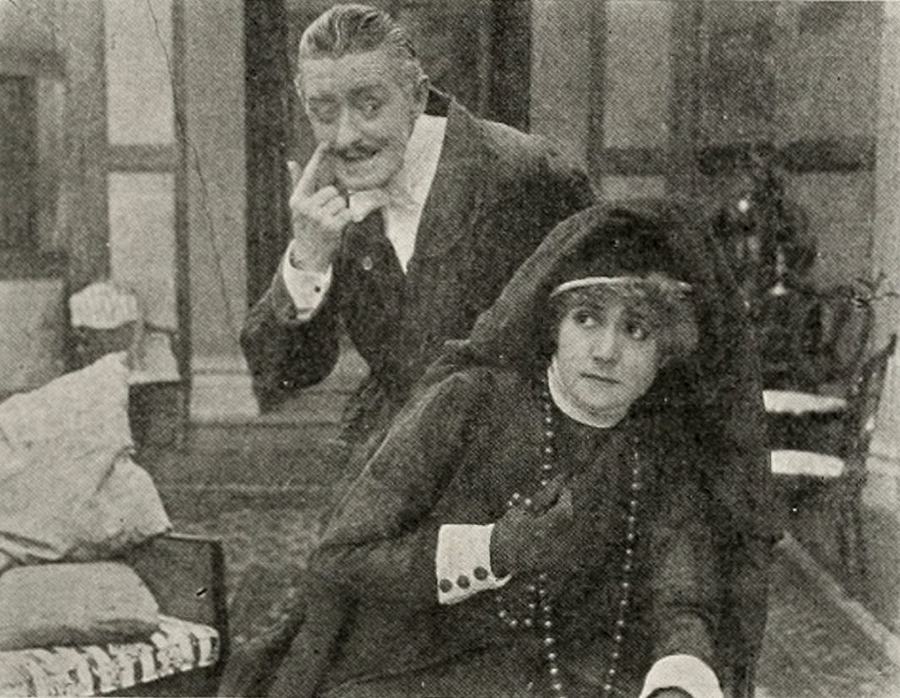
Shadows from the Past Synopsis
Mary Fitz Allen has three suitors, Arthur Barton, a young soldier, Robert Jardon, a barrister, and Lord Lester, already past middle age, but devoted to her. Her heart, however, is wholly Barton's, and while, being very gracious with Lord Lester, has an ill-concealed dislike for Jardon. Her mother is purse-proud and favors the suit of Lord Lester. Jardon sees Mary and Barton talking together in the garden, and from her words, gathers something of what has passed between them. Later, in the village inn, he makes a remark against Mary's character that Barton overhears and the young soldier knocks him down. Barton returns to the barracks, but is told that in falling Jardon had been struck on the head and is now dead. Advised by his companions to leave the country at once, Barton sends a note to Mary, assuring her that "he will never desert her," but will send for her as soon as he is safe in another land. Receiving the letter, Mary falls in a swoon. Mrs. Fitz Allen tells Lord Lester that she is taking Mary to the continent for a visit, and that the girl will probably be more willing to do her bidding and marry Lester on their return. Then she takes Mary to the home of an old family servant of the Fitz Allen's, and there Mary's child is born. The mother makes the old woman swear to keep from Mary the fact that her child is alive, and, later, when they return to their home, Mary has the double grief of believing her child dead, and her lover unfaithful to her, for Mrs. Fitz Allen takes possession of the three letters that Barton has written to her during her absence. It is now that Mary consents to marry Lord Lester. Meantime Barton has shipped aboard a vessel bound for America, but in a quarrel with one of the seamen, has been thrown overboard and drowned. Fifteen years later, Mary, now Lady Lester, is living happily with her husband, whom she has learned to truly love. Jardon is living in bachelor quarters, and Babette, a young French woman, who is infatuated with him, is an inmate of his house. All these years, Mrs. Fitz Allen has been paying for the care given the child by the old servant. Jardon, calling on Lord Lester, picks up and carries away with him a letter addressed to Mary's mother, written by the child's guardian, requesting more money with which to purchase clothes for her. Reading this at his home, Jardon immediately realizes the truth, and determines to compel Mary to listen to his protestations of love by threatening to expose her past life. Meantime, Jardon has turned the French woman out of his house, and she, suspecting that Lady Lester is her rival, obtains a position as maid in her house, in order to spy upon her. On the night that Jardon makes it thoroughly plain to Lady Lester that he knows her secret, he is visited, at midnight, by Lady Lester herself. He pleads with her, and finally threatens her, but she leaves him after declaring that she will tell her husband everything of her own accord. As she leaves the house, Babette enters, and goes to Jardon's bedroom. He orders her out, and in the quarrel which follows, she draws a revolver and shoots him dead. When the crime is discovered, Lady Lester's handkerchief is found in Jardon's hand, and she is suspected of being the murderess. Overhearing the detective talking with Lord Lester, she writes a note of farewell to her husband and goes away to the farm where her child is living. Almost at the moment that her note is handed to Lester, a telephone message to the effect that Babette has confessed to being the murderer, is received. Lord Lester, learning of his wife's whereabouts, sends his housekeeper after her with a message that he wants, not only his wife, but her child, to come to him.
"God of Little Children" holds a slight edge in general audience appreciation, but "Shadows from the Past" offers its own unique cult appeal.
Suggested Watch:
God of Little Children