DbcultAccessing Vault...
Film vs Film
Select two cult films to compare side by side.
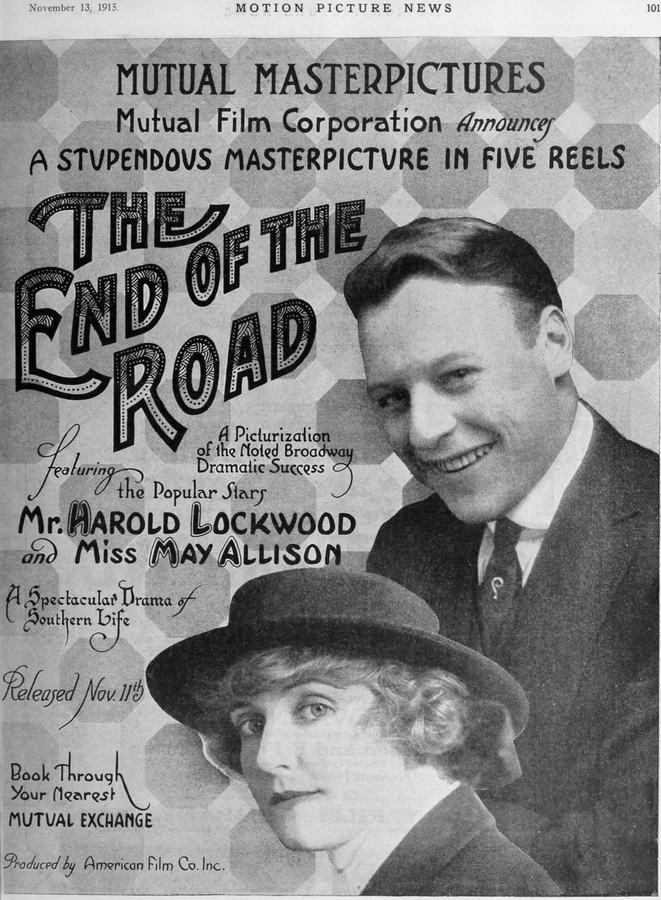
The End of the Road Synopsis
Paul Harvard, who is the son of a wealthy Northerner, is invited for an indefinite stay to the Carolina Pines. Arriving at the Pines, he meets Judge Bulstring, who commissions Dr. Sterling Duke to show the young fellow about, and find him a place to live among the mountaineers. Paul forms the acquaintance of Grace Wilson, and the two are mutually attracted. Another young Northerner arrives on the scene. He is a Federal agent who has come to investigate the fact that there has been much counterfeiting and moonshining. This newcomer is Wilbur Grant, and during the weeks of his stay he simulates drunkenness in order that he may better work himself into the confidence of those whom he suspects. Grant quickly takes up with one Richard Quigg, who professes to deal in real estate, and he actually does hold a mortgage over Magnolia Hall, the name of the Wilson home. This mortgage is fast coming due and Grace is frantic at her inability to raise funds to meet the debt. Quigg offers to cancel the mortgage if Miss Wilson will consent to become his wife. Grace refuses and orders Quigg from the house. Young Harvard takes up his residence in the mountains with the Tollivers. Caroline Tolliver becomes one of his acquaintances. Paul oversees the girl admiring a frock which an itinerant Jew has offered for sale. Paul gives the girl the money and she makes her coveted purchase. The act is overseen and becomes food for gossip. It develops that Caroline has been secretly married to Richard Quigg and that an interesting event is soon to transpire. Jack Tolliver, Caroline's brother, becomes furious when his sister's condition is learned. She will not reveal the name of the man, and as gossip has linked Caroline's name with that of young Harvard, Jack at once assumes that he is the guilty one. The scene shifts to the mountains, where the moonshiners are at work. Within the shack that houses the illicit still are Richard Quigg, Jack Tolliver and others. With the men, too, are Caroline Tolliver and her mother. Outside it is pouring rain. There comes a knock on the door. It is Paul Harvard. He is roughly handled, but manages to hold his own. In an apparently drunken condition, Wilbur Grant enters. He is pushed carelessly to one side, and at length is locked in an unused chamber. A bolt of lightning strikes nearby. A huge dam bursts and the loosened waters bear down upon the moonshiners' abode. All escape miraculously, and Harvard, casting aside personal enmity, effects the rescue of Jack Tolliver. The Tollivers learn that Paul is not responsible for Caroline's condition. Jack and his sister come, shamefaced, to the house to publicly declare the young man's innocence. Meanwhile, the mortgage has fallen due on Magnolia Hall. Richard Quigg has come to collect. Paul Harvard seeks to buy over the head of Quigg. His check is refused, for the document stipulates cash is to be paid. The hands of the clock creep toward the appointed hour as Paul gallops away over the hills to the nearest bank. He obtains the cash and arrives barely in time. All are astounded however, when Quigg overbids the young millionaire. The multitude is plunged into gloom; then Wilbur Grant takes a hand in the affair. Tipping the wink to men who secretly are his aids, he jumps in and arrests Quigg in the name of the Federal Government. The fellow is branded as a counterfeiter and moonshiner and submits to shackles on his wrists. Amid waving of hands and dances of joy, Magnolia Hall is sold to Paul Harvard, who promptly presents it to the wide-eyed young girl, Grace Wilson, who stands at his side. The two gaze in each other's eyes. Harvard's strong arms encompass the girl, and all is happy ever after.
The Return of Helen Redmond Synopsis
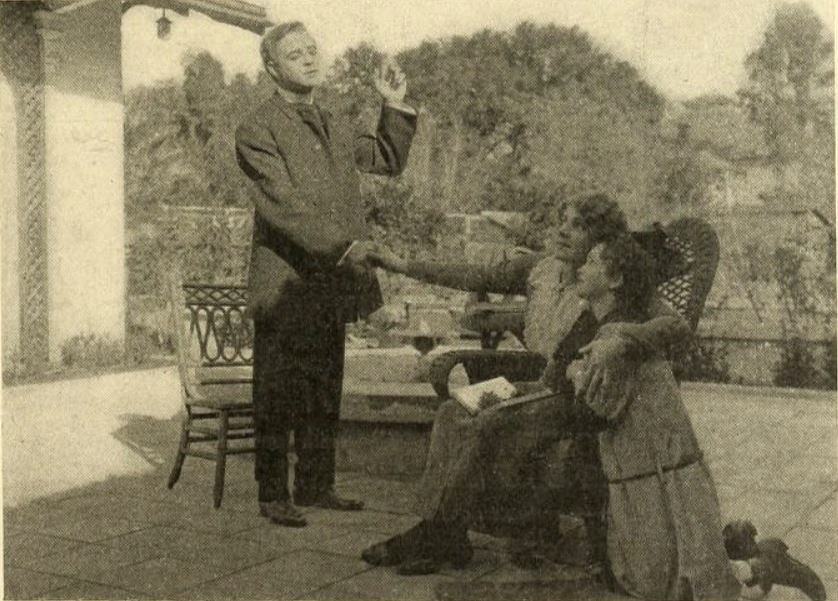
Clubman Neil Forrester marries chorus girl Helen Redmond against his clergyman brother's wishes and a daughter is born to the couple. Helen tires of domestic life, and after a quarrel with her husband she returns to the stage and Bohemia, where she forgets all in its whirl and gaiety. Forrester dies and his brother assumes charge of the child, bringing her up to believe that her mother is dead and was a good woman. One night after the show Helen gives a supper to her friends in her flat, and one of the guests sends her regrets on account of her young daughter's illness. This awakens in Helen thoughts of her own daughter, now 10 years old, and she retires to her own room brokenhearted and resolves to see her the next day. When she goes, she finds that the girl, Marjorie, resembles her, and she humors her by saying that she knew her mother and she was a good woman. The minister returns, recognizes Helen, and orders her out of the house. She first pleads for her daughter, then demands her. The minister changes his tone and tells Helen that it would be wrong to disillusion Marjorie, and a greater wrong to bring her up among Helen's own kind. Helen sinks under these reproaches, but is persistent. While Marjorie is being brought in Helen lapses in a deep reverie. In this state she has visions of bringing her home. The inherited taint manifests itself and Marjorie grows up like her mother, with a weakness for paint, frills, and men's smile, and later Helen's friend elopes with Marjorie. When the minister returns with Marjorie, she tells him she realizes what he says is true and that it is better for her to continue to grow up under his care. She renounces the stage, gives music lessons as a means of livelihood, and is soon reunited with her daughter in the enjoyment of a happy future.
"The End of the Road" holds a slight edge in general audience appreciation, but "The Return of Helen Redmond" offers its own unique cult appeal.
Suggested Watch:
The End of the Road