Film vs Film
Select two cult films to compare side by side.
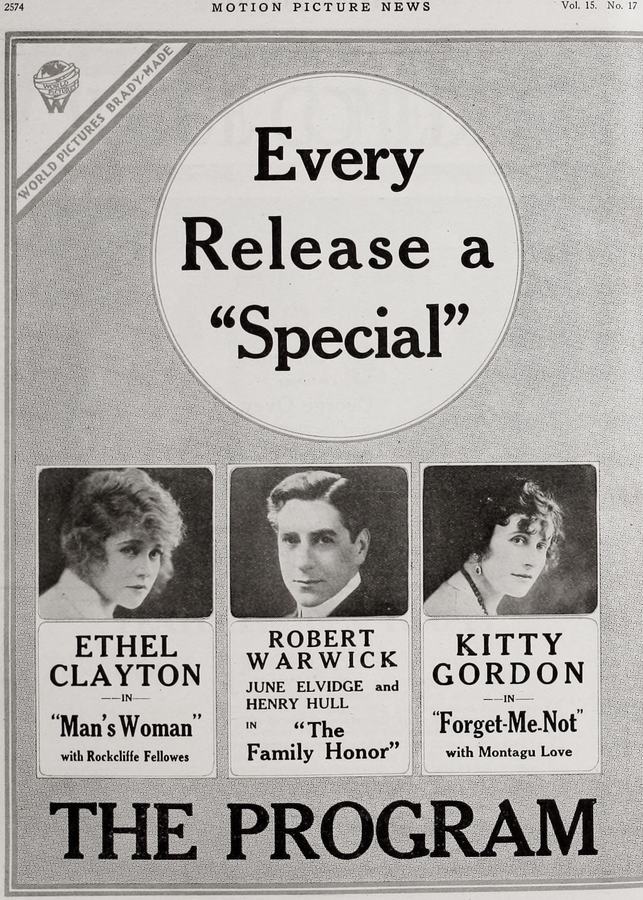
The Family Honor Synopsis
General Wayne, a proud old American patriot, and his two sons: Captain Stephen Wayne, an army officer, and Anthony Wayne, a successful young portrait painter, valiantly maintain the tradition of the Wayne family honor. Anthony is engaged to Doris Leighton, a girl of refinement, but he becomes infatuated with Marcia Quesnay, emotional actress and enchantress. He disgraces his family by his devotion to her, and, lured on by her demands, abandons his promising career. Stephen Wayne, meeting her in an endeavor to compel her to release Anthony from his unfortunate entanglement, falls sincerely in love with her and she with him. Later, with the dawning of this first real love of her life. Marcia renounces her butterfly life and becomes a tender and self-sacrificing woman. She returns all of Anthony's gifts, giving them to Stephen for safe keeping. In order to disillusion Anthony she causes him to believe she is only a common woman and he turns from her in disgust. Led on by Eric Mainwaring, an actor in love with Marcia, who tells Anthony that Marcia is a woman to be bought and not loved, Anthony is persuaded to steal from his father's safe government funds placed there by Stephen, and is cheated of the money at cards by Eric. Stephen, discovering the theft, goes to Marcia's apartment to confront her with the result of her influence over Anthony, and is there in time to rescue her from Eric, who comes with the money he has cheated from Anthony, to persuade Marcia to go abroad with him. Stephen forces Eric to disgorge the stolen funds and to leave in fear o£ the authorities. The following morning Anthony, penniless, an outcast and a thief, is saved from committing suicide by Doris. His father discovering the theft and accusing Anthony, urges him on to suicide, telling his son that honorable death is better than a life of dishonor. Stephen arrives with Marcia in time to avert the tragedy, telling a lie to save Anthony in the eyes of his father and Doris, that it was he (Stephen) who took the money from the safe, at the same time producing the bills to substantiate his claim. A general reconciliation follows. When his father sees Marcia standing beside Stephen he fears that this other son has been ensnared, but Stephen tells them that they have all misjudged her, and that she is going to enhance the family honor by becoming his wife.
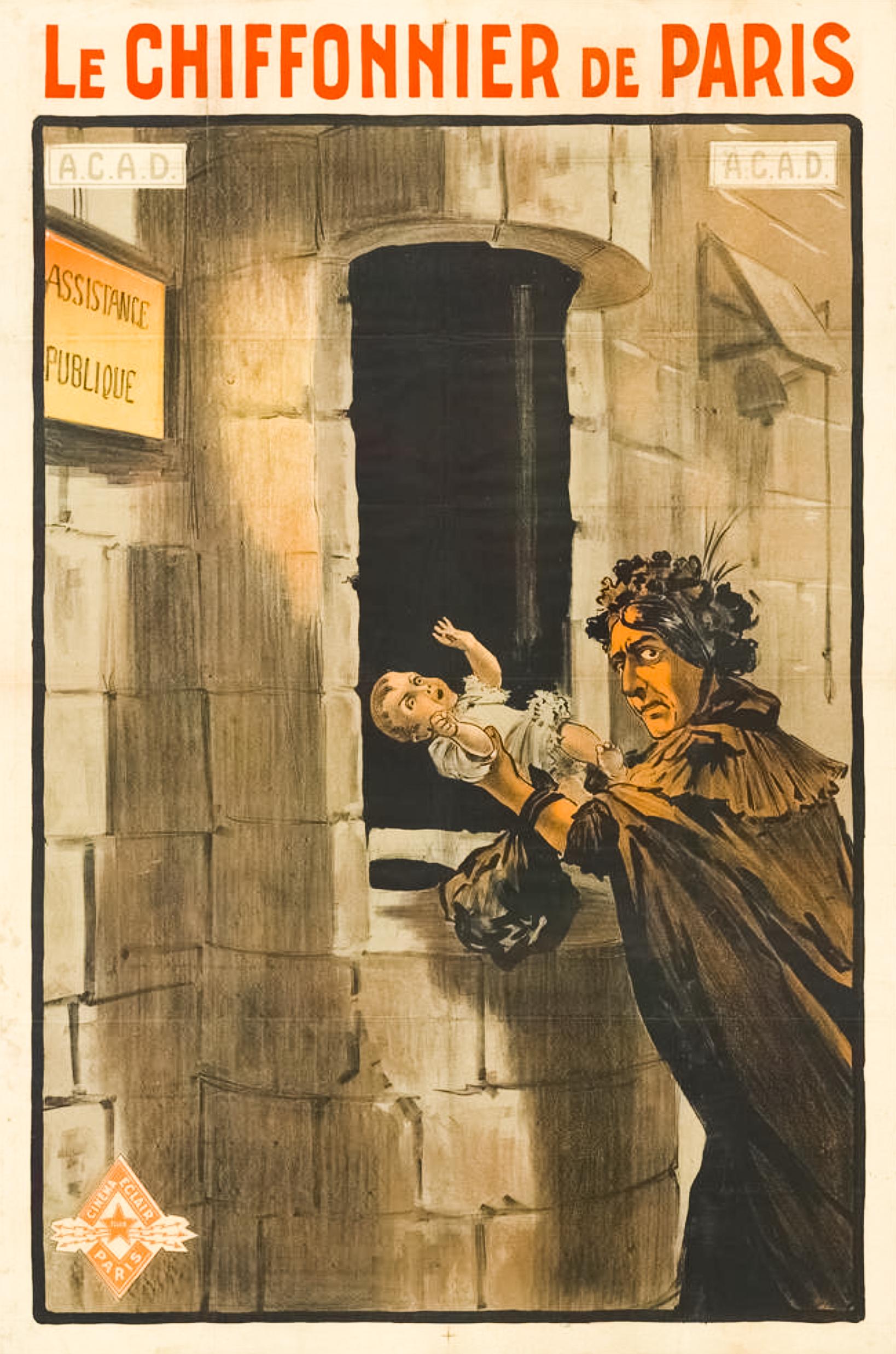
Father John; or, The Ragpicker of Paris Synopsis
Father John is a rag-picker, well known at the Halles. A good man with many good qualities he has but one defect; he is fond of the bottle. He is intoxicated when he meets Garousse, a man ruined by gambling and reduced to the humble trade of a rag-picker. He will not listen to Father John's exhortations. As it happens, a collection clerk, Didier is returning from his round. Garousse does not recoil from murdering the man and makes off with the money. It is in vain that John tries to interfere; Garousse pushes him off, half strangles him and runs away. In front of Didier's body, John swears to keep away from drink forever, and takes home with him. Marie Didier, the grandchild of the victim. Fifteen years later. Father John lives a happy life with Marie, now a dressmaker. Garousse, by means of the stolen money, has become the Baron Hoffman. He has a daughter whom he wishes to wed to Henry Berville, his partner's son. Claire Hoffman has a child from some illicit love, and she has him brought up secretly. By chance, Henry Berville, while out for a walk, comes across Marie Didier, giving alms to poor women. Baron Hoffman is informed by a telegram that he is a ruined man. He informs his daughter of the disaster and she declares she will do all she can to save him. Unfortunately. Henry Berville does not love Claire. Baron Hoffman is soon satisfied as to the reason of his refusal when, on Marie Didier being introduced, he notices the tender intimacy that seems to exist between the two young people. He decides to see to it and to put Marie out of the way of Berville. Baron Hoffman secures the assistance of Mme. Patard, a midwife, and orders, in return for 10,000 francs, the disappearance of the child; but Mme. Patard prefers to hand over the child to Marie Didier, in whose kindness she has confidence. Marie not being at home, Mme. Patard leaves the child in her place. Marie was then at a masked ball, where, insulted by some man, she had been protected by Henry. When she returns home, she finds the child. It never entered her mind to take it to the Foundling Hospital, and keeps it with her. The same night, Father John finds in his basket, the rolls of bills lost by Patard. Baron Hoffman calls on Marie, whom he has followed after a meeting with Henry, and asks her to give up the young man. Learning that the young girl has a child with her, he seeks information and soon learns, by the coincidence of dates, who it is. He writes to Mme. Patard, stating that he knows he has been duped and that her only chance of pardon lies in the disappearance of the child. 50,000 francs is to be the price of that disappearance. As soon as he is satisfied that the midwife has secured the child, he writes to the magistrate and informs him that Marie Didier has done away with the child, whom, she states, has been stolen from her. Marie is arrested. On reading the paper, Father John learns of Marie's arrest, and also the name of the person who has lost 10,000 francs in notes. He sees that it is a plot against the girl. He endeavors to find the author of that vengeance, and calls on the midwife. After some prolonged questioning, John gets hold of the facts; he understands the part played by Mme. Patard and knows that the money was paid out by the baron. He calls on him and the two men, without seeming to do so, recognize each other. Garousse-Hoffman recollects that Father John was formerly fond of drink. Forgetting his oath, Father John gets intoxicated and Garousse steals the papers containing the proof of the crime. This, however, does not deter Father John, and his desire to save Marie is not to he swerved. He finds the means to enlist the sympathy of the magistrate, and, by the aid of a detective, Mme. Patard makes a full confession. She is arrested. Accompanied by two policemen, he repairs to the baron's house, who, by means of stratagem, is made to confess that he really is the murderer of Didier. Marie Didier, upon being set free, weds Henry Berville.
"The Family Honor" holds a slight edge in general audience appreciation, but "Father John; or, The Ragpicker of Paris" offers its own unique cult appeal.
Suggested Watch:
The Family Honor