DbcultAccessing Vault...
Film vs Film
Select two cult films to compare side by side.
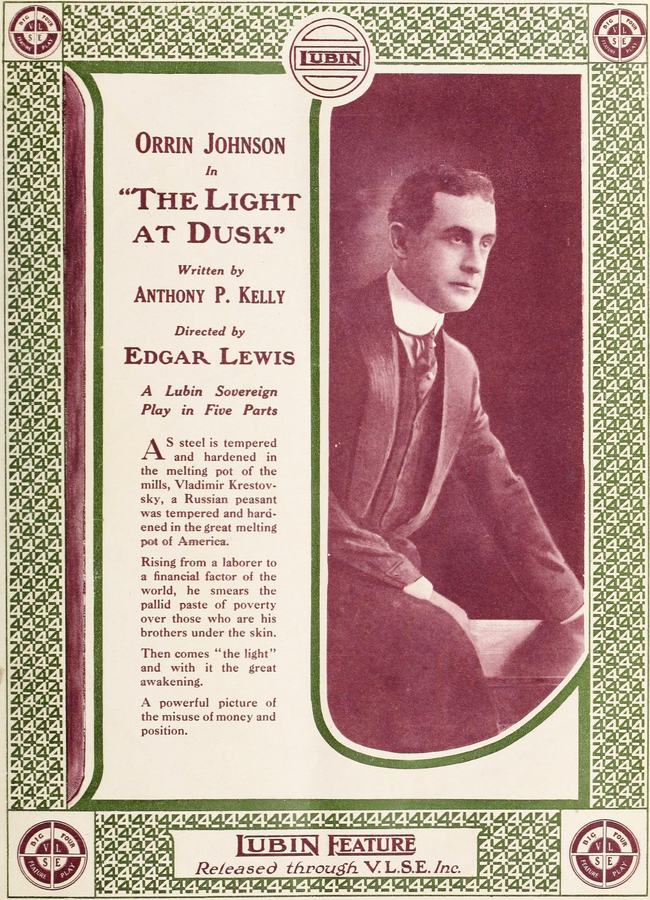
The Light at Dusk Synopsis
Vladimir Krestovsky, a Russian peasant of unusual physical and mental prowess, hearkens to the call of America, and leaving his wife, Nataska, and his year-old baby, Olga, behind, makes the journey and secures work in the steel mills of Pittsburgh. From a position as a laborer, he finally works himself up to be one of the great financial factors of the world. His wife in Russia has not heard from him for many years and knows nothing of his success. He shortens his name of Krestovsky to that of Krest. Then commits bigamy by marrying the daughter of one of the social leaders in the country. In the meantime, over in Russia, his daughter, Olga, has grown to womanhood. She is wooed and won by Nicholas, a kindly young Russian peasant. Krest's American wife dies. His mind, as he sits by her bedside, takes him back to the Street of Forgotten Days when he bid Nataska good-bye. The voice of conscience preys upon him and he endeavors to seek diversion in art. He purchases the original of Hoffman's famous painting of "Christ and the Rich Young Man." Arriving in America, Nicholas and Olga secure work in one of Krest's mills in Pittsburgh. They live with Nataska in a miserable tenement house. A baby is born to Olga, and she, in her weakened condition, returns to work. One day she is severely injured. Nicholas sits beside his wife. He realizes that with her death will also come the death of their offspring. A peasant from another part of the tenement urges Nicholas to appeal to the "Big Boss" Krest himself. Nicholas determines to do so and starts out. In the meantime, Krest has arrived home. The painting has been hung, and he is puzzled as he studies the face of Christ; he wonders where he has seen it in real life. Without a storm has begun to gather, and far up on a distant hill, the stranger appears in a silhouette against the threatening sky. Slowly and peacefully he comes down into the house of Krest. To Krest's startled questions the Stranger replies that he is one who has come to show him the error of his ways. The Stranger takes Krest into the tenement house, shows him the living conditions of the people who work for him. Then the Stranger shows him into the home of Nicholas and shows him Olga and the baby both dead in bed. Then they go back to the home of Krest. On entering, Krest struck by the Stranger's manner and appearance, compares him to the figure of Christ in the painting, and the sub-conscious mind within him forces him to tell the Stranger that it seems he knew him in the long ago. Then the Stranger informs him that he did know him, and asks him if he cannot remember, centuries ago, and the scene goes back to Jerusalem. Krest is the reincarnation of the Rich Young Man, the Stranger is the same Christ, who, centuries ago, had urged the Rich Young Man to go sell all he had, give to the poor and to follow him, but the Rich Young Man could not think of giving up his immense wealth and had left Christ with the beggars. Then the scene comes back to Krest's library. Christ, for the Stranger is Christ, then tells the penitent Krest that, though he did not heed him then, to heed him now, and he tells him that perhaps he did not understand him then, that he did not mean for him to sell everything he possessed, but rather that he should take that which he did not actually need and use to benefit his fellowmen. The Stranger makes the sign of the cross, and disappears. In the meantime, Nicholas has been hastening to Krest's home. The storm breaks without and Krest awakens with a start. He crosses to the windows to shut them. Nicholas has arrived, but the butler refuses him admittance. The rain has drenched him and he stands there. Krest, who has crossed to shut the windows, peers at him. The sight of Nicholas, who looks so much like Christ, staggers Krest, who wonders if it has all been a dream, and watches Nicholas disappear into the storm. Realizing it is really a human being, he calls the butler and bids him bring Nicholas back. Krest questions him and then tells him that he is anxious to see conditions as they really are. He goes back with Nicholas to his home. On the way Krest secures a doctor to care for Olga, never suspecting that it is his own daughter and son-in-law whom he is benefiting. Arriving at the house, the doctor and Nicholas cross to the bedside of Olga, who, much to Krest's relief, is still alive and has a chance to recovering. Krest notes the terrible living quarters of the people, and determined to investigate farther. He starts into the kitchen, where he comes face to face with his wife. Without a word, Nataska crosses to his side, and he takes her into his arms, and so the rejuvenation of Vladimir Krestovsky takes place.
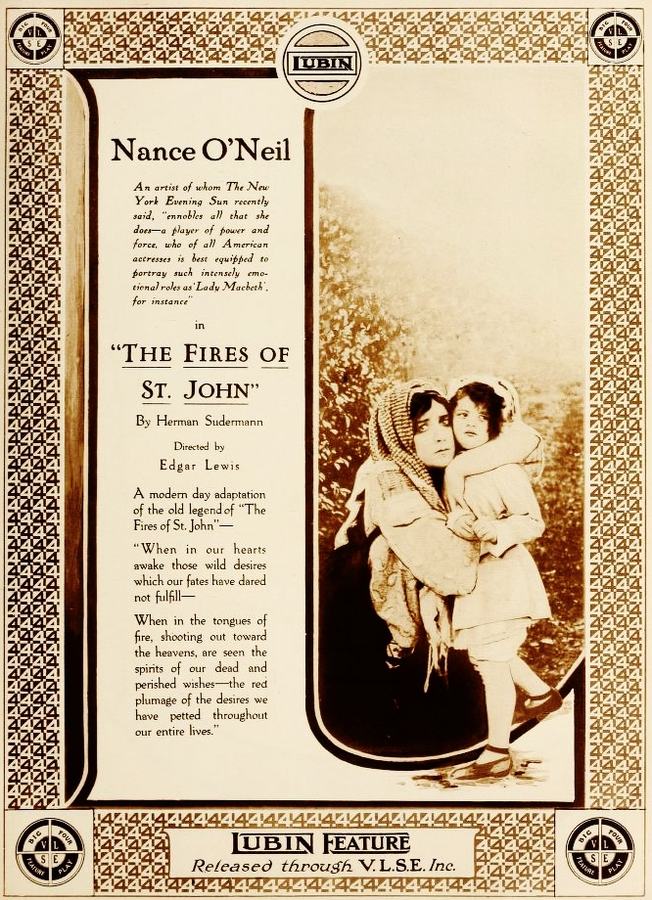
The Flames of Johannis Synopsis
The picture opens in Pennsylvania 25 years ago, during the winter of terrible drought. Vogel, the village's most prosperous farmer, is called to his only brother's bedside to take charge of his 4-year-old nephew George. On his way home from the suicide's house, Vogel finds an old gypsy woman carrying an infant almost frozen to death. Vogel takes the infant home with him and the next day adopts her with George. The old gypsy is paid a sum of money to give up all claim of the child on condition that she will not interfere in the future. She accepts and departs. Marika and George are known in the town as the calamity children. Three years later, a daughter, Gertrude, is born to Vogel. The family is returning from her christening when the old gypsy woman suddenly seizes Marika and caresses her. The crowd drives off the old woman, the the incident makes an impression on Marika's young mind. Marika and George become childhood sweethearts, and when George is 12, he and Marika plant a little tree in the garden behind the house and call it their sweetheart tree. Seeing this, Vogel chides George for being so sentimentally silly, and orders him to get to work filling the grain bins. George resents Vogel's manner, and Vogel angrily flings out that George's father was a suicide who left Vogelto pay all his debts and bring up his son. George runs away, vowing that he will not return to the village until he can repay Vogel in full. Years pass and Marika and Gertrude are grown to young womanhood. Marika, with the memory of George ever in her heart, learns that he has prospered and is about to return to the village. Vogel, who hears this news, decides that George is the man to marry his daughter Gertrude. George returns, and is hailed with delight by all except Marika, who, actuated by a motive of gratitude because of all Vogel has done for her in the past, stifles the call of her own heart and keeps her love for George locked within her own breast. Later George asks Marika why she avoids him, but she's evasive, and he, in a fit of pique, proposes to Gertrude. When she hears of this, Marika insists upon fitting up the new home which George and his future bride are to occupy in a neighboring village. This necessitates her making frequent trips at night, returning to her home the following day. On one of these trips Marika again meets the old gypsy woman, who seizes her and calls her her daughter. Marika rushes to her home and later, as she hears the family discussing the incident of meeting the gypsy years ago, she realizes for the first time that the old hag is her own mother. It is St. John's Eve, two days before the wedding of George and Gertrude, and Marika is to make her last trip to the couple's new home. The family have retired and George has remained up to keep Marika company until train time. As she realizes that George is soon to go out of her life forever, Marika is unable to restrain the pent-up passion of years, and she begs George to take her in his arms. This action is seen through the window by the old gypsy, who realizes that from now on she can secure money from George to keep the facts of what took place from the public. As the day dawns George begs Marika to let him go to Vogel and tell his love for her, but she, knowing that the shock would kill Gertrude and break her foster parents' hearts, refuses. Later she silently looks on with breaking heart as George and Gertrude are married. During the wedding ceremony the old gypsy enters Vogel's house and is found by the returning guests in the cellar, intoxicated. She is arrested and taken to jail. Marika learns of this and goes at once to her mother, and finds her very ill. She dies in delirium. The next morning Pastor Hoffman, who has always loved Marika, comes to the cell and finds his beloved bending over the body of her mother. He takes her into his arms and she leaves the prison with him.
"The Light at Dusk" holds a slight edge in general audience appreciation, but "The Flames of Johannis" offers its own unique cult appeal.
Suggested Watch:
The Light at Dusk