DbcultAccessing Vault...
Film vs Film
Select two cult films to compare side by side.
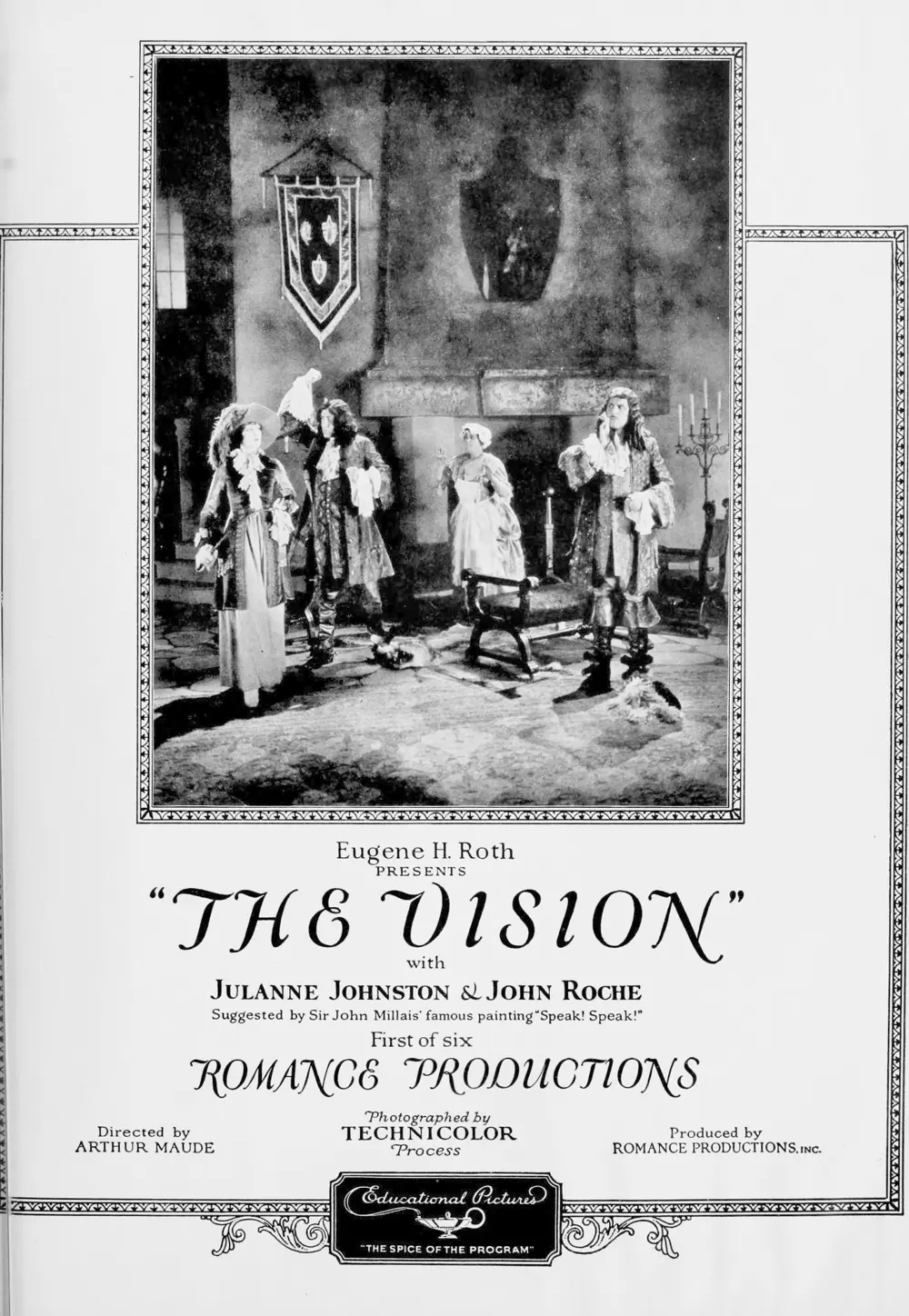
The Vision Synopsis
The story, credited to Arthur Maude, and suggested to him by Sir John Millais' painting, "Speak. Speak!" lends itself particularly well to the remarkable color effects produced by the Technicolor process. As to the story itself, it concerns a vision which appears to Edgar Graythorpe, sick and confined to his home at Roxton Castle; and alone with the exception of one servant. Graythorpe's queer actions - his conversations with someone unseen - have led the other servants to leave. Millais visits him and while there, the "Vision" again appears to Graythorpe. And then - the story unfolds - telling of a thwarted romance between Lucy Cludde and Charles de Lacey, and de Lacey's subsequent assassination at the hands of another suitor favored by Lucy's father. Pursued by the rival suitor, Lucy takes her life by leaping over a high cliff. Her spirit is the vision which appears to Graythorpe at intervals - and will continue to appear - until Graythorpe, who along with Roxton Castle has inherited the spirit of de Lacey - joins her. This is all revealed to Graythorpe by an old diary. Graythorpe dies and the two spirits meet.
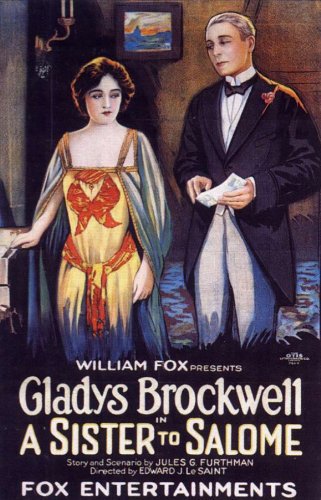
A Sister to Salome Synopsis
When famous opera singer Elinore Duane undergoes an operation on her throat, she has a series of ether-induced visions. In one, she is transported to ancient Rome where she appears as a much-admired woman in love with Paul, a young heretic, and at odds with Lutor, the high priest. To save her love, she poisons Lutor with her ring. After several other visions which involve variations on this love triangle, Elinore awakens to discover that Lutor is actually her doctor, Sascha Jaccard, and that Paul is the son of a friend who has come to visit the recovering prima donna.
"The Vision" holds a slight edge in general audience appreciation, but "A Sister to Salome" offers its own unique cult appeal.
Suggested Watch:
The VisionBoth films share