
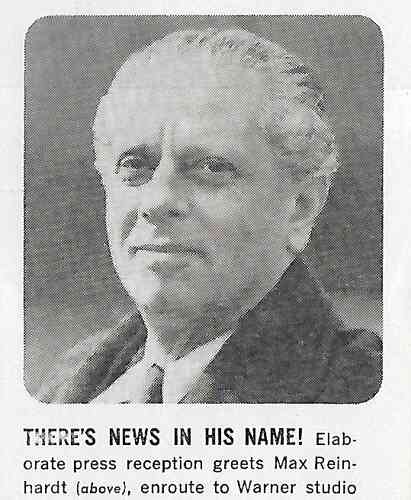
Max Reinhardt
director, miscellaneous, writer
- Birth name:
- Maximilian Goldmann
- Born:
- 1873-09-09, Baden, Austria-Hungary [now Baden, Lower Austria, Austria]
- Died:
- 1943-10-31, New York City, New York, USA
- Professions:
- director, miscellaneous, writer
Biography
{ "rewritten_biography": "Born into an Austrian merchant family as Max Goldmann—a name he would legally trade for Reinhardt in 1904—the young Max was a constant presence at Vienna’s Hofburg Theater, captivated by every performance he could find. His formal journey began in 1890 at the Sulkowsky Theater in Matzleinsdorf, followed by acting and assistant directing stints in Vienna and Salzburg’s Stadtheater. A transformative moment arrived in 1894 when director Otto Brahm invited him to Berlin. Brahm, a champion of realism who had founded the 'Free Stage' in 1890 to showcase forbidden works by Ibsen and Tolstoy, eventually took the reins of the Deutsches Theater. It was here that Reinhardt mastered the full theatrical craft, earning acclaim for his remarkably authentic portrayals of elderly characters. In 1901, Reinhardt pivoted toward the experimental by co-founding the cabaret 'Schall und Rauch' (Sound and Smoke), which evolved into the 'Kleines Theater' in 1902. He soon took command of the 'Neues Theater' (the future Berliner Ensemble) from 1902 to 1905. During this era, he refined his vision of the Gesamtkunstwerk—a total work of art where lighting, costume, music, and choreography moved in perfect synchronicity. Deeply influenced by August Strindberg and Richard Wagner’s operatic scale, Reinhardt sought to fuse every artistic element under a single directorial vision. After producing over fifty plays at Neues Theater—often fueled by his talent for securing private funding—he succeeded Brahm at the Deutsches Theater in 1905. He reimagined the theater as a democratic, immersive space, often extending the action into the audience to break the fourth wall. While he was a master of gargantuan, profitable spectacles featuring epic lighting and massive crowds, he also pioneered the intimate. In 1906, he built the Kammerspiele to showcase minimalist 'chamber dramas' and expressionist works that favored subjective emotion over objective realism. He eventually oversaw a vast empire of thirty theaters and companies, including a troupe that performed Shakespeare in neutral territories during World War I. His quest for the 'perfect playhouse' led to the 1919 opening of the 'Grosses Schauspielhaus,' an arena-style 'Theatre of the Five Thousand' equipped with a massive revolving stage. In the 1920s, he added the Boulevard Theaters on the Kurfürstendamm to his portfolio. However, the economic hardships of post-war Germany and rising anti-Semitism began to erode his audience base. In 1920, he returned to Salzburg, co-founding the Salzburg Festival with Richard Strauss and Hugo von Hofmannsthal, where he famously staged the morality play 'Everyman' against the majestic backdrop of the Austrian Alps. By 1924, he was directing Vienna’s Theater in der Josefstadt while maintaining his Berlin presence with the 'Komoedie.' His productivity was staggering; at his peak in 1916-17, he managed 48 productions in a single year. Though primarily a man of the stage, he experimented with film as early as 1910, directing four silent features including 'The Miracle.' Reinhardt’s influence was a cornerstone of German Expressionism, mentoring future legends like F.W. Murnau, Ernst Lubitsch, and Otto Preminger. His signature use of light and crowd dynamics would later define the visual language of filmmakers like Fritz Lang. The rise of Hitler in 1933 shattered this world. As a Jewish artist, Reinhardt saw his theaters and properties systematically seized. After a brief return to Austria, he fled the Nazi shadow, arriving in America in 1934. He viewed Shakespeare’s 'A Midsummer Night’s Dream'—which he staged twelve times throughout his life—as a utopian refuge from a fractured world. In 1934, he brought this vision to the Hollywood Bowl, transforming the landscape with a 250-foot stage, a literal forest, and a torch-lit wedding procession. The production discovered an 18-year-old Olivia de Havilland and featured a young Mickey Rooney. This success led to the 1935 Warner Bros. film adaptation, co-directed by his protégé William Dieterle and scored by Erich Wolfgang Korngold. Despite the $1.5 million budget and innovative use of gauzed lenses and expressionist ballet, the film was a financial disappointment but a landmark in cinematic history. Reinhardt spent his final years between the East and West Coasts, running a Hollywood workshop and a New York acting school with his wife, Helene Thimig. Between 1905 and 1930 alone, he oversaw 23,374 performances of 452 plays. He remained a child of the theater until the end, famously remarking that the stage is the ultimate sanctuary for those who 'secretly put their childhood in their pockets' so they can keep playing forever." }
Filmography
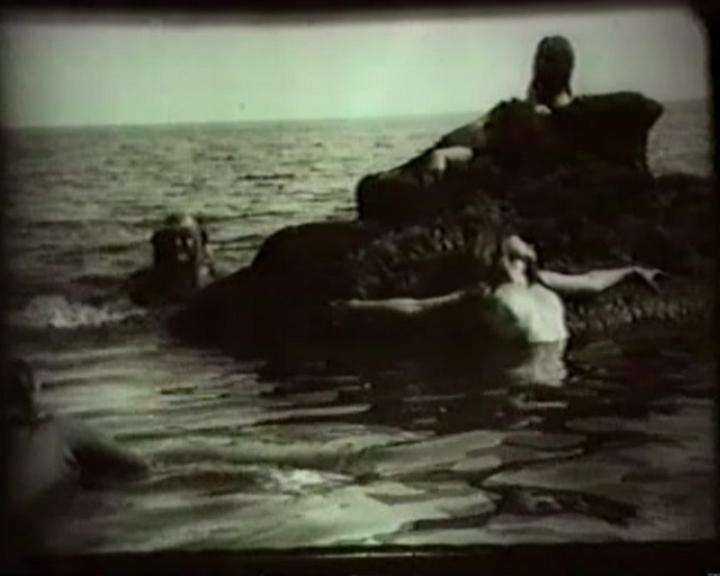
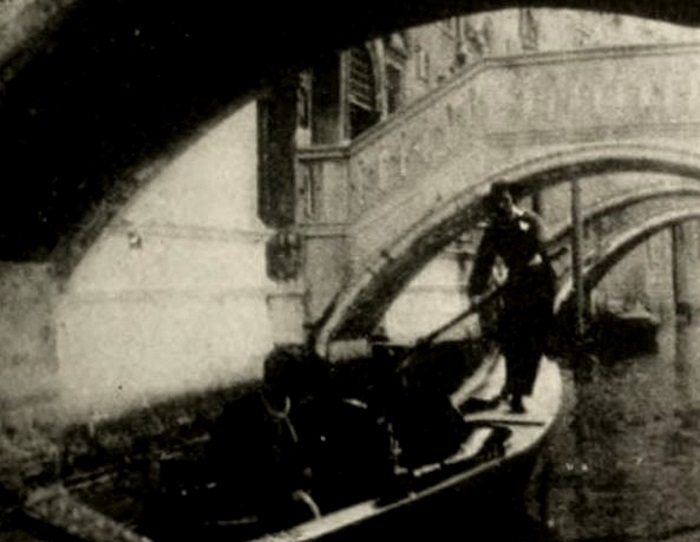
Directed (2)
Knowledge Base
Frequently Asked Questions about Max Reinhardt
Community
Comments
Log in to comment.