DbcultAccessing Vault...
Cult Review
Senior Film Conservator
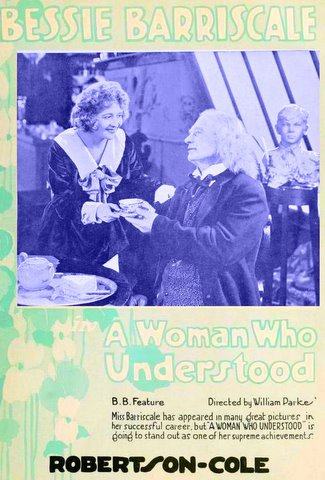
From the flickering shadows of early cinema emerges "A Woman Who Understood," a profound narrative that delves into the very essence of human sacrifice and the often-painful path to emotional enlightenment. This 1917 silent drama, penned by the perceptive Isabel Johnston, is far more than a simple melodrama; it's a stark, unvarnished look at the complexities of marital bonds, artistic ambition, and the transformative power of selfless love. It challenges the viewer to ponder the true cost of devotion and the arduous journey toward genuine understanding, not just of others, but of oneself.
At its core, the film presents Madge Graham, portrayed with compelling gravity by Dorothy Cumming, as a figure of immense artistic promise. A sculptress whose hands are both tools of creation and symbols of her potential, Madge willingly forsakes her burgeoning career. This isn't a reluctant concession but a deliberate, heartfelt choice made in service of nurturing the burgeoning talent of Robert Knight, played by Thomas Holding. Knight, a violinist of considerable skill, becomes the beneficiary of Madge's profound devotion. Their union, sealed by marriage and blessed with two children, initially appears to be a harmonious blend of domesticity and shared artistic spirit – albeit with Madge's artistic flame now burning quietly, redirected to fuel her husband's. Her sacrifice is complete, a silent testament to her unwavering belief in his potential, a belief that eclipses her own burgeoning aspirations.
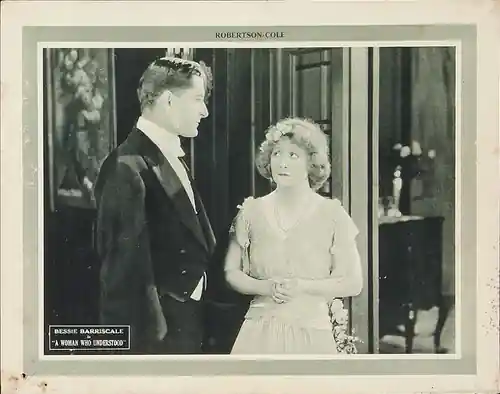
However, the narrative soon veers into treacherous territory, exposing the fragile underpinnings of Knight's character. Perhaps blinded by his own burgeoning success or simply susceptible to external allure, he becomes ensnared by the sophisticated charms of Mrs. Alden, a character brought to life with intriguing ambiguity by Bessie Barriscale. Mrs. Alden, the wife of a wealthy man, represents a different kind of world – one of opulence and perhaps a perceived freedom from the domestic constraints Madge embodies. This entanglement isn't merely a fleeting flirtation; it's a growing infatuation that threatens to unravel the very fabric of Madge's carefully constructed world, a testament to the insidious nature of unchecked desire. The film deftly portrays the gradual erosion of fidelity, building tension with each stolen glance and hushed rendezvous, making the eventual explosion of truth all the more impactful.
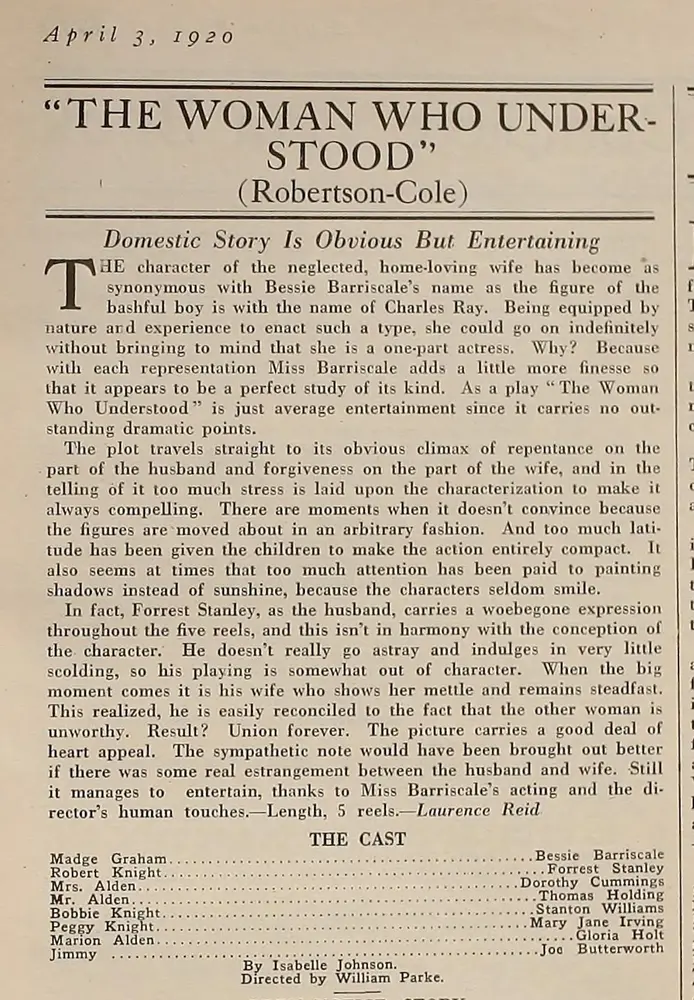
The film's emotional crescendo arrives with a brutal, visceral force. Madge, a woman whose intuition runs deeper than superficial pleasantries, uncovers her husband's treachery at the Alden residence. The scene, a masterclass in silent film tension, culminates in a shocking discovery: Robert and Mrs. Alden locked in an embrace. The sheer force of this revelation, the seismic shock of betrayed trust, leads to an accidental overturning of a lamp. Flames erupt, consuming the opulent setting, a stark metaphor for the fiery destruction of their domestic peace and the inferno of Madge's shattered heart. The visual spectacle of the fire serves not just as a plot device but as a powerful symbol of the consuming nature of betrayal.
In the ensuing chaos, Knight, in a desperate attempt to quell the inferno, suffers grievous burns to his hands – the very instruments of his artistic expression, now tragically marred. Hospitalized and facing the grim prospect of losing his ability to play, the stark realities of his choices begin to manifest. It's here that the narrative delivers its most poignant and morally complex challenge. Skin grafting becomes the only viable option to salvage his hands, his career, his identity. Mrs. Alden, the object of his infatuation, recoils from this ultimate act of sacrifice, her superficial affections exposed for their shallow depth. Her refusal is a chilling moment, starkly contrasting her earlier allure with her profound lack of genuine commitment, proving her love to be as ephemeral as the flames that damaged Robert's hands.
It is Madge, the wronged wife, the woman whose aspirations were shelved for his, who steps forward. Her act of bravery, her willingness to offer her own skin – literally a piece of herself – to heal the man who betrayed her, transcends mere forgiveness. It is an act of profound, almost biblical, love. This selfless gesture is the crucible in which Robert Knight's perception is finally forged anew. The physical scarring he endures is mirrored by the emotional scarring of his conscience, culminating in a devastating realization of Madge's unparalleled devotion. It's a moment that redefines the very essence of understanding, moving beyond intellectual comprehension to a deep, visceral appreciation of sacrificial love. Her silent agony, her resolute decision, speaks volumes about the enduring strength of a woman who truly understands the meaning of commitment, even when unrequited.
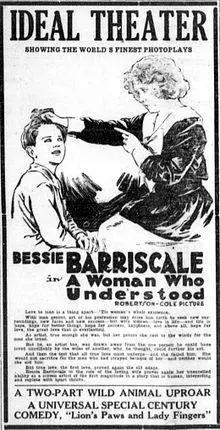
"A Woman Who Understood" navigates complex emotional landscapes with an understated power characteristic of the silent era's finest works. The film's narrative arc, while seemingly melodramatic on the surface, delves into universal human experiences: the allure of forbidden desire, the agony of betrayal, and the redemptive potential of unconditional love. Isabel Johnston's screenplay is a testament to the power of economy in storytelling, allowing the actors' expressions and the visual language of cinema to convey volumes. It is a narrative that, despite its age, feels remarkably contemporary in its exploration of human fallibility and the profound capacity for forgiveness. The film's ability to communicate such intricate emotional states without spoken word is a testament to its artistic merit and the skilled execution of its creators.
Dorothy Cumming's portrayal of Madge Graham is nothing short of extraordinary. She imbues Madge with a quiet strength, a dignity that never wavers even in the face of profound personal anguish. Her eyes, often downcast in sorrow or blazing with a fierce resolve, communicate an entire spectrum of emotions without the aid of spoken dialogue. It's a performance that speaks to the heart, embodying the titular "woman who understood" not as a passive victim, but as an active agent of grace. Her sacrifice isn't born of weakness but of an immense, almost terrifying, inner fortitude. Cumming's subtle gestures, her posture, and her expressive face craft a character that is deeply sympathetic and remarkably resilient, making her ultimate act of selflessness all the more impactful. Her performance alone elevates the film beyond mere melodrama into a profound character study.
Thomas Holding, as Robert Knight, navigates a difficult role with commendable nuance. He must convey not only the ambition and artistic passion of a violinist but also the moral failings of a man seduced by external glamour. His transformation from a self-absorbed artist to a humbled, repentant husband is gradual and believable, particularly after the harrowing fire sequence. The physical and emotional pain he projects during his recovery is palpable, making his eventual epiphany feel earned rather than simply handed to him by the script. Holding manages to elicit both disdain for his character's infidelity and eventual pity for his suffering, creating a complex portrayal of a man grappling with the consequences of his choices.
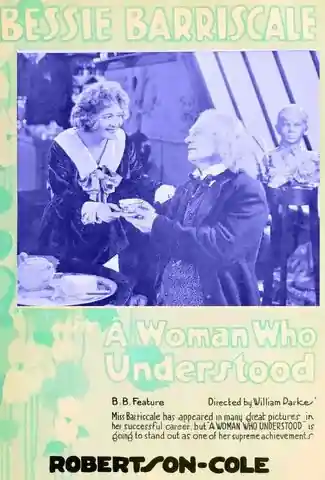
The direction, while uncredited in the plot summary, expertly uses the visual language of the silent film era to convey emotion and plot points. The fire sequence, in particular, is a dramatic highlight, employing the era's special effects to create a palpable sense of danger and destruction. The framing of shots, the use of close-ups to capture facial expressions, and the pacing of the narrative all contribute to a compelling viewing experience. The film understands the power of symbolism: Madge's sculptor's hands, Robert's violinist's hands, and the eventual grafting, all speak volumes about creation, destruction, and redemption. These visual metaphors are not merely decorative; they are integral to the film's thematic depth, allowing the audience to engage with the story on a profound, non-verbal level. The silent medium, in this instance, becomes an advantage, forcing a greater reliance on visual cues and physical acting that transcends linguistic barriers.
The themes explored in "A Woman Who Understood" resonate across cinematic history. The sacrifice of a woman's personal aspirations for her husband's career is a recurring motif, seen in countless dramas, though rarely depicted with such stark consequence. The film's exploration of marital infidelity and its devastating fallout can be compared to other silent era morality plays, such as The Invisible Bond, which also delves into the unseen ties that bind and break relationships, exploring the psychological toll of hidden secrets. The stark contrast between a wife's unwavering devotion and a mistress's superficiality finds a parallel in films like The Woman's Law, where female characters often face profound moral dilemmas and societal pressures, often forced to choose between personal desires and familial duty.
Moreover, the central act of sacrifice, the literal giving of oneself for another, is a powerful narrative device that echoes through many tales of profound love and redemption. One might even draw a thematic line to more contemporary narratives that explore the depths of human compassion in the face of betrayal, such as Ashes of Love, though the context and era differ, the core emotional resonance remains. The film's ability to elicit such a visceral response to Madge's ultimate act is a testament to its enduring emotional power. It's not just a story of a woman understanding her husband's flaws, but of a woman embodying an understanding of love that transcends human failing, a love that is both boundless and transformative. The sheer magnitude of her sacrifice elevates the film beyond a simple domestic drama into a profound statement on the nature of unconditional love and forgiveness.
Isabel Johnston's screenplay is particularly astute in its portrayal of consequences. Robert Knight's burns are not merely a plot device; they are a physical manifestation of his moral transgressions, a searing reminder of the destructive nature of his choices. The subsequent refusal of Mrs. Alden to provide the necessary graft serves to further isolate him, stripping away the illusion of her affection and leaving him vulnerable to the hard truth. This stark reality sets the stage for Madge's heroic intervention, which transforms the narrative from a tale of domestic discord into a profound meditation on grace and forgiveness. The narrative structure expertly builds to this pivotal moment, ensuring that Knight's realization is not a sudden, unearned epiphany, but the culmination of a painful journey.
The film, despite its age, remains remarkably poignant. Its exploration of the sacrifices inherent in love, the fragility of fidelity, and the arduous journey toward true understanding feels as relevant today as it did over a century ago. It challenges viewers to consider the true cost of ambition and the immeasurable value of unconditional love. "A Woman Who Understood" is a powerful reminder that sometimes, the greatest acts of love are not grand declarations, but quiet, selfless gestures that redefine the very meaning of devotion. It's a testament to the fact that silent cinema, in its purest form, possessed an unparalleled capacity to convey the deepest human emotions with compelling clarity and enduring impact. The film's message transcends time, speaking to the universal human condition and the enduring power of empathy.
In an era where cinematic spectacle often overshadows genuine emotional depth, this film stands as a beacon of poignant, character-driven storytelling. It's a historical artifact that still resonates with contemporary audiences, offering a powerful, if sometimes uncomfortable, reflection on the human heart's capacity for both profound error and boundless love. The film’s silent power is its strength, allowing the audience to project their own understanding onto the raw emotions displayed, making Madge’s ultimate act of love a universal statement on the power of empathy and forgiveness. It invites viewers to look beyond the surface, to understand the unspoken complexities of relationships, and to appreciate the quiet heroism of those who love unconditionally. This is not just a film; it is a timeless lesson etched in celluloid.
IMDb 6.4
1915
Community
Log in to comment.