DbcultAccessing Vault...
Cult Review
Senior Film Conservator
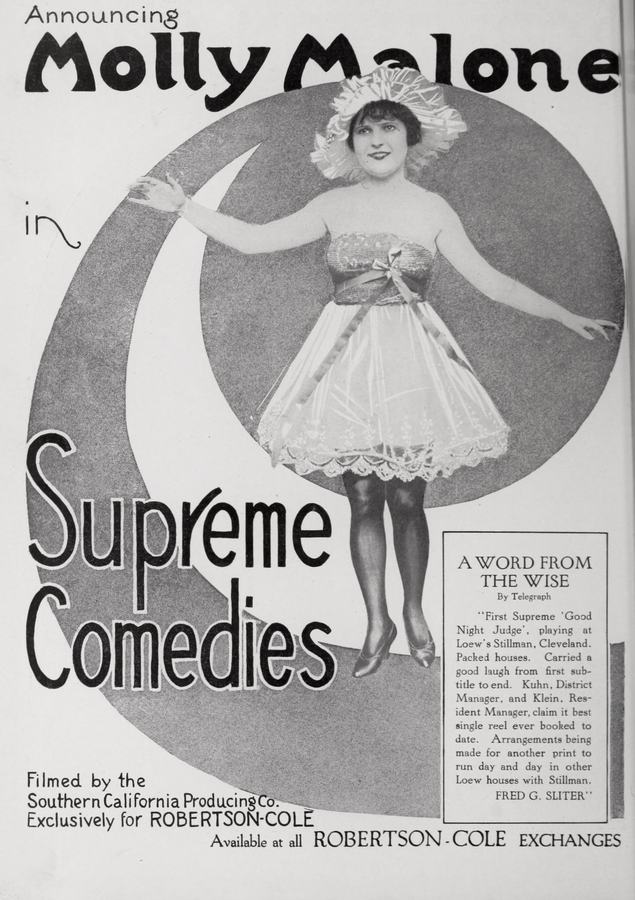
If you’ve ever stood on a carnival pier at twilight, felt the ferris-wheel lights stutter against your corneas and wondered whether the universe itself might be rigged, Molly’s Millions will speak to you in the tongue of neon and salt-spray. The picture arrives like a tonic for anyone who thinks silent cinema peaked with melodramatic faints; here, the faints are feints, the gasps are gambits, and even the intertitles smirk.
Frank Roland Conklin’s screenplay treats narrative the way a card-cheat handles aces: he shows you three acts, but you swear you counted four. The inciting prophecy—delivered by a fortune-teller whose crystal ball looks suspiciously like a goldfish bowl—functions as both promise and punch-line. Once Molly Malone, luminous flapper with a laugh that could sand varnish off a yacht, believes she is destined for riches, every frame tilts into a fun-house reflection of desire. She teams up with James Liddy’s grifter, a man who wears his hat like a debt he never intends to repay, and together they begin to manufacture destiny.
What follows is not a heist but a haunting: the duo haunt yacht clubs, séance parlors, and the kind of beach-cave speakeasies where gin arrives in conch shells. Each new mark is introduced with a iris-in that feels like a raised eyebrow; each escape is punctuated by a cut so brisk it leaves celluloid whiplash. By the time Molly reclines on a tiger-skin rug supposedly purchased with her “winnings,” the rug itself looks embarrassed to be there.
Malone’s performance is a masterclass in controlled delirium. Watch her eyes when a sucker agrees to invest in a non-existent copper mine: pupils dilate like market bubbles, yet the smile stays pinned at demure. She sashays between registers—giddy, greedy, heartsick—without ever betraying the silent-era penchant for semaphore acting. Meanwhile Liddy, all elbows and easy charm, plays counterpoint; his body leans away from every promise, as though honesty were magnetized repulsion.
“In the vacuum of sound, their chemistry hisses louder than dialogue ever could.”
Supporting players—an aging magician who keeps doves in his top-hat like handkerchiefs of regret, a kid accordionist paid in saltwater taffy—function as living leitmotifs. Each re-entry cues a emotional chord: wonder, menace, rue. The film understands that in 1924 the audience still read faces like paragraphs; Conklin simply refuses to dumb-down the vocabulary.
Cinematographer Edgar J. Schleussner (never lauded enough) turns budget constraints into aesthetic rebellion. Day-for-night scenes are drenched in cobalt rather than the usual slate, giving moonlit chases the pallor of expired currency. Superimpositions layer Molly’s face over crashing surf until desire and devastation share one silhouette. A single flash-pan—when Liddy realizes the final con has backfired—feels like watching hope spontaneously combust.
Color tinting behaves like a character: amber for greed, cerulean for longing, crimson for the moment those two vices intersect. Because the 35mm prints now circulate only in archives, most viewers encounter scans where tints have faded to bruise. Yet even these ghosts whisper the original intent.
Modern ears may balk at watching a film without audible dialogue, but Molly’s Millions weaponizes that vacuum. The absence of voices turns every coastal gust, every projector clatter, into part of the mix. You become hyper-aware of your own breathing—an involuntary duet with the characters’ panic. Try watching it on a laptop in a dark room; the illusion that Molly might hear you conspire with her is uncanny.
Place this film beside The Dragon Painter and you see two philosophies of desire: one Eastern-mystic, one boardwalk-brash. Swap in Idle Wives and note how both pictures interrogate marriage as a speculation market, though Idle Wives moralizes where Molly’s Millions monetizes the immorality itself. The DNA even snakes toward The Marriage Lie: both pivot on a fib told at the altar, yet Conklin’s treatment prefers jitterbug tempo to that film’s funeral march.
Some scholars label the picture proto-feminist because Molly ultimately pockets the narrative agency. I dissent: the film portrays gender as liquidity. Femininity is an asset class; masculinity, venture capital. Both leads learn to short-sell their own stereotypes—Molly weaponizes the ingenue’s blush; Liddy monetizes the bad-boy smirk—until identity itself becomes penny-stock. The climax doesn’t empower one gender; it bankrupts the whole exchange.
Spoilers reside here, but if you’ve read this far you likely crave the exquisite bruise. The finale occurs at daybreak on a derelict pier. Molly and Liddy, stripped of cash, watches, even the kid accordionist’s last candy coin, stand ankle-deep in tide-pools that reflect a sky the color of unpaid bills. They exchange not vows but IOUs scribbled on damp cigarette papers, then walk in opposite directions while the camera cranes up until the pier resembles a line-item crossed out by an accountant with a wicked sense of humor. Fade to white—not the usual iris—suggesting the entire story has been one long exposure overexposed.
As of this month, the only accessible version is a 2K scan on Archive.org with a new electro-acoustic score by Port Radium Quartet—all theremin and typewriter clicks. It lands somewhere between cabaret and audit. If you prefer live events, the AlleyCat Cinema in Portland programs it quarterly with a four-piece klezmer ensemble; those screenings sell out because word is the drummer cues rim-shots every time Molly lies, creating a percussive Pinocchio effect.
Why should twenty-first-century viewers care about a flapper con-artist flickering at 18 fps? Because the movie anticipates our influencer age: hype as currency, persona as asset, love as leveraged buy-out. It’s as if TikTok were translated into semaphore. More importantly, it reminds us that every era has its own language for calling greed by prettier names. Conklin simply filmed the dictionary and set it on fire.
Verdict: 9/10 — A carnival mirror aimed at capitalism, still reflecting our selfies a century later.
IMDb 4.5
1932
Community
Log in to comment.