DbcultAccessing Vault...
6.9/10
Senior Film Conservator
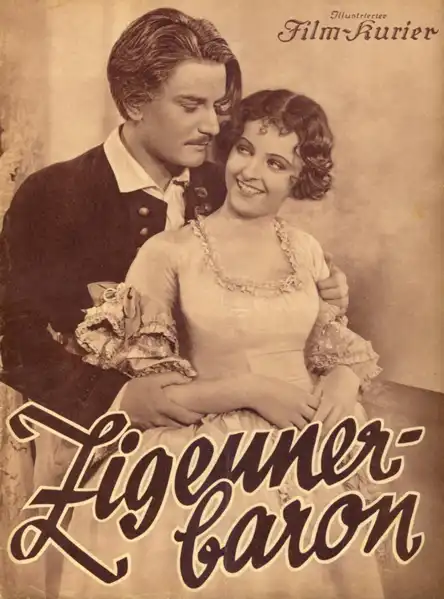
A definitive 6.9/10 rating for a film that redefined the boundaries of cult cinema. The Gypsy Baron remains a cornerstone of transgressive art.
So, The Gypsy Baron from 1935. Is it worth tracking down today? Well, if you have a soft spot for really old, sort of charmingly stiff musicals, maybe. Anyone expecting fast pacing or gritty drama will probably hit the 'stop' button pretty quick. It's for folks who appreciate film history, or just want to see something truly different from today. 🕰️
The whole thing kicks off with Sándor Barinkay, our main guy, coming back to his old stomping grounds. He's hiding his nobleman status, which feels like a bit of a stretched secret, honestly. Everyone in the village seems to know something's up.
His family's land is now run by a pig merchant, Zsupán, who is just a complete goofball. He really leans into playing the village idiot, which gets a few laughs. You can tell he’s having a blast, even if his antics sometimes feel like they go on a beat too long. 🐷
Then there’s the women in his life. The merchant's daughter, Arsena, is kind of interesting, but it's the gypsy Saffi who really catches your eye. Their whole thing feels like the actual heart of the story, or at least it tries to be. The love triangle stuff is pretty standard, but Saffi brings a real spark.
The musical numbers are… well, they’re 1935 musical numbers. Lots of operetta-style singing, which can be a little much if you’re not prepared. Some songs really hit, but others kind of blend together. It feels like they just stopped the story for a song, then picked it up again. 🎤
One scene, where Sándor is trying to gather support from the local gypsies, just feels off. The 'crowd' isn't really a crowd at all. It’s like six people standing around, looking vaguely interested. It pulls you right out of the moment. You're left thinking, 'Where did all the other extras go?'
The search for the hidden treasure, that’s another big part of the plot. It kind of pops up later, almost out of nowhere. It feels like a way to give the story a proper ending, rather than something that’s been building all along. Like, oh right, the treasure! 💰
Anton Walbrook, who plays Barinkay, he’s got this intense stare. It really works for him in some of the more dramatic bits. But then he’ll break into a song, and it’s a different vibe entirely. He handles it well for the most part, considering the material.
There's this moment where a specific prop, a small, worn wooden chest, gets a really long close-up. It's supposed to be important, but it just lingers, making you wonder what you're supposed to be feeling. It almost becomes funny. 🤔
Pacing is definitely a thing here. It’s not slow in a bad way all the time, but it’s certainly not brisk. Some conversations feel like they could have been cut in half. You can almost feel the movie trying to convince you that every single line matters.
The ending wraps things up pretty neatly, maybe a little too neatly for all the build-up. It gives you that classic operetta feel, where everything is just fine in the end. A bit predictable, but then again, it’s 1935. They weren’t reinventing the wheel.
It's not a must-see for everyone, not by a long shot. But if you’re into older films and don’t mind a bit of theatricality mixed with some uneven performances, give it a shot. It's a curious piece of film history. Sometimes you just want to see how they used to do it, even if it's a little rough around the edges. 👍
IMDb 7.6
1931
Community
Log in to comment.