
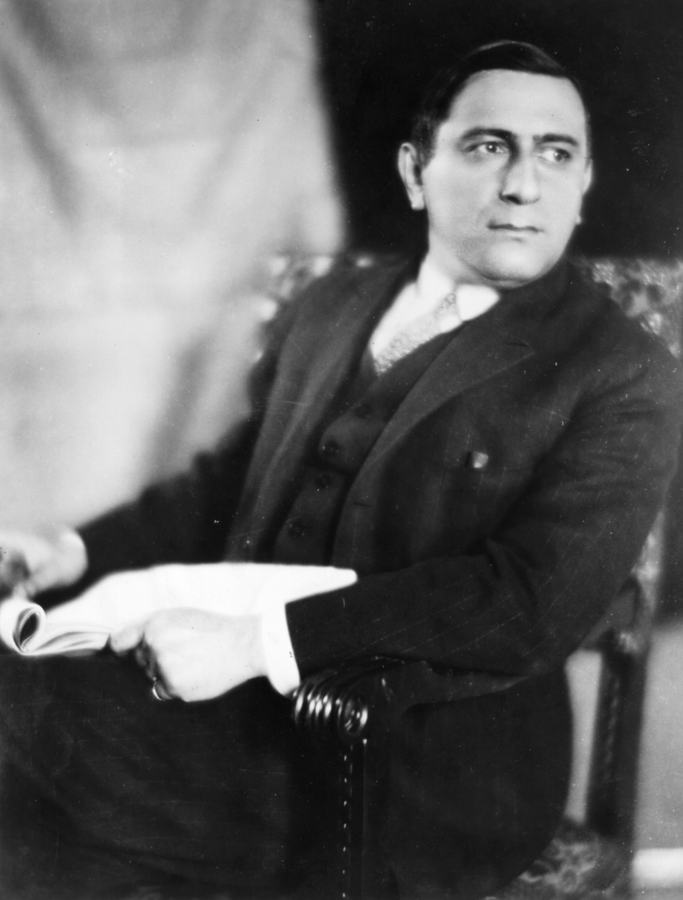
Ernst Lubitsch
actor, director, writer
- Born:
- 1892-01-29, Berlin, Germany
- Died:
- 1947-11-30, Hollywood, Los Angeles, California, USA
- Professions:
- actor, director, writer
Biography
Sixteen-year-old Ernst Lubitsch bolted from Berlin’s Sophien-Gymnasium after tasting grease-paint in the school’s attic theatre, promising his worried tailor-father he would still balance the ledgers of the family shop—so long as he could slip into cabarets after dusk to trade jokes for coins. By 1911 he had charmed his way into Max Reinhardt’s Deutsches Theater, jumping from walk-on to leading man faster than most players learn their lines; nights he fetched tools at the Bioscope studios, quietly studying how silents told stories without words. A year later he stepped before the camera himself, clowning in a string of Jewish-village sketches that audiences devoured. The logical next step: write and direct the gags himself, which he did from 1914 onward. The breakthrough arrived in 1918 with two Pola Negri vehicles. The Eyes of the Mummy served tragedy spiced with sand-dune eroticism, while Carmen turned Bizet’s firebrand into an international box-office blaze. Over the next twelve feverish months Lubitsch made seven features; among them, the vast biblical pageant Passion let Negri and Emil Jannings emote in costumes heavy with sequins and doom, whereas The Oyster Princess lampooned American millionaires with such airy, risqué precision that French critics coined the phrase “the Lubitsch Touch”—a shorthand for gliding camerawork, whispered innuendo and a visual wink that told the whole plot in a single frame. The Loves of Pharaoh lured him to New York in 1922; he sailed home, then returned for good to guide Mary Pickford through the frothy Rosita (1923). The Marriage Circle (1924) kicked off a dazzling streak of adult comedies where bedrooms always had two doors and marriages three surprises. Whether for Warner Bros. silents or Paramount talkies, Lubitsch’s champagne dialogue now bubbled from the mouths of Hollywood’s fastest tongues—Chevalier, MacDonald, Colbert—while he invented the screen musical as we know it. In 1935 Paramount handed him the producer’s crown; in 1938 Fox lured him west again with a three-year directing deal. War clouds darkened his humor but sharpened his bite. At MGM, Ninotchka (1939) let Garbo’s icy envoy laugh, thaw and fall for Parisian champagne—and Melvyn Douglas. Two years later Lubitsch formed his own company to shoot To Be or Not to Be (1942), a Warsaw-set farce that skewered Nazis, egotistical actors and the whole fragile art of pretense; Jack Benny and Carole Lombard’s comic duel climaxed when Felix Bressart, a minor Jewish player, recites Shylock’s “Hath not a Jew eyes?” as both performance and defiance. A coronary in June 1943 slowed but did not stop him; he finished the Technicolor afterlife comedy Heaven Can Wait that same year, then watched from a studio chaise while Otto Preminger steered A Royal Scandal (1945) for him. When Lubitsch died in November 1947, the Academy saluted his quarter-century of screen wizardry with a special Oscar. At the graveside, Billy Wilder murmured, “No more Lubitsch.” William Wyler’s reply echoed the grief of an era: “Worse—no more Lubitsch pictures.”
Filmography
In the vault (1)
Knowledge Base
Frequently Asked Questions about Ernst Lubitsch
Community
Comments
Log in to comment.