
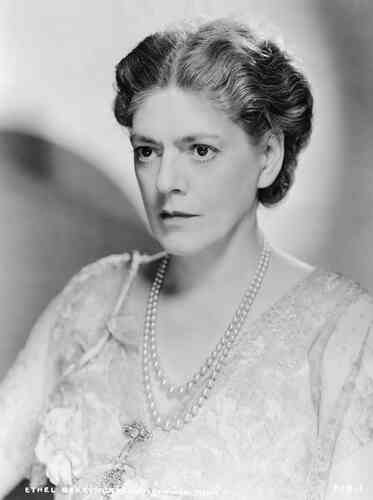
Ethel Barrymore
actress
- Birth name:
- Ethel Mae Blythe
- Born:
- 1879-08-15, Philadelphia, Pennsylvania, USA
- Died:
- 1959-06-18, Beverly Hills, California, USA
- Professions:
- actress
Biography
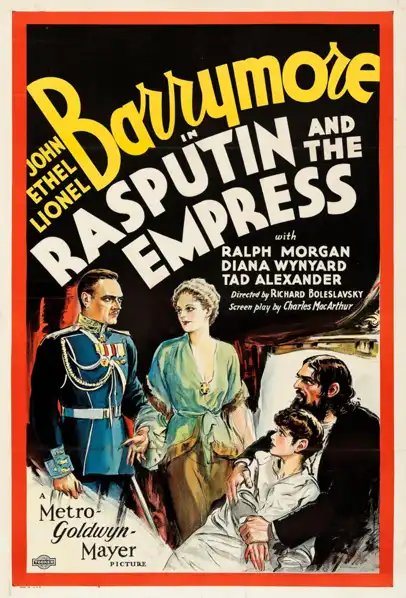
Ethel Barrymore arrived in the world second in line of three siblings whose DNA practically hummed with greasepaint. Father Maurice had sailed from England in 1875, traded a Cambridge law degree for curtain calls, and scandalized his kin. Mother Georgiana Drew, Philadelphia-born, grew up in the footlights of her parents’ company. The pair met while playing for Augustin Daly in Manhattan and soon turned the Barrymore home in Philadelphia into a nursery for future headliners. While older brother Lionel apprenticed with the Drew clan, Ethel practiced arpeggios and dreamed of Carnegie Hall. The keyboard lost. In the 1894 New York season, seventeen-year-old Ethel stepped before the footlights, and reviewers forgot to breathe: a heart-shaped face, eyes like spilled ink, a velvet contralto that could hush a balcony. Henry Irving whisked her to London for *The Bells* (1897) and *Peter the Great* (1898); she came home to conquer in Clyde Fitch’s *Captain Jinks of the Horse Marines* (1901), a vehicle engineered by producer Charles Frohman. Over the next decade, she was Ibsen’s Nora (1905), the fiery Alice, the fraying wife in *Mid-Channel* (1910), and the sparkling Rose Trelawney (1911). Between curtain calls she married broker Russell Griswold Colt in 1909 and produced three children without ever surrendering her dressing-room key. Cameras beckoned. Though her silent work never eclipsed brother John’s swoon-factor, her very first film, *The Nightingale* (1914), proved she could magnetize a lens. She balanced sporadic movie jobs through 1919 with stage triumphs—*Declassee*, a heartbreaking Juliet, *The Second Mrs. Tanqueray*, and, crown jewel, *The Constant Wife* (1926). Offstage, she brandished her clout for Actors’ Equity, marching in the 1919 strike that re-shaped American theater. Middle age brought gray hair and grandmother roles. Save for one riotous family reunion—*Rasputin and the Empress* (1932) alongside both brothers—Hollywood’s offers grew arthritic. She declined, touring triumphantly in *The Corn Is Green* from 1940-42 before finally resettling in Southern California in 1940. There, the cameras rediscovered her. As Cary Grant’s Cockney mother in *None But the Lonely Heart* (1944) she snatched an Oscar for Best Supporting Actress and complained it wasn’t her best take. Audiences disagreed, savoring her shrewd politico in *The Farmer’s Daughter* (1947) and the wistful art-dealer Miss Spinney in *Portrait of Jennie* (1948). Television dropped by in the 1950s; in 1955 she published *Memories, An Autobiography*. Two dozen years earlier, Broadway had already nailed her name above the door of the Ethel Barrymore Theatre. She died in 1959 and rests beside her brothers in East Los Angeles’ Calvary Cemetery, the First Lady of the American stage still holding court in footlight memory.
Filmography
In the vault (2)
Knowledge Base
Frequently Asked Questions about Ethel Barrymore
Community
Comments
Log in to comment.