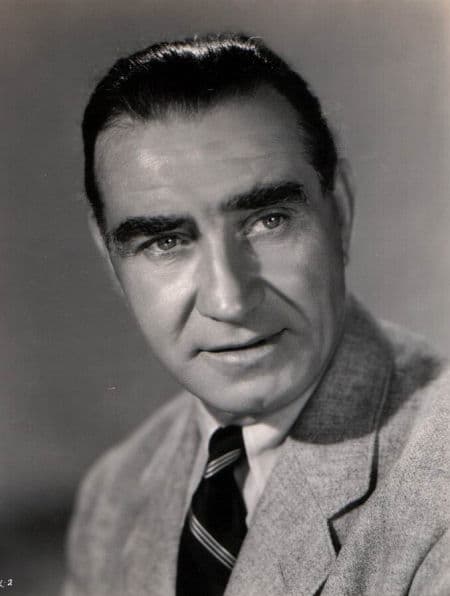
Frank Lloyd
actor, director, writer
- Birth name:
- Frank William George Lloyd
- Born:
- 1886-02-02, Glasgow, Scotland, UK
- Died:
- 1960-08-10, Santa Monica, California, USA
- Professions:
- actor, director, writer
Biography
Frank Lloyd slipped into the world of celluloid almost by accident, carrying nothing louder than a trained baritone and a gift for mimicry. Born in Glasgow, he first trod the boards in Edwardian London, earning pennies by sending up Harry Lauder’s swagger and crooning to smoky music-hall crowds. When wanderlust struck in 1909, he crossed the Atlantic, patched telegraph wires across the Canadian prairie to keep hunger at bay, and married Alma Haller—an operetta soubrette he met between curtain calls in Edmonton. A season of West-Coast burlesque later, Universal handed him an actor’s contract in 1913; two years of scathing reviews convinced him the camera belonged on the other side of his ambitions. By 1917 he was sprinting through Fox, cranking out fifteen features in twenty-four months—Zane Grey sagebrush sagas, Dickens and Hugo in flickering silhouette—while William Farnum’s jawline sold tickets. Goldwyn borrowed him briefly, then First National locked him in for the 1920s, letting him loose on corsets and cutlasses. Jackie Coogan’s Oliver quivered under Lon Chaney’s Fagin; Milton Sills’s Sea Hawk sliced through studio fog; Balzac’s Parisian intrigos glowed in The Eternal Flame. The Academy looked up from its inaugural luncheon long enough to hand him a statuette for 1928’s The Divine Lady, the second Oscar ever claimed by a director. The Depression decade found Lloyd at his most dazzling. Fox’s Cavalcade (1933) traced an English family across wars and weddings, its meticulous sets and Noël Coward’s clipped sorrow hauling in five million dollars and another golden boy for the mantelpiece. Weeks later Berkeley Square let Leslie Howard whisper across centuries, prompting the Times to hail the film as “delicacy incarnate.” A quick hop to MGM produced the peak: 1935’s Mutiny on the Bounty, a thunder of salt, tar, and seething egos that seized Best Picture and pinned Gable’s grin opposite Laughton’s tyrannical Bligh in cinema lore. Lloyd followed with Foreign Legion sandstorms (Under Two Flags, 1936), a thunder-of-hooves western in Wells Fargo (1937), and the velvet intrigue of If I Were King (1938), where Ronald Colman’s Villon traded couplets with Basil Rathbone’s Louis XI. War interrupted. Major Lloyd commanded the 13th Air Force Combat Camera Unit, filming Pacific sorties and earning the Legion of Merit for turning battle into briefing-room clarity. Peace brought him home to Carmel Valley quiet until Republic lured him back for one last trumpet call—The Last Command (1955), a blaze of cannon smoke over the Alamo that served as both elegy and exclamation point. Today a star on Hollywood Boulevard remembers the quiet Scotsman who could stage ballroom waltzes, naval mutinies, and camel charges with the same unshowy mastery.