
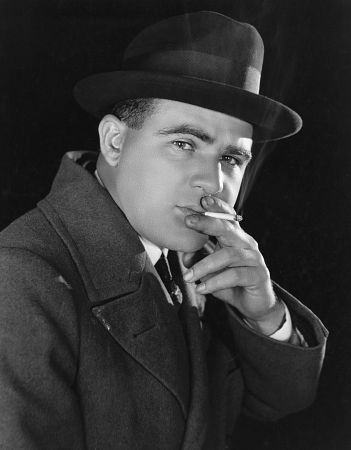
Hal Roach
miscellaneous, producer, writer
- Birth name:
- Harry Eugene Roach
- Born:
- 1892-01-14, Elmira, New York, USA
- Died:
- 1992-11-02, Los Angeles, California, USA
- Professions:
- miscellaneous, producer, writer
Biography
Elmira, New York, 1892: a restless dreamer named Hal Roach arrives on earth already eager to leave. By twenty he has skinned mules, herded horses and panned for gold, only to wash up in San Diego in 1913 as a glorified scenery-chewer in slapstick crowd scenes. A fellow extra, Harold Lloyd, catches his eye; Roach, honest enough to admit he stank on-screen, senses Lloyd will glow. A modest inheritance buys a camera and a new banner—Phun Philms, quickly respelled Rolin—and in early 1915 the two novices gamble on one-reelers. The first efforts are cringe-worthy, but Pathé starts paying by the exposed foot, so the team sharpens its timing. “Will E. Work” dies a quick death; “Lonesome Luke,” a shameless Chaplin echo, fattened the receipts until Lloyd, weary of being a carbon copy, storms out, returns, storms out again, and finally dons the round spectacles that re-write box-office arithmetic. Pathé rewrites Roach’s contract, and 1917 finds the producer, still only 25, wealthy enough to crisscross Europe while his studio becomes a cozy, family-style laugh factory. Roach’s Midas touch widens: Our Gang debuts and instantly eclipses every kid act in town; Stan Laurel and Oliver Hardy click; Charley Chase, Edgar Kennedy and ‘Snub’ Pollard keep the editing benches humming. When Pathé folds its U.S. tent in 1927, Roach sashays to MGM with a deal that pads both ledgers for eleven cushy years. Then, inexplicably, he develops a crush on Mussolini, christens a shaky Rome-L.A. venture “RAM Productions,” and hosts Il Duce’s son Vittorio’s 21st-birthday blowout in September 1937. The photographs and autographed portrait survive Schenck’s fury—and the collapse of the MGM pact—yet Roach rebounds at United Artists with Topper, Of Mice and Men, and the cave-man blockbuster One Million B.C., 1940’s top money spout. War, changing tastes and the march toward features shrink the two-reel kingdom. Roach experiments with “streamliners,” then embraces the infant medium of television—My Little Margie, Blondie, Oh! Susanna—while competitors scoff. Retirement fails; Junior hemorrhages cash, so Pop reclaims the keys, leases stages and mines the vault for TV syndication. In 1983 his firm pioneers digital colorization, later feeding the Disney Channel a steady diet of new product. He exits in 1992, one month short of 101, still spinning yarns like the street-wise kid who once swapped a mule for a movie camera.
Filmography
In the vault (1)
Knowledge Base
Frequently Asked Questions about Hal Roach
Community
Comments
Log in to comment.