
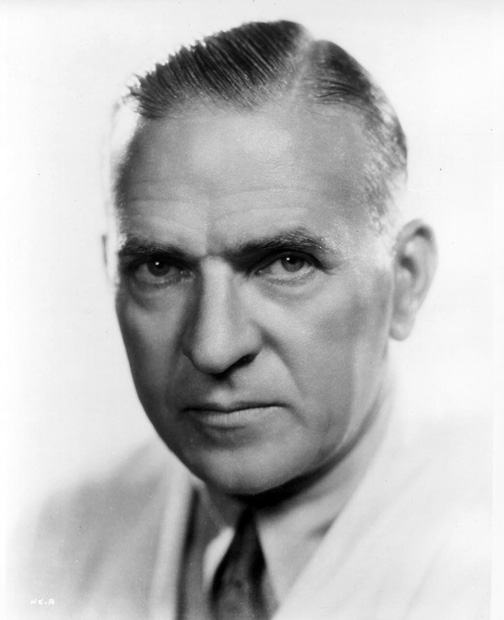
Henry King
actor, director, producer
- Birth name:
- Henry Edmonson King
- Born:
- 1886-01-24, Christiansburg, Virginia, USA
- Died:
- 1982-06-29, Toluca Lake, California, USA
- Professions:
- actor, director, producer
Biography
Henry King slipped away from a Virginia machine shop at fifteen, talked his way onto a rolling Empire Stock Company wagon, and spent the next seventy-odd years proving that diligence can outrun genius. Between 1930 and 1961 he clocked in on the 20th Century-Fox lot almost daily, directing forty features—more pages of literature, history, and music than any other single filmmaker on the payroll. He never chased a signature flourish; he chased the story, polishing scripts the way machinists once polished steel until the shine came through. The result: A Bell for Adano’s dusty Italian square, The Sun Also Rises’ bull-ring hush, and Margie’s soda-fountain glow—all lit with the same plain, patient eye. King’s gift was spotting tomorrow’s star before the mirror did. A retouch pencil gave Ronald Colman his first mustache in The White Sister (1923); the real one soon followed. Samuel Goldwyn scoffed at “another damn cowboy,” but King gambled on Gary Cooper in The Winning of Barbara Worth (1926) and watched the rushes silence the boss. Jean Peters, Tyrone Power, even a reluctant studio head—King lobbied, cajoled, and sometimes bullied until the right face hit the screen. He had once been a face himself: a blackface song-and-dance kid touring with Pearl White, then a one-reel western heavy cranking out shorts in 1913 Philadelphia. By 1914 he was in Balboa leads opposite four-year-old Marie Osborne; by 1915 he was behind the camera. 23 1/2 Hours’ Leave (1919) proved he could make barracks life hilarious; Tol’able David (1921) proved he could make the Blue Ridge ache. Location jaunts through Italy for Romola (1924) and The White Sister taught him that distance and altitude could be characters too—lessons he later surveyed from the cockpit of his own plane after earning a pilot’s license in 1930. Crews dubbed him “The Flying Director,” though he logged as many hours on fairways as on runways. King’s sound-era résumé reads like a studio shelf hurled into a whirlwind: dashing pirates (The Black Swan, 1942), a nun’s vision at Lourdes (The Song of Bernadette, 1943), Chicago burning to the ground (In Old Chicago, 1938), Berlin’s ragtime pulse (Alexander’s Ragtime Band, 1938), a bomber squad cracking under war’s psychological weight (Twelve O’Clock High, 1949), a weary gunfighter unable to outrun his own legend (The Gunfighter, 1950), and Hong Kong’s humid heartbreak (Love Is a Many-Splendored Thing, 1955). Gregory Peck—King’s favorite reactor of quiet storms—anchored three of those, plus The Bravados (1958) and the snow-capped regrets of The Snows of Kilimanjaro (1952), Hemingway’s own pick of the adaptations. Not every reel glowed: Wilson (1944) preached peace to a nation still at war and felt like a sermon without hymns; Beloved Infidel (1959) prettified Fitzgerald’s messy last romance until the spark went out. Still, Oscar voters nominated King twice, and in 1956 the Directors Guild handed him a Lifetime Achievement plaque. Asked late in life why he kept showing up, King laughed: “I’ve had more fun directing pictures than most people have playing games.” The calendar said 1982, but the grin was pure 1915—still chasing the next good story.
Filmography
In the vault (2)
Knowledge Base
Frequently Asked Questions about Henry King
Community
Comments
Log in to comment.