
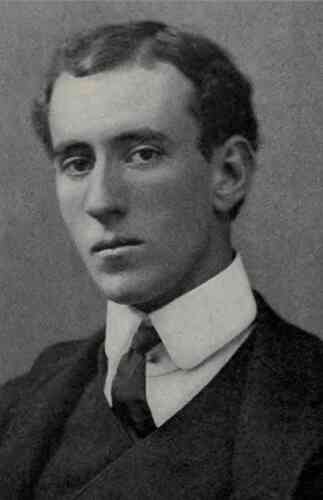
William C. de Mille
director, producer, writer
- Birth name:
- William Churchill De Mille
- Born:
- 1878-07-25, Washington, District of Columbia, USA
- Died:
- 1955-03-05, Playa del Rey, Los Angeles, California, USA
- Professions:
- director, producer, writer
Biography
William Churchill de Mille entered the world on a sultry Carolina afternoon, 25 July 1878, already trailing a family tree heavy with footlights. While baby brother Cecil would one day conquer Babylonian panoramas, W.C. kept the ancestral spelling of the surname and set his sights on Manhattan’s playhouses, the natural arena for the son of Broadway regular Henry C. DeMille and Beatrice Samuel DeMille, whose own co-authored drama *The Greatest Thing in the World* reached the Great White Way in 1900. A Columbia diploma in hand, he swapped lecture halls for orchestra seats and never looked back. January 30, 1905, found the rookie dramatist watching his maiden effort, *Strongheart*, greet its first audience at the Hudson. Sixty-six shows later the curtain fell, only to rise again that August at the Savoy for an extra month-long sprint. Halloween 1906 brought *The Genius*, a brisk 35-performance farce at the Bijou, but momentum truly gathered when *Classmates*, co-written with Margaret Turnbull, passed the century mark after its August 29, 1907, premiere. Then came the earthquake: *The Warrens of Virginia*, unveiled December 3, 1907, under David Belasco’s gilt-edged banner. The sprawling Civil War romance galloped through 380 performances, shuttled to the Stuyvesant in May 1908, and—almost as an afterthought—introduced Broadway to a curly-haired Canadian named Gladys Smith, soon rechristened Mary Pickford. Cecil shared both stage and by-line that season, co-scripting *The Royal Mounted* for an April 6, 1908, bow that closed 32 shows later. Politics, not petticoats, dominated W.C.’s next coup. *The Woman*, which struck up the Republic Theatre band on September 19, 1911, tunneled into Albany’s smoke-filled rooms, tracking a reformer targeted by his own party. Audiences squirmed as loyalties flipped nightly; villains and heroes swapped masks scene by scene, the play refusing to pick sides across its 247-performance run. Two years elapsed before *A Tragedy of the Future* surfaced for 115 repertory performances at the Princess, and only thirteen bleak nights greeted *After Five* (co-authored with Cecil) at the Fulton in late 1913. Broadway would not hear de Mille’s typewriter clack again for sixteen years. Hollywood lured him west in 1914. At Famous Players-Lasky—soon to morph into mighty Paramount—W.C. slid from titles to scripts to the director’s chair, joining a dynasty that already included Cecil the colossus and their indefatigable mother Beatrice, who would supply a dozen scenarios in 1916-17. On the lot he answered to the affectionate nickname “Pop,” while Cecil strutted as Director-General. Where the younger DeMille brandished spectacle like a saber, W.C. mined quieter ore: domestic stakes, moral crossroads, the tremor beneath ordinary hearts. Critics noticed; *Variety* crowned *Conrad in Quest of His Youth* (1920) “a better picture than has been made by any director…at any time.” The talkie revolution left him cold; he trusted images more than microphones, and the industry’s pivot silenced his enthusiasm. After 1933’s *His Double Life*, co-directed in New York with Arthur Hopkins, he folded his viewfinder. A 1929 one-act, *Poor Old Jim*, flickered briefly in a Little Theatre Tournament, and a 1936 staging of Henry Myers’s *Hallowe’en* vanished after a dozen performances. Meanwhile daughter Agnes was busy reinventing dance on the same strip of Manhattan real estate, her choreography for *Oklahoma!* and *Brigadoon* (Tony, 1947) eclipsing every marquee her father had known. The Depression, sound stages, and shifting tastes had gutted the Broadway he once owned; by the mid-thirties half the palaces glowed with movie posters, not playbills. Yet celluloid royalty still sought his counsel: he served as the second president of the fledgling Academy of Motion Picture Arts and Sciences. William C. de Mille died in California on March 8, 1955, aged seventy-six, leaving behind a legacy etched not in ten commandments or chariot races but in the delicate grammar of human frailty—an art his younger brother never quite mastered and Hollywood never quite forgot.
Filmography
In the vault (1)
Knowledge Base
Frequently Asked Questions about William C. de Mille
Community
Comments
Log in to comment.