Augusta Jane Evans Wilson
writer
- Birth name:
- Augusta Jane Evans
- Born:
- 1835-05-08, Columbus, Georgia, USA
- Died:
- 1909-05-09, Mobile, Alabama, USA
- Professions:
- writer
Biography
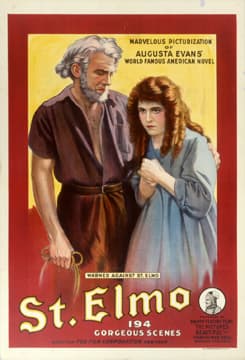
Augusta Jane Evans Wilson’s childhood unfolded on the move: her father’s financial collapse in Georgia sent the family to Alabama, where the red-clay hills became the stage for a girl who would turn the “domestic” novel inside out. While other writers of the genre kept their heroines busy with embroidery and suitors, Augusta stuffed her plots with theology, stump-speech politics, and midnight debates on the soul. Legend insists that at fifteen she inked a clandestine manuscript, wrapped it in Christmas paper, and placed it in her father’s hands on 25 December 1850. Five years later that gift matured into the published novel Inez (1855), launching a career that would produce nine books and make her, at twenty, the youngest professional novelist the South had yet produced. The story—a Texan rebellion melodrama laced with Jesuit villains—flopped, yet it announced a mind unafraid of controversy. By 1859 she struck gold with Beulah, the chronicle of an orphan who loses, seeks, and finally reclaims faith. Copies flew off shelves; schoolgirls read it by candlelight; mothers pressed it into the hands of restless sons. Between its pages Wilson declared women the moral sentinels of the republic, tasked with converting atheist husbands one prayer at a time. Secession cracked the nation, but not Wilson’s resolve. Confederate brass—Beauregard among them—traded letters with the Alabama authoress, seeking counsel as if she were an unofficial cabinet member. When her Northern fiancé refused to swap the Union for the Stars and Bars, she returned the ring, choosing conviction over courtship. In 1863 she weaponized ink and paper: Macaria, or Altars of Sacrifice glorified the Confederate crusade and sold out in Richmond bookshops within weeks. Union generals, unnerved by its power, banned the novel in every occupied town. Wilson upended domestic fiction’s cardinal rule—heroine marries hero—by sending her protagonist to a celibate life of service to the Confederate ideal. Defeat did not silence her. St. Elmo (1866) arrived like a lightning bolt: a brooding, Byronic hero tamed by the love of a steadfast woman and dragged, protesting, into Christian virtue. America devoured it; “St. Elmo” became a brand—for steamboats, cigars, towns, even a color of paint. No earlier Southern novel had colonized popular imagination so thoroughly. Marriage in 1868 to Colonel Lorenzo Madison Wilson, a widower thirty years her senior, shifted her energies. The inkstand stayed, but the torrent slowed. Vashti (1869) and Infelice (1875) explored women who slip the chains of failed marriages and reinvent themselves under new names—surprisingly apolitical for the former firebrand. At the Mercy of Tiberius (1887) and A Specked Bird (1902) followed, their heroines wrestling with hidden pasts and moral reckonings. A slim final tale, originally sketched as a short story, swelled into Devota (1907); it would be her last breath in print. On 9 May 1909 she died at seventy-four, her books still stacked on parlor tables across the South. Popularity held until mid-century, then collapsed under the weight of her unapologetic Lost-Cause nostalgia and rigid social sermons. By 1951, when Perry Fidler’s biography appeared, she was already a curiosity in dusty stacks. Yet ink has a second life. In 1992 Louisiana State University Press resurrected Beulah and Macaria, framed by scholarly forewords from Elizabeth Fox-Genovese and Drew Gilpin Faust. A fresh wave of historians and feminists rediscovered her in the 1990s; Anne Sophie Riepma’s Fire and Fiction (2000) and Rebecca Grant Sexton’s edition of her letters, A Southern Woman of Letters (2002), pulled Augusta Jane Evans Wilson back into conversation—no longer relic, but revelation.