
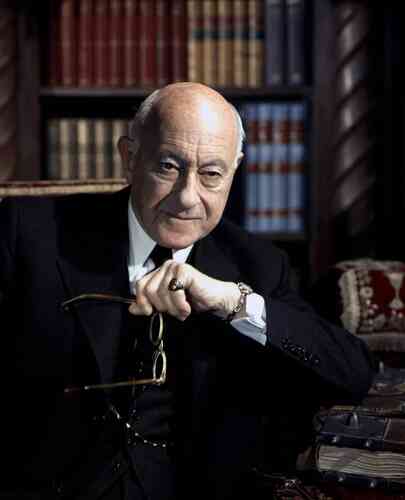
Cecil B. DeMille
director, editor, producer
- Birth name:
- Cecil Blount DeMille
- Born:
- 1881-08-12, Ashfield, Massachusetts, USA
- Died:
- 1959-01-21, Hollywood, Los Angeles, California, USA
- Professions:
- director, editor, producer
Biography
Cecil Blount DeMille was born into footlights: his mother and father wrote plays, traded dialogue like currency, and filled the house with scenery. When Henry died in 1893, twelve-year-old Cecil watched Beatrice convert grief into enterprise—she founded a finishing school and a stock troupe, turning parlors into classrooms and stages. Too young for Cuba and carbines, Cecil studied thespian craft across the street from Madison Square, bowing first to a paying crowd in 1900, then spent a dozen seasons shepherding his mother’s repertory actors from city to city. In the autumn of 1913 he partnered two glove-salesmen-turned-producers, Lasky and Goldfish (later Goldwyn), pooled $25,000, and shipped a single-reel camera to Flagstaff, Arizona. A broken axle rerouted them to the sleepy orange-grove settlement of Hollywood, where they gambled on a six-reel western, The Squaw Man (1914). The gamble stuck: Hollywood became a noun, DeMille became an adjective for spectacle, and feature-length pictures replaced the nickelodeon two-reeler. He bankrolled pageantry instead of contracts, built Babylon for Joan the Woman (1916), parted the Red Sea twice for The Ten Commandments (1923 and again in 1956), staged pagan Rome in The Sign of the Cross (1932), and crowned Christ in The King of Kings (1927). Between swords and sand, he teased Jazz-Age appetites with sex-and-money romps, minting new luminaries—Gloria Swanson among them—while insisting that glamour was lighting, drapery, and nerve, not a face already famous. Seventy directorial credits later, he moved to the microphone, commanding Lux Radio Theatre from 1936 to 1945, turning living-room consoles into dream palaces. In 1950 he strolled through Sunset Boulevard, playing himself, a living monument to the art he helped invent. Off-screen, Broadway leapt to his niece Agnes’s choreography in Oklahoma! (1955), proof that the family flair for spectacle kept rewiring itself. From schoolgirl stages to VistaVision chariots, Cecil B. DeMille never stopped insisting that if audiences could imagine it, he could build it bigger—and make them believe.
Filmography
Written (2)
Knowledge Base
Frequently Asked Questions about Cecil B. DeMille
Community
Comments
Log in to comment.