
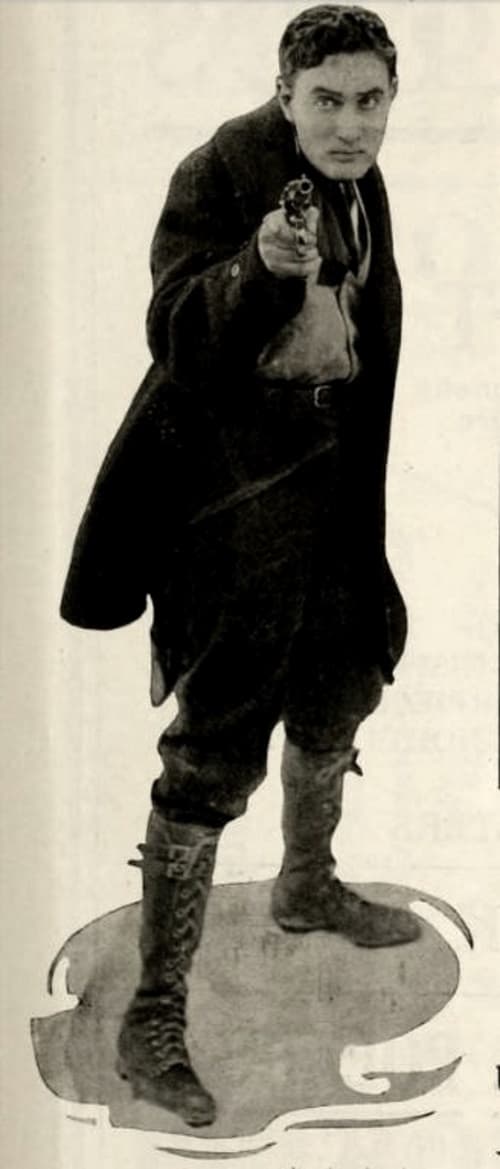
Edgar Selwyn
director, producer, writer
- Birth name:
- Edgar Simon
- Born:
- 1875-10-20, Cincinnati, Ohio, USA
- Died:
- 1944-02-13, Los Angeles, California, USA
- Professions:
- director, producer, writer
Biography
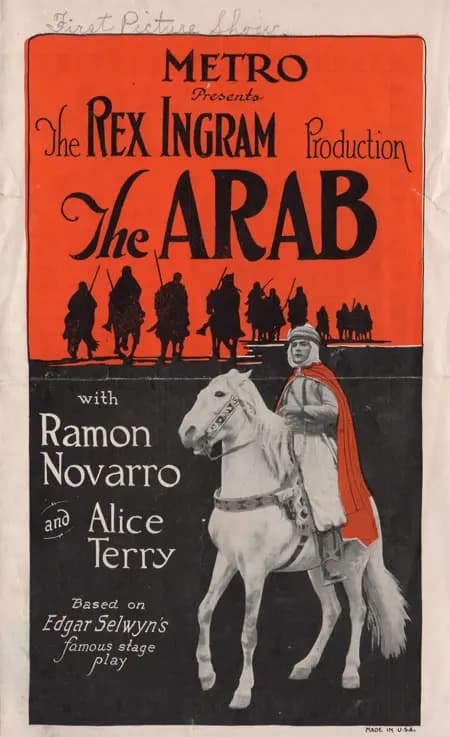
October 20, 1875: a Cincinnati tenement greets Edgar Simon, the name soon to be traded for Edgar Selwyn. After a boyhood detour through Toronto, the orphan finds himself adrift in Selma, Alabama, then seventeen and alone in Chicago, pockets as empty as the winter sky. One frozen night he vaults off a bridge to drown himself; the river answers with a slab of ice that merely bruises his ribs. Before he can limp away, a hold-up artist presses a revolver to his spine. “Money or life?” “Take the life,” Selwyn shrugs. Bewildered, the robber pockets the pistol, walks him to a pawnshop, and the two strangers split the proceeds over coffee—material good enough to fuel Selwyn’s 1915 hit Rolling Stones. By the 1890s he is hawking neckties for nine dollars a week in New York, then ushering at the Herald Square for fifty cents a performance—until he’s sacked for aping star Richard Mansfield. William Gillette rescues him in 1896: eight dollars a week to play a Confederate spy in Secret Service, a schooling in action-over-dialogue that will later shape silent cinema. Selwyn tours with a stock outfit, premieres his own one-act A Night in Havana, and by 1899 is back on the same Herald Square boards, now as actor in The King’s Musketeers. London calls in 1902 with Arizona; Broadway keeps him busy in Sherlock Holmes opposite Gillette and opposite Ethel Barrymore in Sunday and A Doll’s House. Popularity, a 1906 Cohan clunker, nudges him toward the typewriter. His first script, It’s All Your Fault, limps through 32 showings in 1908, but Pierre of the Plains (from Gilbert Parker’s novel) gallops for the same number the next month and lands on-screen in 1914 with Selwyn starring and producing. The Country Boy (1910) chalks up 143 performances; The Arab (1911) makes him playwright-star and, in 1915, becomes a DeMille picture. The Wall Street Girl (1912) introduces a new collaborator—his wife, book-writer Margaret Mayo—while Within the Law, also produced in 1912, mints a pre-tax million. Kid brother Arch arrives, pockets stuffed with borrowed coins for a Coney Island weighing-machine concession; after a blanket-wrapped windfall and a trash-can recovery, the Selwyn boys—joined by Crosby Gaige—incorporate Selwyn & Company in 1914. They raise the 900-seat Selwyn Theatre on 42nd Street in 1918 (financed by gambler-fixer Arnold Rothstein); eleven days after the Armistice its second bill, Edgar’s The Crowded Hour, salutes the troops. Next door rises the Times Square Theater (1920); its twin, the Apollo, converted from a failing movie house, warms up with Poppy in 1923 and then hosts George White’s Scandals and their famously under-dressed lineups until burlesque and grindhouse days close in. Between play-doctoring and real-estate, Selwyn keeps a hand in film. All Star Feature Films (1912) merges with Sam Goldfish’s outfit in December 1916 to birth Goldwyn Pictures and its reclining-lion seal. Goldfish likes the trademark so much he re-christens himself Goldwyn; Edgar and Arch pocket stock, watch the studio fold into Metro-Goldwyn in 1924, and leave Leo to roar for MGM. Talkies summon Selwyn west in 1929. Directing The Sin of Madelon Claudet he coaxes Helen Hayes to an Oscar (1931). Divorced from Mayo, he marries Ruth Wilcox—thirty years younger and sister to Loew’s kingpin Nicholas Schenck—then mentors her brother Fred Wilcox toward Lassie Come Home and Forbidden Planet. After Irving Thalberg’s 1932 collapse, Selwyn becomes one of Louis B. Mayer’s “cardinals,” juggling producer duties and story supervision. On the night of February 13, 1944, a cerebral hemorrhage fells him at Los Angeles’ Cedars of Lebanon; he dies Valentine’s Day, age 68. Survivors include Arch, two sisters, and stepson Russell—“Rusty”—Selwyn, heir to a legacy carved from ice, pawn-tickets, and footlights.
Filmography
Written (3)
Knowledge Base