Emerson Hough
writer
- Born:
- 1857-06-28, Newton, Iowa, USA
- Died:
- 1923-04-30, Evanston, Illinois, USA
- Professions:
- writer
Biography
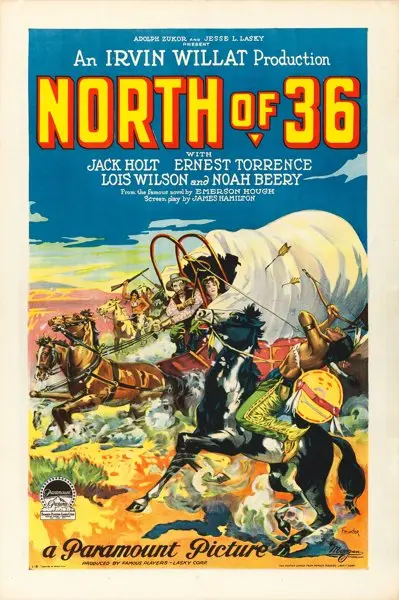
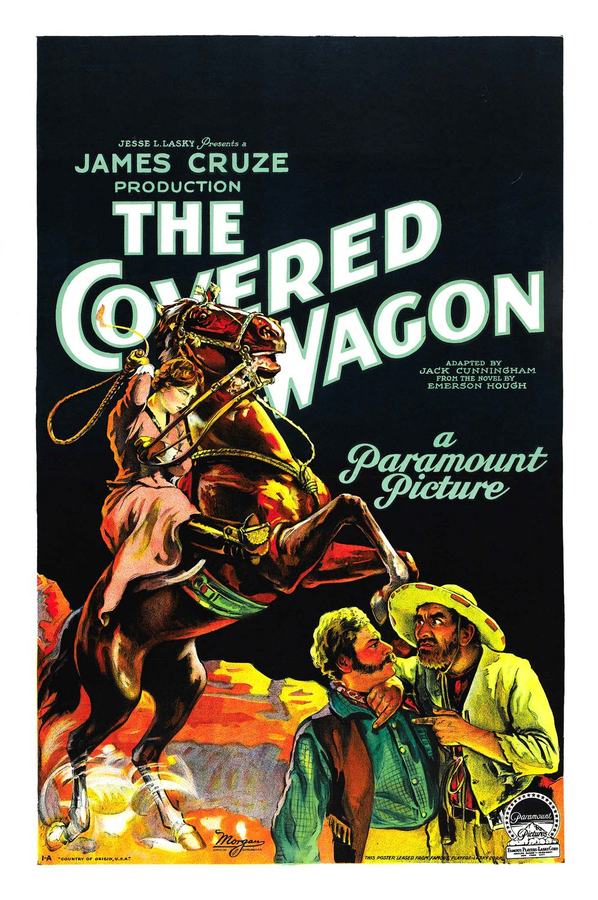
"Emerson Hough, an American novelist whose tales would capture the spirit of the West, began his journey in Newton, Iowa, in 1857. After completing Newton High School in 1875, he pursued a bachelor's degree in philosophy from the University of Iowa, graduating in 1880. A brief foray into law saw him admitted to the Iowa bar in 1882, a year that also marked his literary debut: an article titled \"Far From the Madding Crowd\" appearing in \"Forest and Stream,\" ironically foreshadowing a life often lived on the frontier.\n\nThe lure of the American West soon drew Hough to White Oaks, New Mexico, where he established a law practice and contributed to the local newspaper, \"The Golden Era.\" An urgent return to Newton eighteen months later, prompted by his mother's illness, provided the quietude for him to pen \"The Story of the Outlaw: A Study of the Western Desperado.\" This seminal work delved into the lives of figures like Pat Garrett and Billy the Kid. The dramatic news of Garrett's killing of Billy in New Mexico spurred Hough's return to the territory, where he forged an unlikely friendship with the legendary lawman.\n\nHough's career then diversified, with stints at various newspapers across the nation. A pivotal moment arrived in 1899 when he accepted the role of western editor for \"Forest and Stream\" magazine. Under the tutelage of its publisher, George Bird Grinnell—a renowned conservationist and founder of the Audubon Society—Hough became a fervent champion of environmental preservation. It was in the winter of 1893 that \"Forest and Stream\" dispatched him on a critical mission: to survey Yellowstone National Park. Accompanied by a guide and a military escort from Fort Yellowstone, Hough's grim findings exposed a devastating truth. The park's iconic buffalo herd, widely believed to number nearly a thousand, had dwindled to barely a hundred, decimated by rampant poaching. His stark revelations galvanized eastern newspapers to champion the anti-poaching cause, culminating in 1894 with the passage of a landmark US Congressional law, largely attributed to Hough's relentless advocacy, which finally criminalized poaching in national parks—an act previously unpunishable. This commitment to safeguarding America's wilderness extended to his lobbying efforts for a comprehensive national park system, a vision that materialized with the establishment of the National Park Service in 1916.\n\nBy 1902, Hough had transitioned fully into fiction, publishing his debut novel, \"The Mississippi Bubble,\" which quickly soared to best-seller status. A prolific stream of Western-themed novels followed, each imbued with a fierce protectiveness for the land and its inhabitants, often railing against the rapacious ambitions of moneyed interests seeking exploitation. This deep-seated conviction extended beyond his prose; in 1916, he actively campaigned for Theodore Roosevelt's presidential bid. When World War I engulfed the globe, Hough served his country as a captain in the US Army's intelligence service.\n\nEmerson Hough passed away in Evanston, Illinois, in 1923, just after witnessing the premiere of \"The Covered Wagon.\" This epic 1923 film, adapted from his own best-selling 1922 novel, stood as a crowning cinematic tribute to a life dedicated to the American West, its stories, and its preservation."
Filmography
Written (10)