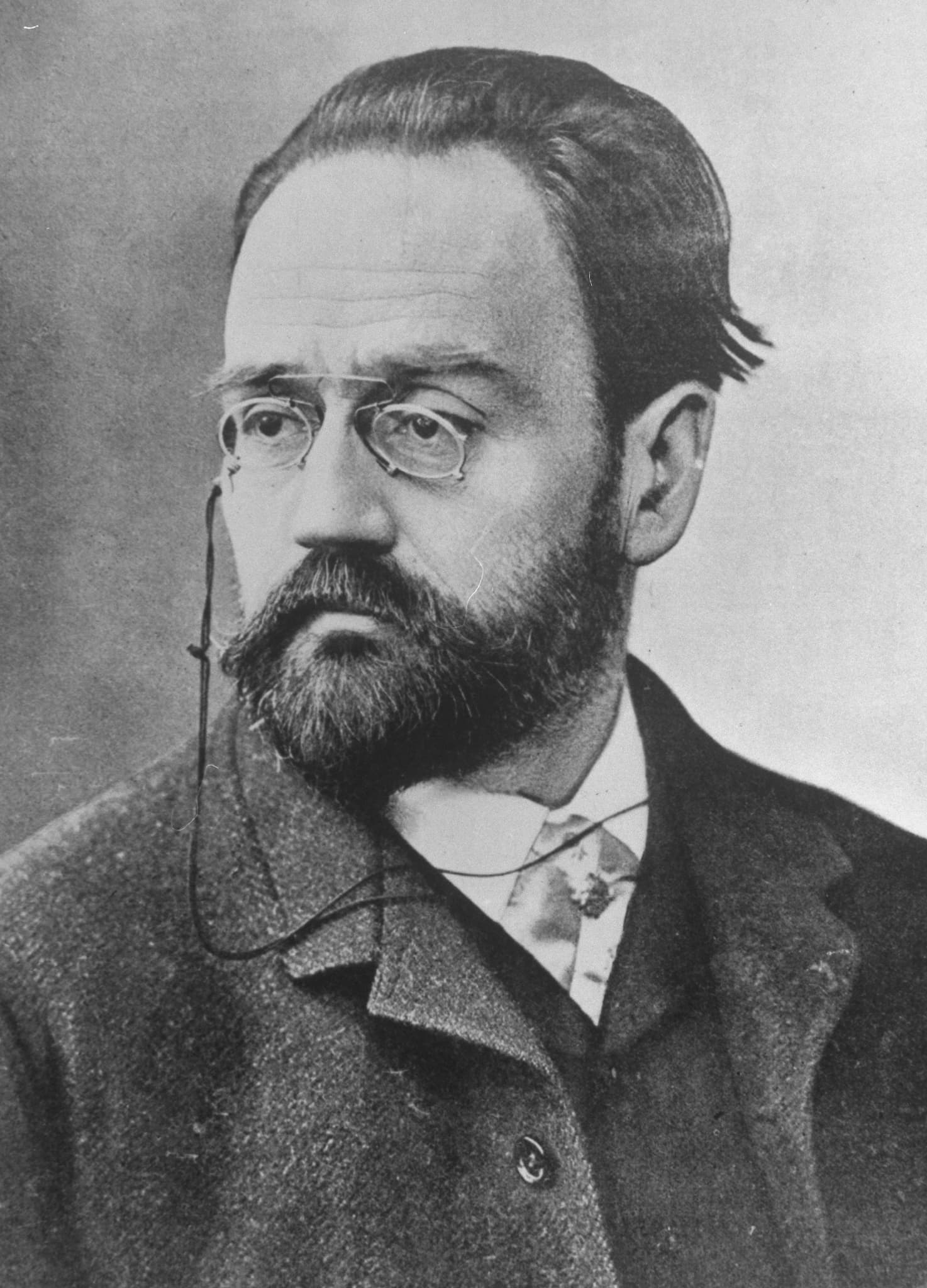
Émile Zola
writer
- Birth name:
- Émile-Édouard-Charles-Antoine Zola
- Born:
- 1840-04-02, Paris, France
- Died:
- 1902-09-28, Paris, France
- Professions:
- writer
Biography
The influential life of Émile Zola began on April 2, 1840, in the vibrant city of Paris, France, the son of an Italian engineer. His formative years included studies at the Collége Bourbon in Provence, where he forged a lasting friendship with his schoolmate, Paul Cezanne. By 1858, Zola had returned to Paris, enrolling at the Lycée Saint-Louis and successfully graduating in 1862. After a period navigating various clerical roles, he found his calling, contributing a literary column to a prominent Parisian newspaper. Zola’s most ambitious literary endeavor was “Les Rougon-Macquart,” a sprawling saga comprising twenty novels. This monumental cycle meticulously chronicled Parisian society during the tumultuous French Second Empire under Napoleon III and in the aftermath of the Franco-Prussian War. He is widely recognized as the progenitor of the Naturalist movement in 19th-century literature. Zola’s distinct clinical approach involved a scrupulous dissection of the lives of ordinary individuals, grounded in the then-contemporary theory of hereditary determinism. He masterfully employed this framework to illustrate the profound interplay between genetic predispositions and environmental factors in shaping human behavior. His most celebrated works, including “L'assommoir” (1877), “Nana” (1880), and “Germinal” (1885), not only showcased his dual concerns for scientific observation and artistic expression but also articulated his fervent stances on social reform. Within the rarefied circles of the Parisian intellectual elite, Zola lived a multifaceted existence, embodying both the gravitas of a statesman and the conviviality of a bon vivant. He divided his time between a serene villa in Medan on the Seine and a residence in the heart of Paris. Politically, he emerged as a fervent disciple of Victor Hugo, staunchly opposing the perceived corruption of Napoleon III’s monarchy. Zola became a vocal advocate for the Third Republic and was duly honored with election to the Legion of Honour. Simultaneously, he held a pivotal position within Paris’s vibrant cultural landscape. He immersed himself in a coterie of realist writers, among them Edmond de Goncourt, Alphonse Daudet, and Ivan Turgenev, alongside his revered literary mentor and intimate friend, Gustave Flaubert. As critical acclaim and financial prosperity flowed from his novels, Zola found himself at the center of his own literary orbit, attracting a new generation of followers like Guy de Maupassant and Paul Alexis. In 1886, Zola unleashed “L'Oevre” (“The Masterpiece”), a novel that sent shockwaves through the Parisian art world. Its central figure, Claude Lantier, was a composite character, drawing elements from several prominent artists, notably Paul Cezanne, Edouard Manet, and Claude Monet. Zola also wove in aspects of himself and his confidant, Gustave Flaubert. However, it was the personality and artistic journey of Paul Cezanne that resonated most profoundly within Lantier, particularly concerning his most intimate personal traits. Zola and Cezanne’s shared childhood and enduring friendship provided the author with a rich tapestry of material. Zola’s narrative unflinchingly brought to light Cezanne’s inherent reticence, his gnawing self-doubt, his artistic anxieties, and his more veiled sexual frustrations. He delved into Cezanne’s “passion for the physical beauty of women, and insane love for nudity desired but never possessed,” alongside his almost misogynistic perception of “satanic female beauty,” which profoundly impacted his sexuality and found sublimation in the very brush-strokes of his canvases. Zola depicted Cezanne’s prolific sketches of nudes and impressionistic bathers as an outlet for the artist’s masculinity, and even suggested his countless depictions of apples served as a sublimation and displacement of his erotic interests. Through Cezanne’s internal conflicts—the intricate interdependence of his sexual and artistic anxieties—Zola sought to illuminate a facet of the eternal conundrum at the heart of creative genesis. Within the novel, Lantier tragically fails to render a perfectly beautiful nude; his wife bears a disfigured child who dies, after which the artist presents a painting of his deceased infant to the Salon before ultimately taking his own life. In reality, Cezanne, a man of profound sensitivity and refinement, interpreted Zola’s fictional portrayal as a deeply personal betrayal. The book irrevocably severed their lifelong friendship, and even the sagacious, conciliatory efforts of Claude Monet and Camille Pisarro proved futile. Zola’s potent literary depiction indelibly shaped how Cezanne was perceived by his peers, critics, and the public, ultimately driving the painter from the Parisian art scene into a self-imposed isolation. February 1898 marked a pivotal moment when Zola courageously jeopardized his entire career by defending Captain Alfred Dreyfus, a Jewish army officer unjustly convicted and imprisoned for treason. In a searing open letter titled “J'Accuse,” addressed to French President François Félix Faure and emblazoned across the front page of the Paris daily “L'Aurore,” Zola accused the French government of rampant anti-Semitism. He vehemently asserted that Dreyfus’s conviction rested on fabricated accusations and forged evidence of espionage, a falsity known to the very court that condemned him, representing a grotesque miscarriage of justice. For publishing “J'Accuse,” Zola was swiftly brought to trial for libel, convicted two weeks later, sentenced to jail, and stripped of his Legion of Honour. He managed to evade imprisonment by fleeing to England. Upon the collapse of the government, he returned to France, resuming his tireless defense of Dreyfus, who languished in the hellish penal colony of Devil’s Island in South America. The Dreyfus affair plunged France into a profound national schism, with Zola aligning himself with the more liberal commercial society against the reactionary forces of the army and the Catholic church. His incendiary open letter proved a major turning point. The case was reopened; Dreyfus was initially acquitted, then controversially convicted again, but ultimately freed and fully exonerated by the French Supreme Court. Zola’s life concluded in a strange and tragic manner on September 29, 1902, in Paris. His death from carbon monoxide poisoning, attributed to a blocked chimney, remained shrouded in an unresolved mystery, with accusations leveled against his enemies, though never proven. He was initially interred in the Cimetiere de Montmartre in Paris. However, on June 4, 1908, in a final testament to his enduring legacy, Émile Zola’s remains were ceremoniously reinterred in the hallowed ground of the Pantheon in Paris, France.