
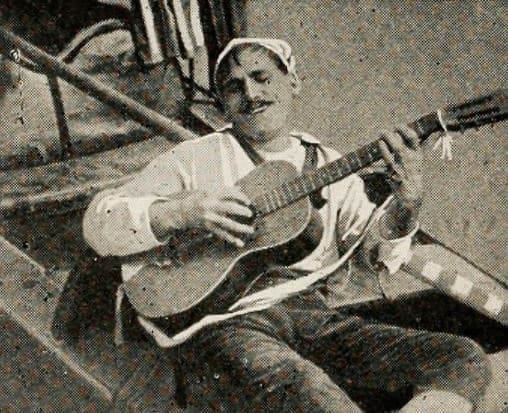
George Beban
actor, director, writer
- Born:
- 1873-12-13, San Francisco, California, USA
- Died:
- 1928-10-05, Los Angeles, California, USA
- Professions:
- actor, director, writer
Biography
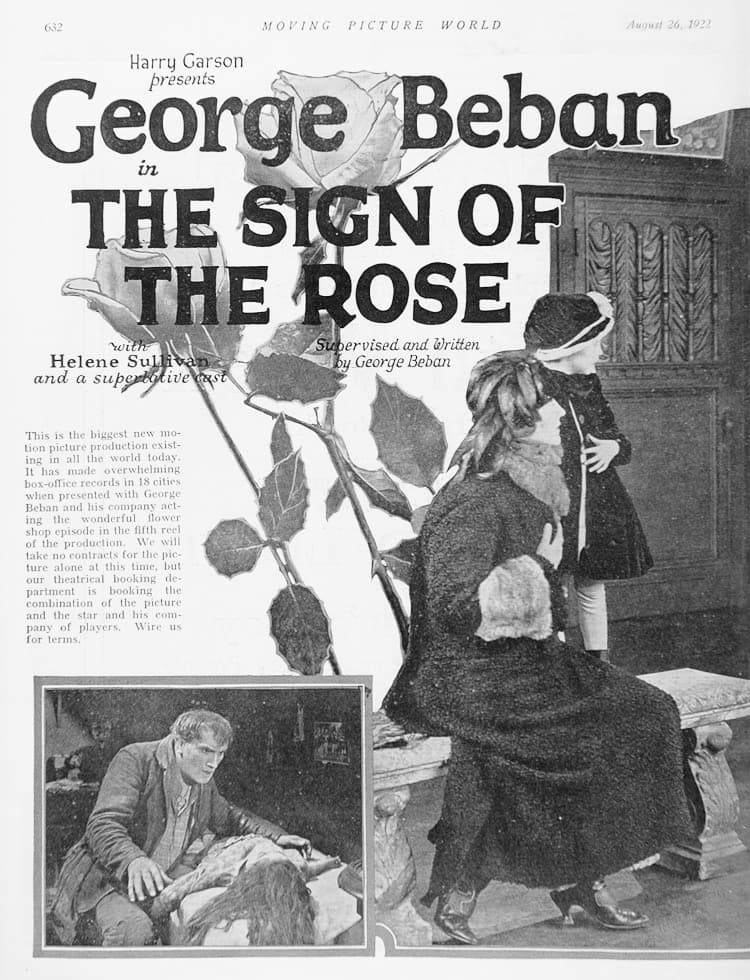
George Beban’s life began on San Francisco’s Telegraph Hill, where the foghorns competed with the operatic voice of a boy who sold newspapers by day and sang for his supper by night. Born in 1873 to a stonecutter from the Adriatic coast and an Irish seamstress, he was the family’s songbird, packing saloons at eight dollars a week while still in knickers. Each time his father dragged him home and forced him to trade arias for arithmetic, George slipped away again, until at fourteen he quit the hill for good, chasing spotlights from coast to coast. He graduated from child-baritone to Broadway foil in Marie Cahill’s 1895 smash *Nancy Brown*, trading San Francisco’s opera houses for the Bijou’s footlights. Vaudeville circuits soon knew him as the rubber-faced “Frenchman” who could twist a mustache and an audience into knots, yet underneath the greasepaint he hoarded observations about the Italian fruit-vendors and fishermen who had schooled him in dialect and decency. Those notes became ammunition when, in 1915, he stepped before a movie camera determined to scrub the “Black Hand” stain off America’s idea of Italians. *The Sign of the Rose* (retitled *The Alien*) and Thomas Ince’s *The Italian* made audiences weep for an immigrant bootblack instead of shudder at a crime boss, and suddenly a vaudeville comic was hailed as a social conscience. Between 1915 and 1926 Beban wrote, directed, financed, and starred in a string of one-reelers and features—most now vanished like nitrate ghosts—portraying dockworkers, organ-grinders, and dreamers who spoke with their eyes because intertitles could never keep pace with hearts that big. Off-screen he bankrolled a bluff-top villa at Playa del Rey, a castle of stucco and red tile where the Pacific served as perpetual orchestra. On August 19, 1928, housewarming guests drank champagne while Tom Mix and William Morrissey argued whether a horse had more future in talkies than a cowboy; fists flew, the police arrived, and Beban laughed until the candles guttered out. Five weeks later a dude-ranch bronc pitched him onto the eastern Sierra hardpan. He lingered five days in a Los Angeles hospital, uremic poison racing the bruises from skull to kidneys, and died October 5, 1928, at fifty-five. Flames at Hollywood Cemetery reduced him to ash, but the voice that once soared over Telegraph Hill survives in the flicker of surviving frames and in the career of fourteen-year-old George Jr.—later Bob White—who carried the family name into 1940s supporting roles. Cinematographer Richard Beban and writer Richard W. Beban still sign their work with the same stubborn artistry that propelled one runaway boy from street-corner songs to the fragile silver of silent film.
Filmography
Written (2)
Knowledge Base
Frequently Asked Questions about George Beban
Community
Comments
Log in to comment.
Loading comments…