J. Stuart Blackton
director, miscellaneous, producer
- Birth name:
- James Stuart Blackton
- Born:
- 1875-01-05, Sheffield, Yorkshire [now South Yorkshire], England, UK
- Died:
- 1941-08-13, Los Angeles, California, USA
- Professions:
- director, miscellaneous, producer
Biography
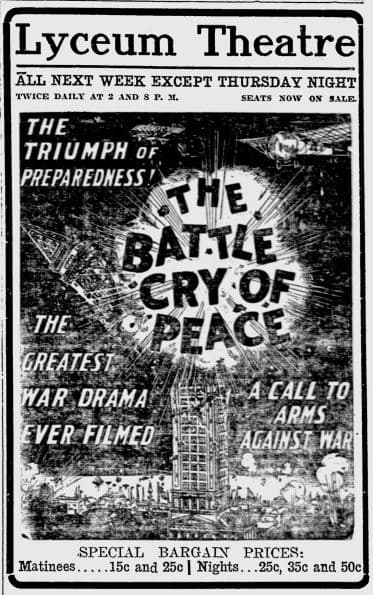
J. Stuart Blackton's life was a testament to the power of innovation and creativity. At just 10 years old, he arrived in the US, where he would soon make a lasting impact on the world of cinema. As a journalist-illustrator for the New York World, Blackton's talents caught the attention of Thomas A. Edison, who was so impressed by his drawings that he suggested they be captured by the Kinetograph camera. This led to the creation of Edison Drawn by 'World' Artist (1896), a short film that sparked Blackton's fascination with the medium. Blackton's passion for film only grew stronger as he partnered with Albert E. Smith and later William T. Rock to form the Vitagraph Company in 1897. The trio converted a projector into a motion-picture camera and began producing films in a makeshift studio on the roof of the Morse Building in New York City. Their early productions, such as The Burglar on the Roof (1898) and Tearing Down the Spanish Flag (1898), showcased Blackton's acting talents and marked the beginning of a new era in filmmaking. As the Spanish-American War raged on, Blackton and his partners produced a series of films that blurred the lines between reality and propaganda. Their coverage of local events, from fires to crimes, demonstrated their ability to adapt to the ever-changing world around them. The Vitagraph Company continued to push boundaries, relocating to the world's first glass-enclosed studios in Flatbush, Brooklyn, where Blackton directed a string of groundbreaking films, including A Gentleman of France (1905) and Raffles, the Amateur Cracksman (1905). Blackton's innovative spirit led him to experiment with single-frame animation, resulting in a slew of animated cartoons between 1906 and 1910, including the beloved Humorous Phases of Funny Faces (1906) and The Haunted Hotel (1907). He also pioneered the use of close shots, a technique that would become a staple of filmmaking. Blackton's emphasis on editing set his films apart from his contemporaries, as seen in his 'Scenes Of True Life' series, which began in 1908. As a true visionary, Blackton's contributions to the film industry extended far beyond his own productions. He paved the way for the development of two- and three-reel comedies, starring in the popular Happy Hooligan series, and introduced American audiences to stage adaptations of Shakespeare plays and historical re-creations. When the demands of Vitagraph became too great, Blackton implemented a system of overseeing multiple directors, a model that would later be adopted by other studios. In 1917, Blackton left Vitagraph to pursue independent projects, including a series of patriotic propaganda films during World War I, such as The Battle Cry of Peace (1915). His later work took him to England, where he directed a number of costume pageants, including experiments in color. After Vitagraph was absorbed by Warner Bros. in 1926, Blackton retired, only to face financial hardship in the 1929 crash. He eventually found work on a government project in California and later as director of production at the Anglo-American Film Company, where he remained until his passing. Throughout his life, Blackton wore many hats, including president of the Vitaphone Company, a manufacturer of record players, and organizer of the Motion Picture Board of Trade. He was also a publisher and editor of Motion Picture Magazine, one of America's first film-fan publications. Blackton's legacy is a testament to his boundless creativity, innovative spirit, and dedication to the art of filmmaking.