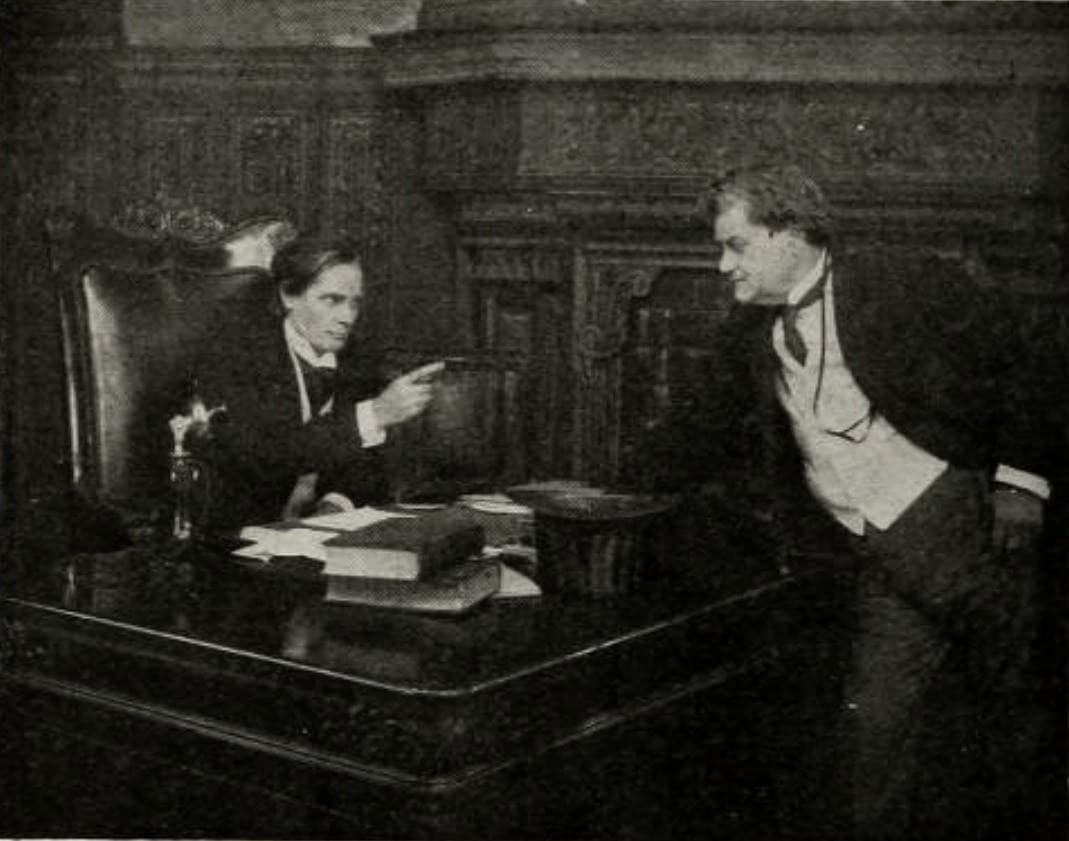
James S. Barcus
writer
- Birth name:
- James Solomon Barcus
- Born:
- 1863-03-18, Sullivan County, Indiana, USA
- Died:
- 1920-05-03, Newark, New Jersey, USA
- Professions:
- writer
Biography
James S. Barcus entered the world on 18 March 1863 in the thickets of Sullivan County, Indiana, where the clang of his blacksmith father Solomon’s hammer rang out like a metronome for hard times. His mother, Martha, carried the blood of Revolutionary rifleman Nathan Hinkle, but even that pedigree couldn’t keep creditors from the door. School was a luxury; whenever the family’s skinny soil demanded extra hands, James traded chalk furrows for plow furrows. At twenty he finally pinned a teaching certificate to the wall of a one-room school near Hymera and spent three winters coaxing farm kids through their ABCs. Restless, he swapped lesson plans for a suitcase of sample books, rattling across the countryside in a buggy that doubled as bedroom and boardroom. Preachers, doctors, farmers and lawyers bought what he sold, and the nickels added up to a train ticket east. He reached Ann Arbor with pockets so light he sometimes had to hock his gold watch—an heirloom—to pay freight on the very volumes he would sell the next morning. While still hustling texts between classes, Barcus married Bettie Belle Tichenor of Vigo County on 3 September 1884. Bettie’s brother William, later a Michigan law graduate, offered living proof that a Hoosier could survive the intellectual winters of the university. James followed suit, graduating in 1891, and publisher R. S. Peale immediately snapped him up. Within months the apprentice became partner; two years later he helped launch Clarke, Barcus & Co. in Manhattan and snatched the coveted rights to “The Century Dictionary and Encyclopedia.” He soon captained two more firms—J. S. Barcus Co. and Globe Publishing—turning ink and paper into small fortunes. Fame arrived in 1895 with “The Science of Selling,” a handbook that converted every doorstep into a potential cash register. Royalties bankrolled Columbia Law School, where Barcus—an unapologetic Republican reared in Democrat-hunting territory—also penned “The Boomerang,” a satirical skewering of William Jennings Bryan’s 1896 campaign oratory. The pamphlet flew through GOP circles like campaign kerosene. By 1899, degree in hand, the 36-year-old publisher sat on the Republican National Committee and roosted atop several of New York’s most selective clubs. Yet the Midwest tugged. In July 1899 he and Bettie purchased a stately Terre Haute mansion, outfitted its parlors with law libraries and Persian rugs, and opened the plushest legal office western Indiana had ever seen. When Congressman George Washington Faris retired, Barcus ran to succeed him, touting balance sheets instead of war records. He lost the convention ballot by a razor-thin three votes, but the itch for office only spread. While shuttling between Indiana and his Manhattan skyscraper offices, he bought Success Magazine, then the Terre Haute Tribune in 1902, and won a seat in the Indiana Senate the same year. Money gushed from “The Messages and Papers of Congress,” a Barcus-produced set so profitable it drew a congressional probe. Re-elected to the state senate, he grabbed a second newspaper, the Terre Haute Gazette, welded it to the Tribune, and christened the hybrid Tribune-Gazette. When the congressional nomination slipped away again in 1905, he resigned his senate seat in September and steamed back to New York, though he kept the Hoosier presses rolling. Book wars back east brought fresh triumphs—“The Classic Library of Famous Literature,” “The Consolidated Library,” and a shelf of lesser collections—while his pen turned to drama. On 13 April 1914 “The Governor’s Boss,” his original play, bowed at Charles Frohman’s Gerrick Theater. A year later the tale flickered across movie screens courtesy of The Governor’s Boss Photoplay Co. Barcus died 3 May 1920 in Newark, New Jersey, aged fifty-seven, leaving behind the novel “The Repentance of Croesus” and a book version of his theatrical hit. From blacksmith’s son to press baron, he had sold dictionaries, newspapers, and dreams—always certain the next page would turn a profit.