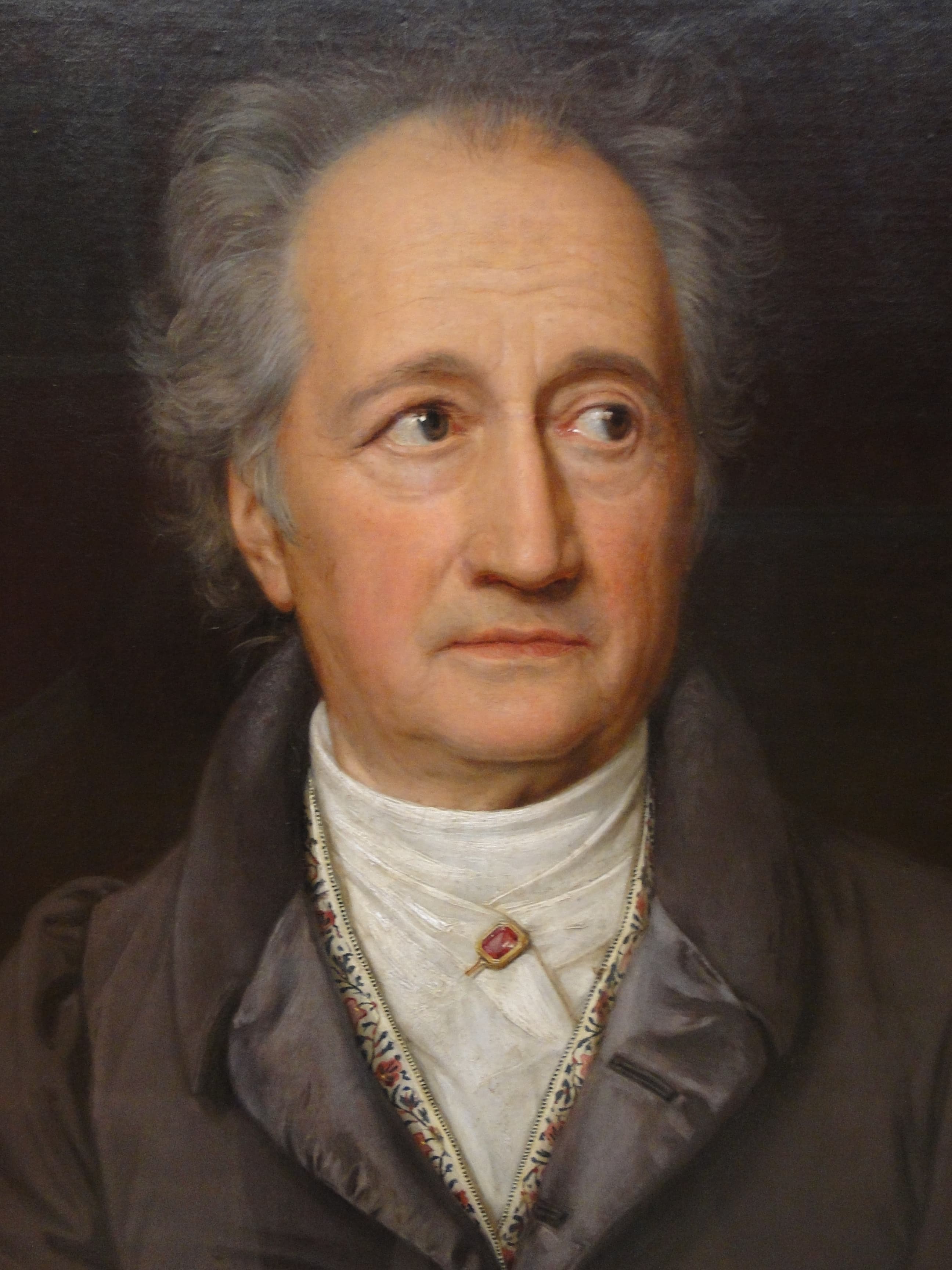
Johann Wolfgang von Goethe
music_department, soundtrack, writer
- Birth name:
- Johann Wolfgang ('von' since 1782) von Goethe
- Born:
- 1749-08-28, Frankfurt am Main, Holy Roman Empire [now Hesse, Germany]
- Died:
- 1832-03-22, Weimar, Saxe-Weimar-Eisenach [now Thuringia], Germany
- Professions:
- music_department, soundtrack, writer
Biography
Johann Wolfgang von Goethe arrived in Frankfurt am Main on 28 August 1749, the first-born of a prosperous lawyer’s household. Privilege cushioned his boyhood, yet by age sixteen he had fled to Leipzig’s lecture halls to satisfy parental expectations of a legal career; verses smuggled between law codes betrayed where his heart really lay. A brush with near-fatal illness cut the university stint short, but after convalescence he crossed to Strasbourg and emerged, parchment in hand, a fully stamped jurist. The ink on his diploma had barely dried when, in 1774, a slim epistolary tale of a lovesick youth in blue coat and yellow waistcoat—“The Sorrows of Young Werther”—set Europe ablaze, catapulting its twenty-five-year-old author into the eye of the nascent Sturm und Drang tempest. Court life beckoned in 1775: Goethe swapped the Rhine’s bustle for the wooded quiet of Weimar, becoming confidant and cultural compass to Duke Carl August. Between council meetings he spun dramas—“Egmont,” “Torquato Tasso”—that kept candle-lit theatres breathless. Restlessness struck again in 1786. Under a moonlit sky he slipped southward incognito, roaming Rome’s ruins and Naples’ shores for two transformative years. Marble gods and Mediterranean light rewired his imagination, and he ferried antiquity’s poise back across the Alps. Home again, he joined forces with Friedrich Schiller to forge Weimar Classicism, a measured counterpoint to earlier Sturm frenzy. Their collaborative spark yielded ballads, epigrams, and, towering above all, “Faust”—a lifetime’s wager between flesh and spirit issued in two thunderclaps: Part I (1808) and the concluding act (1832). Beyond the desk, Goethe trained his gaze on prisms, plants, clouds, and bones, drafting scientific treatises that earned him a seat among Europe’s polymaths. He remained Weimar’s resident sage for more than five decades, dying there on 22 March 1832, the same rooms echoing with the scratch of quills that had shaped literature, science, and an era.