
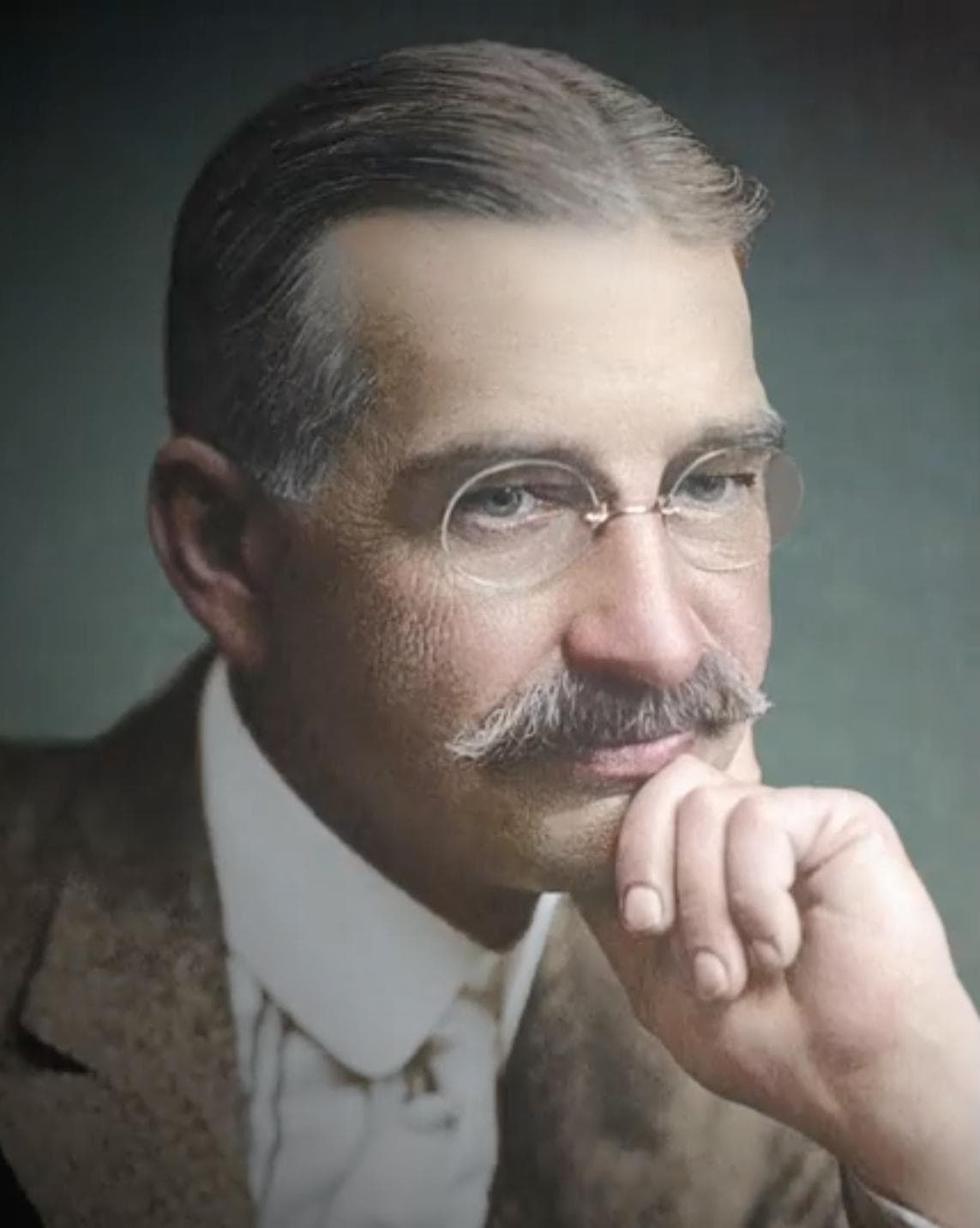
L. Frank Baum
miscellaneous, producer, writer
- Birth name:
- Lyman Frank Baum
- Born:
- 1856-05-15, Chittenango, New York, USA
- Died:
- 1919-05-06, Hollywood, California, USA
- Professions:
- miscellaneous, producer, writer
Biography
L. Frank Baum’s career was a roller‑coaster of daring experiments and occasional triumphs. In 1882 he scored his first theatrical hit with the staging of **“The Maid of Arran,”** a success that would remain his sole notable acting credit. A restless dreamer, he ran a small printing press, produced the amateur paper **The Rose Lawn Home Journal**, and even issued a guide for coin‑ and‑stamp collectors. Yet his business instincts were poor: he tried his hand as a newspaper editor of **The Aberdeen Saturday Pioneer**, opened **Baum’s Bazaar** (which declared bankruptcy on New Year’s Day 1899), and dabbled in motion‑picture production and direction, but each venture fizzled despite his enthusiasm and talent. It was only when he turned to writing that Baum found lasting fame. Over the next two decades he created the fourteen‑book **Oz** series and a host of related fantasies, a body of work that scholars credit with birthing modern fantasy from the Andersen‑style literary fairy tale. To satisfy publishers’ demands for juvenile series, he adopted a parade of pseudonyms; the most successful was **Edith Van Dyne**, a name later taken up by Emma Speed Sampson to continue several of his series. Baum was a gentle family man who never swore or told ribald jokes. He struggled to discipline his four sons, leaving most of the household authority to his wife, Maud. Born with a weak heart, he suffered several minor attacks, one triggered by his brief stint at Peekskill Military Academy at age 14—a experience that later inspired the satirical military jabs scattered throughout the Oz books. In 1914 he founded **The Oz Film Manufacturing Company** and, a year later, directed **The Patchwork Girl of Oz** (J. Farrell MacDonald, 1914). The venture proved financially disastrous; his son Frank Joslyn Baum assumed control, renamed it **Dramatic Feature Films**, and abandoned the Oz brand after it was deemed box‑office poison, even though critics praised the film. Undeterred, Baum kept writing from his sickbed, and his final Oz volume—only his second foray into science fiction—was released posthumously in 1920. His stories attracted legions of readers of all ages and later influenced writers such as Gore Vidal, Ray Bradbury, and Terry Brooks. After his death the Oz saga continued both officially and unofficially. Frank Joslyn sold the film rights to the first Oz book to MGM in 1934; Walt Disney later acquired the remaining rights, though he never secured the original novel, despite his own desire to adapt it. Earlier screen versions had been attempted by Otis Turner, Ray C. Smallwood, Larry Semon, Ethel Meglin, Ted Eshbaugh, and many others. Ironically, Baum moved to Hollywood’s Ozcot district seeking a quiet writing retreat, a decision that birthed the very film company he had imagined. Among his lesser‑known works is **Tamawaca Folks**, a parody of his vacation spot in Macatawa, Michigan, which playfully twists the name of Michigan author John Esten Cooke into John Estes Cooke; Baum himself appears in the novel under an alias. Health problems capped his life at 63, but his prodigious output—though often overlooked today—left an indelible mark on American literature. His legacy even reached television: a 1952 episode of **Death Valley Days** featured L. Frank Baum and Maud as characters.
Filmography
Written (0)
No films in the vault yet.
Knowledge Base
Frequently Asked Questions about L. Frank Baum
Community
Comments
Log in to comment.
Loading comments…