
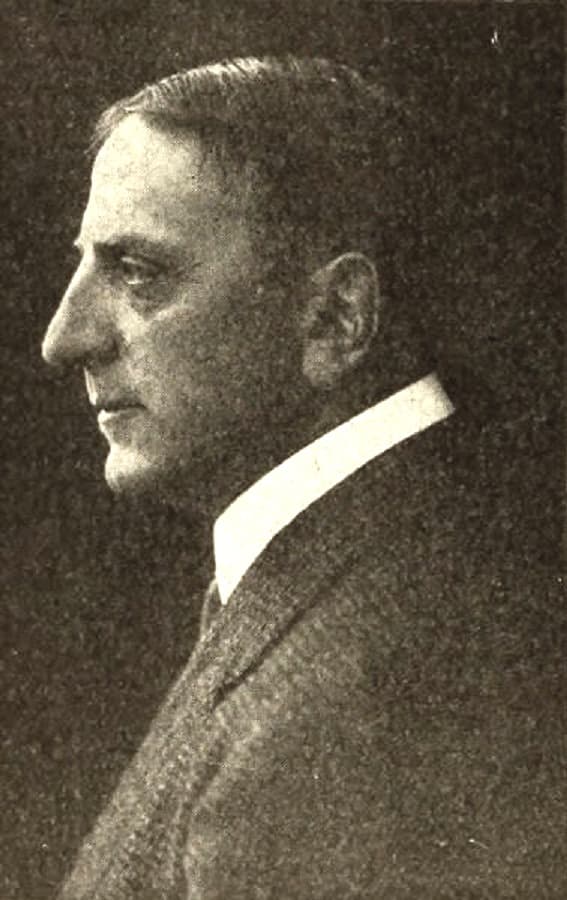
Maurice Tourneur
director, producer, writer
- Birth name:
- Maurice Félix Thomas
- Born:
- 1876-02-02, Paris, France
- Died:
- 1961-08-04, Paris, France
- Professions:
- director, producer, writer
Biography
Belleville, 2 February 1873: a jewelry-dealer’s son named Maurice Thomas enters the world drawing pictures before he can read. By twenty he is sketching magazine covers; by twenty-five he is aiming French artillery across the Algerian desert; by thirty he is carving clay for Rodin and mixing pigments for Puvis de Chavannes. Then the century turns, and Thomas turns with it—walks straight into the footlights, swapping his surname for the more theatrical “Tourneur,” a mask that will never come off. Parisian balconies at 90 francs a month teach him the grammar of greasepaint; a South American tour with the legendary Réjane teaches him distance and longing; marriage to Fernande Petit in 1904 teaches him permanence. Their son Jacques, born the same year, will one day haunt American cinemas with panthers, zombies, and film-noir shadows. 1911: after 400 stage productions, Tourneur trades curtains for celluloid, following friend Émile Chautard into the jittery new world of flicker. Éclair ships him across the Atlantic in 1914 to rebuild their scorched Fort Lee studio. He lands in the mud of New Jersey’s first “Hollywood,” erects glass-walled stages, and begins fashioning orphans and gamins into luminous daydreams. World War I roars while Tourneur refines a quieter revolution: close-ups that think, shadows that breathe, tracking shots that glide like guilty thoughts. At World he marshals future giants—Clarence Brown cutting frames, Josef von Sternberg slicing negatives, Frances Marion inventing words. Critics crown him, along with Griffith and Ince, one of the three kings of the American screen; audiences crown him keeper of their sweetest nightmares. He rails against the star system—“gleaming personalities” that bleach truth from story—yet directs Mary Pickford to two 1917 blockbusters and coaxes stage-proud Elsie Ferguson into four shimmering tragedies. He builds *The Blue Bird*’s dream-caverns and *Prunella*’s moonlit labyrinths only to watch both masterpieces sink under the weight of their own beauty. Literature calls: *Victory*, *Treasure Island*, *The Last of the Mohicans*, *Lorna Doone*—each page turned into flickering cathedral light. 1923: he divorces Fernande, marries actress Louise Lagrange, and pronounces Hollywood a factory where directors are shuffled “like hired hands.” 1926: he walks off *The Mysterious Island*, leaves Irving Thalberg’s memo-cluttered desk, and sails home—into the reproach of a France that remembers he did not fight in the trenches. Berlin greets him with *The Ship of Lost Men* and a fledgling Marlene Dietrich; Jacques cuts the negative. Talkies arrive; wars return. Under the Nazi shadow he shoots *Carnival of Sinners*—a Faustian hand that passes from monk to artist to devil—an allegory of collaboration spliced into horror trimmings. Film stock is rationed; he edits on discarded tail-ends, smuggling dread past censors who demand only escapist smiles. August 1944: Paris liberated, cinemas shuttered for Roosevelt’s death, Tourneur limps into premature retirement after a 1949 car crash claims his leg. He spends his remaining years painting watercolors and translating English detective novels into French, turning other people’s clues into his native tongue. 4 August 1961: the man who once chased moonlight across glass stages dies quietly in the city where he first drew breath. Père-Lachaise receives the body; the Library of Congress preserves *The Poor Little Rich Girl* and *The Last of the Mohicans*; Clarence Brown weeps and calls him “my God.” The rest of us still feel the chill of that enchanted hand, still hear the blue bird singing somewhere just beyond the lens.
Filmography
Written (0)
No films in the vault yet.
Knowledge Base
Frequently Asked Questions about Maurice Tourneur
Community
Comments
Log in to comment.
Loading comments…