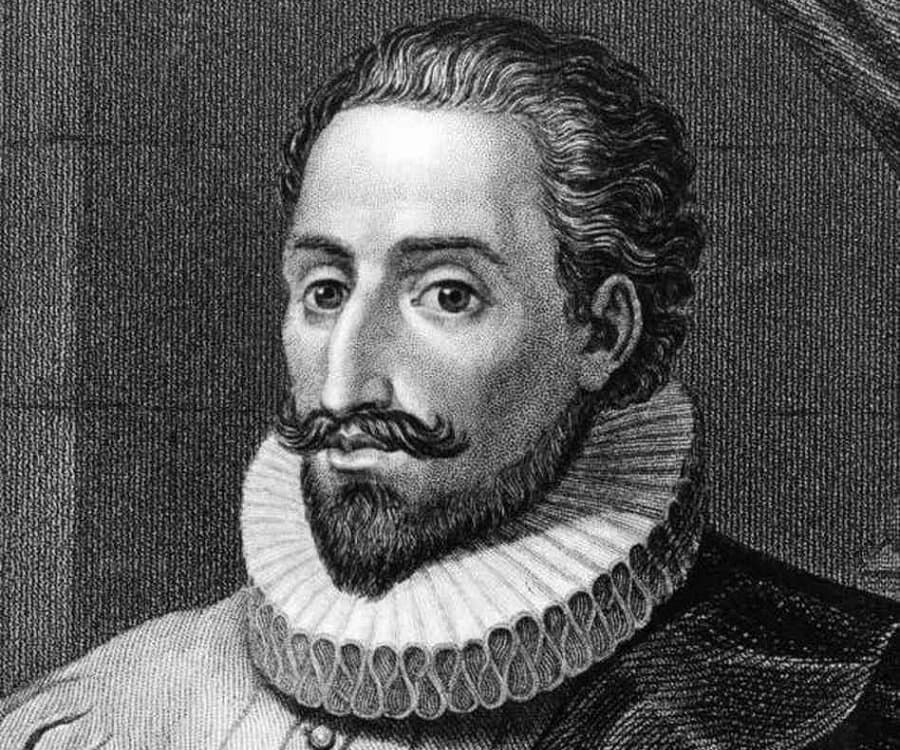
Miguel de Cervantes y Saavedra
writer
- Birth name:
- Miguel de Cervantes Saavedra
- Born:
- 1547-09-29, Alcalá de Henares, Madrid, Spain
- Died:
- 1616-04-23, Madrid, Spain
- Professions:
- writer
Biography
October 9, 1547: a priest sprinkled holy water on an unnamed infant in Alcalá de Henares and, without knowing it, baptized the Spanish language’s most restless ghost. Rodrigo de Cervantes’ wandering household—half-medical, half-migratory—dragged the boy from town to town, letting monks hammer Latin into him while the family luggage kept pace with their father’s shaky career. By 1570 the same restless teenager had talked his way into Cardinal Aquaviva’s Roman retinue, copying letters and learning that silk-brocade corridors could be as slippery as any battlefield. A year later he swapped ink for musket and marched aboard a galley just in time for Lepanto. Feverish, he still begged the captain for the hottest spot on deck; two chest wounds and a shattered left hand later, he kept the wrist bones as souvenirs and the nickname “el manco de Lepanto” for life. Homeward passage in 1575 ended off the Algerian coast when Barbary corsairs scooped up the ship and auctioned its crew. Miguel, still bandaged, spent five Septembers in North-African bagnios, masterminding three break-outs. Each time the guards clamped irons on the others, he stepped forward, invented a taller tale, and took the beating meant for the group. The Bey, half-amused, half-bewildered, kept the self-appointed scapegoat alive—an expensive hobby, since the family’s purse could ransom only his brother Rodrigo. Two Trinitarian friars finally bartered him free in 1580; he re-crossed the strait with nothing but a limp and a notebook full of plots no one yet wanted to read. Back in Spain he tried to please the market: knock-off pastorals, five-act thunderclaps that aped Lope de Vega, love sonnets that forgot to fall in love. The public yawned; creditors howled. An illegitimate daughter, a calamitous 1584 wedding, and a string of humbler offices—tax collector, commissary, quartermaster—kept the wolf from the door until the Inquisition slammed it shut, twice, for “irregularities” that evaporated under inspection but still cost him excommunication and time in Seville’s royal jail. Somewhere between ledgers and lawsuits he learned that imitation was a prison more airtight than any cell. In 1605, aged fifty-seven, he released a sardonic spoof of chivalry whose hidalgo tilts at windmills while a pot-bellied farmer talks common sense into the gale. Readers roared, pirated, demanded more. A forged Part II obliged Cervantes to answer with the real one in 1615; together the volumes forged the modern novel the way gunpowder forged war. Yet royalties trickled, and the author still insisted his verses were the crown jewels—never mind that the world was already cherishing the knight who mistook inns for castles and bruises for badges. Between those triumphs he slipped in the twelve crisp *Exemplary Stories* (1613) and eight earthy interludes (1615), proving he could juggle tragedy, farce, and street-smart wisdom in the same breath. On 23 April 1616, swollen with dropsy, he joked about his imminent departure in the prologue to *Los trabajos de Persiles y Sigismunda* and died later that day. The graveyard swallowed his body whole; centuries later, ground-penetrating radar still hunts for the bones of the man who gave the world its first truly modern novel. Exactly ten days afterward—though calendars split the difference—William Shakespeare followed him into the dark, leaving the planet with twin colossi born and buried on the same symbolic date. Cervantes never lived to hear the word “quixotic” enter every tongue on earth, never knew that his failed poet-self had already become the planet’s most celebrated prose magician.