Paul Gilmore
actor, writer
- Born:
- 1873-07-14, Milwaukee, Wisconsin, USA
- Died:
- 1962-12-29, Palm Springs, Florida, USA
- Professions:
- actor, writer
Biography
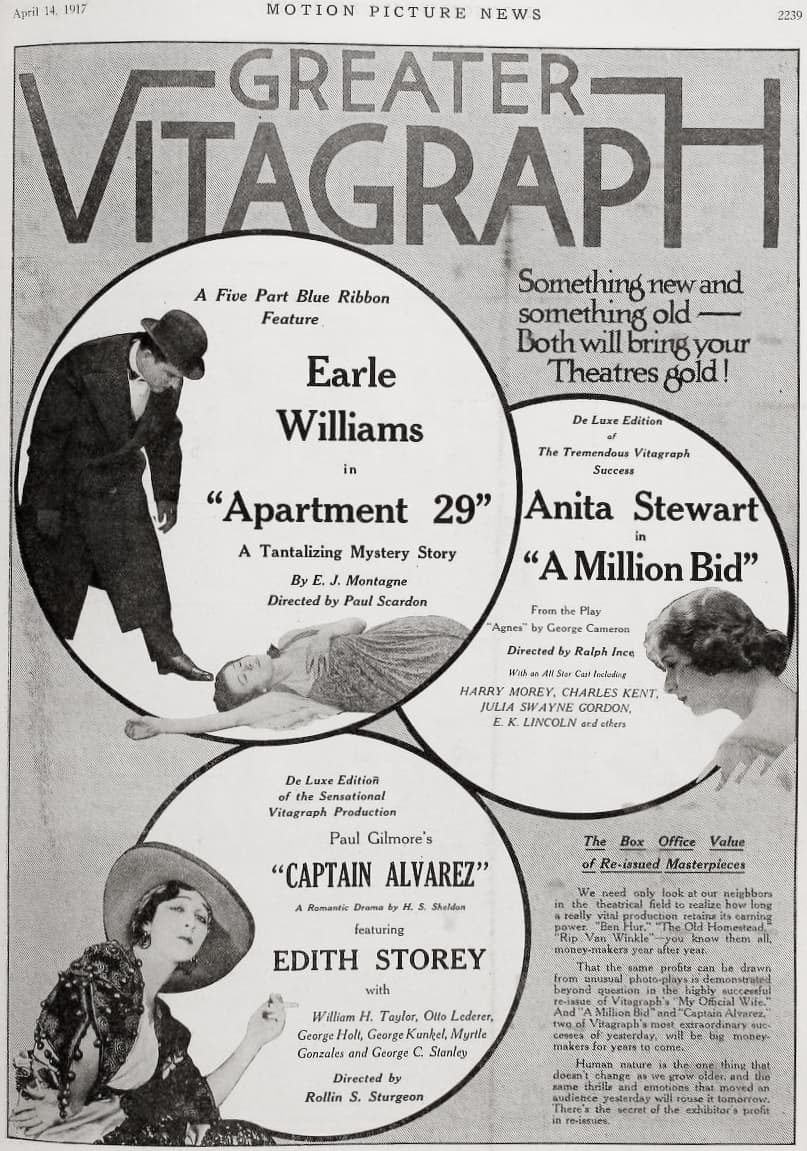
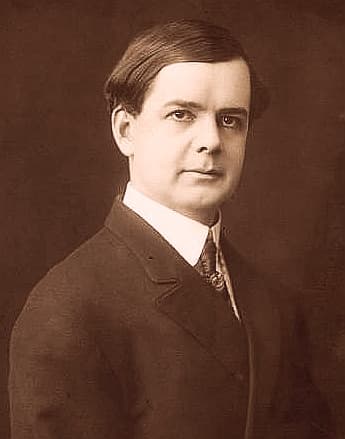
Paul Gilmore (1873-1962) carved a remarkable path through American entertainment, not only as one of the nation's most celebrated stage actors but also as a pioneer in silent film, appearing in over ten productions. Beyond the footlights, he left an indelible mark as the long-time owner and manager of New York City's iconic Cherry Lane Theatre, a venue that nurtured the early careers of future luminaries such as Robert Walker Sr., Jennifer Jones, and Carl Reiner. Born Paul Howard Gilmore on July 14, 1873, in Milwaukee, Wisconsin, his destiny seemed preordained for a legal career by his parents. Yet, as a teenager, the allure of the stage proved irresistible. He discovered his passion performing in amateur theatricals at Milwaukee's Grand Opera House, a prestigious venue owned by his successful publisher father. A pivotal moment arrived in 1891 when theatrical producer Jacob Litt, captivated by Gilmore's talent, offered him a role in his traveling production, "The Ensign." What began as a youthful lark, with Gilmore intending to return to his law studies after a few weeks, blossomed into a lifelong commitment. He never looked back, instead touring extensively with Litt's company in acclaimed plays like "Uncle Tom's Cabin" and "In Old Kentucky." Gilmore's ascent to leading man status was swift. His striking clean-cut features, expressive brown eyes, and a luxuriant shock of dark, wavy hair made him a natural for romantic leads. Coupled with his impeccable taste in attire, he quickly earned the moniker "the youngest, best-dressed leading man on the American stage." By 1896, he had moved on from Litt's Players, further solidifying his reputation under the esteemed Charles Frohman in productions such as "The Wife," "Americans Abroad," and "Sweet Lavender." His pioneering spirit extended to the nascent world of motion pictures. From 1897, Gilmore lent his talents to early film experiments, performing short "character studies" for the American Mutuoscope Company (which evolved into American Mutuoscope and Biograph Company, and eventually the Biograph Company in 1909). He also collaborated with Thomas Alva Edison's company on several brief (under 60-second) cinematic works, including "A Pillow Fight," "The Vanishing Lady," "The Miser," "Herman the Great," and "Caught In the Act." While he later claimed a role in Edison's 1918 feature "The Artist's Model," his name does not appear among the principal actors. Gilmore's personal life was marked by both joy and profound tragedy. On June 17, 1897, he married Regina Cooper, daughter of Dubuque, Iowa's millionaire wagon manufacturer, A.A. Cooper. Just over two years later, on September 9, 1899, Regina gave birth to twins – a boy and a girl – but tragically succumbed to heart failure two days later. Overwhelmed and committed to his touring career, Gilmore entrusted the care of his infant children to his father-in-law, who raised them under the Cooper surname. The fates of his children diverged dramatically. His son, Paul Gilmore Cooper, met a tragic end in 1918, dying after leaping from a train he had illegally boarded. His daughter, Regina, however, would later join her father in New York upon reaching adulthood, adopting the stage name Virginia, and becoming his lifelong partner in theatrical endeavors. Mere months after his wife's death, Gilmore faced another brush with mortality. On December 16, 1899, during a performance of "The Musketeers" in Phoenix, Arizona, a horrifying accident occurred when a stage pistol was mistakenly loaded with live rounds. Gilmore and two other actors were critically wounded; Gilmore sustained six injuries, most severely in his legs. Doctors initially despaired of his survival, and even after he rallied, doubted his return to the stage. Following the removal of a bullet from his knee in March 1900, he embarked on a remarkable recovery. By October of that year, he was back on tour, starring in "Under the Red Robe." Tragically, fellow actor Lewis Monroe died a month after the incident from lockjaw, a complication of a bullet wound to his hand. His resilience paid off, and Gilmore achieved full star status in late 1900 with his electrifying performance in "The Dawn of Freedom" at the Fourteenth Street Theatre in New York City. He tirelessly crisscrossed the country, captivating audiences in scores of plays, often embodying the dashing, swashbuckling lover. Crowds flocked to see him in hits like "Captain Debonnaire," "The Mummy and the Hummingbird," and "The Boys of Company B." His marital life continued with a second marriage to Mary A. Goodwin in 1901, which ended in divorce in January 1909. Later that year, in November, he married actress Ethel Elizabeth Cauley while on tour in Staunton, Virginia. Beyond his thriving stage career and operating his own touring company, Gilmore ventured into feature film production in 1915. By 1920, he had starred in or played significant roles in nine movies, amassing over a quarter of a million dollars in cash and tangible assets, including a substantial 40-acre parcel on Anna Maria Island in Florida. Here, he envisioned an ambitious rival to Hollywood: "Paul Gilmore's Oriental Film City." He and his fourth wife, Pickett Gilmore, served as principal officers in this grand cinematic enterprise. In the spring of 1920, Gilmore and Albert Plummer of Character Pictures began filming the South Seas adventure "Isle of Destiny" on Anna Maria Island. Gilmore poured vast sums of his personal fortune into the production, personally funding the challenging importation of cars, horses, and some 200 actors by boat, as the island lacked a serviceable road or bridge. "Isle of Destiny," a six-reeler, performed creditably upon its New York premiere, and Gilmore laid plans for at least two more films on the island. However, his extensive real estate speculations ultimately faltered, leading to the devastating loss of all his assets and most of his cash. Undeterred, Gilmore returned to New York City, settling in Greenwich Village. There, he transformed a tobacco warehouse into what would become the intimate and enduring Paul Gilmore Cherry Lane Theatre. Divorced from his fourth wife by the 1930s, he was joined by his daughter, Virginia, and together they managed the small venue, often starring in its productions. In 1948, the Gilmores relocated to Duluth, Minnesota, where they established the Gilmore Comedy Theatre within a 40- by 80-foot Quonset hut they constructed along the shores of Lake Superior. The theater opened on July 14, 1949, with a production of "This Thing Called Love." Gilmore continued to operate the theater until 1955, when advancing age and declining health necessitated its sale. Paul Gilmore and his daughter retired to Dubuque, Iowa, residing at 418 Raymond Place. Gilmore passed away on December 29, 1962, at the age of 89, while wintering in Palm Springs, Florida. He was laid to rest in Mt. Olivet Cemetery in Key West, Iowa. His daughter, Regina Cooper Gilmore, lived until September 22, 1981, dying in Dubuque. Her estate, valued at over $1 million, was subsequently divided among relatives, various Catholic charities, and Saint Raphael's Cathedral.