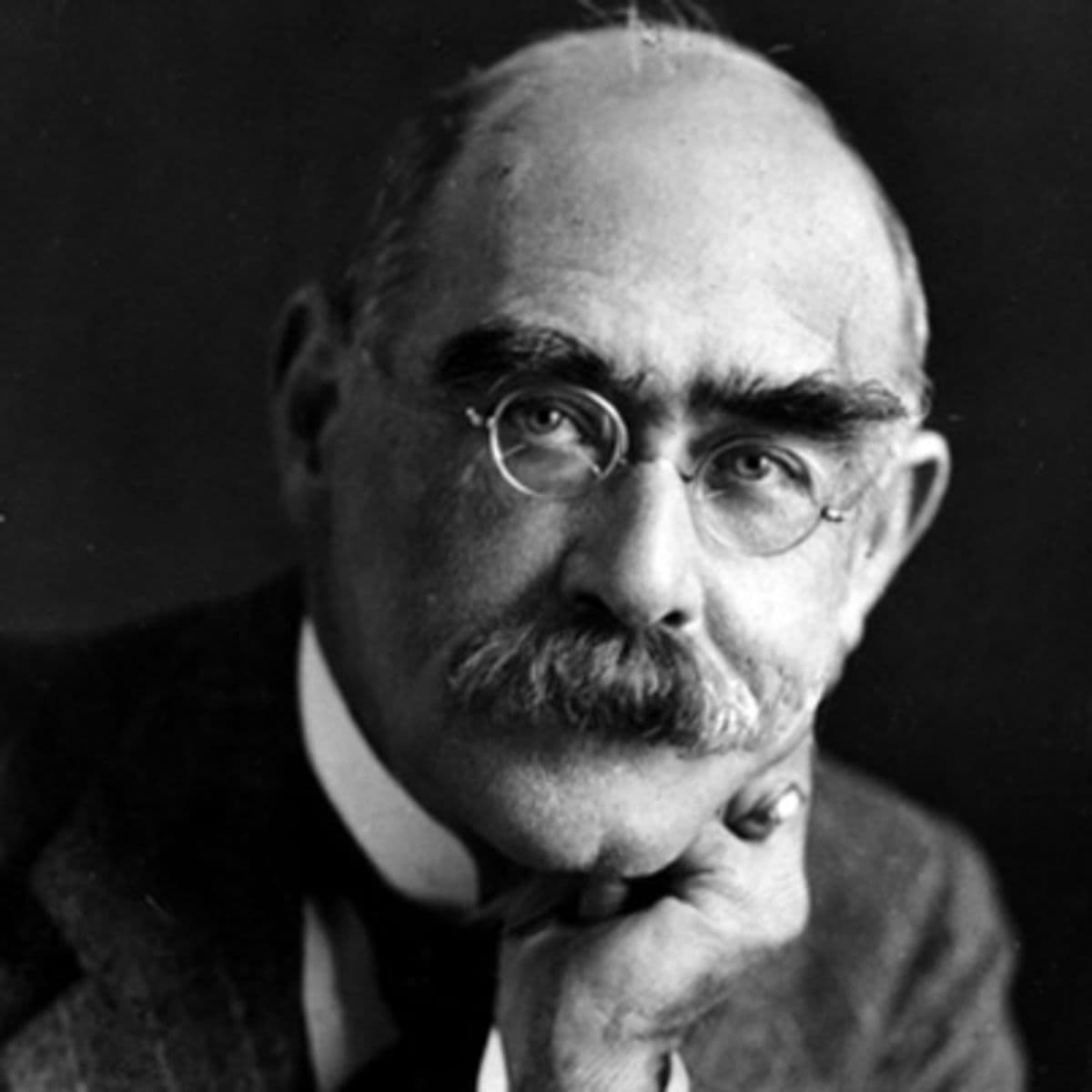
Rudyard Kipling
music_department, production_designer, writer
- Birth name:
- Joseph Rudyard Kipling
- Born:
- 1865-12-30, Bombay, Bombay Presidency, British India
- Died:
- 1936-01-18, London, England, UK
- Professions:
- music_department, production_designer, writer
Biography
Bombay’s sultry air greeted the newborn Rudyard Kipling in 1865; his father, John Lockwood Kipling, oversaw the city’s museum and filled sketchbooks with Indian scenes. While the Raj boomed outside, the boy’s earliest lullabies came in Marathi and Hindustani from the ayahs who rocked him to sleep. At six he was shipped to Southsea, handed to a stranger who starved both his body and his confidence—an exile that branded him for life. Rescue arrived in the shape of Westward Ho!, the windswept Devon boarding school whose boy-wars and corridor conspiracies later marched across the pages of *Stalky & Co.* Still in his teens he sailed back to the subcontinent, landing a reporter’s desk in Lahore. Before he turned twenty-five he had released *Departmental Ditties*—satiric verses that made civil servants laugh through their whiskers—and filled six slim Railway Library paperbacks with more than seventy stories of bazaars, barracks and Himalayan hill stations. When the young scribe reached London in October 1889 the city was already gossiping about the name on those cheap Indian imprints. Love detoured him across the Atlantic: in 1892 he married Caroline Balestier, took a farmhouse in Brattleboro, Vermont, and there, between snowdrifts and timber wolves, wrote the twin *Jungle Books* and the salty sea tale *Captains Courageous*. A move back to England’s green Sussex brought forth *Kim*, the spy-road epic of the Grand Trunk Road, and, for younger ears, the playful origin fables of *Just So Stories*—camel humps, whale throats and all. Though the century turned, the stories never stopped: *A Diversity of Creatures*, *Debits and Credits*, *Limits and Renewals*—collections that many now rank above the early trumpet of Empire. The drums of 1914 stole the author’s only son, and grief hollowed the later prose, lending it an unblinking clarity. Once tarred as the balladeer of imperial certainty, Kipling today emerges as something richer: a ventriloquist of many tongues and castes, able to slip inside the skin of Sikhs, sailors, lama and urchins alike, spinning worlds that still feel startlingly alive.