
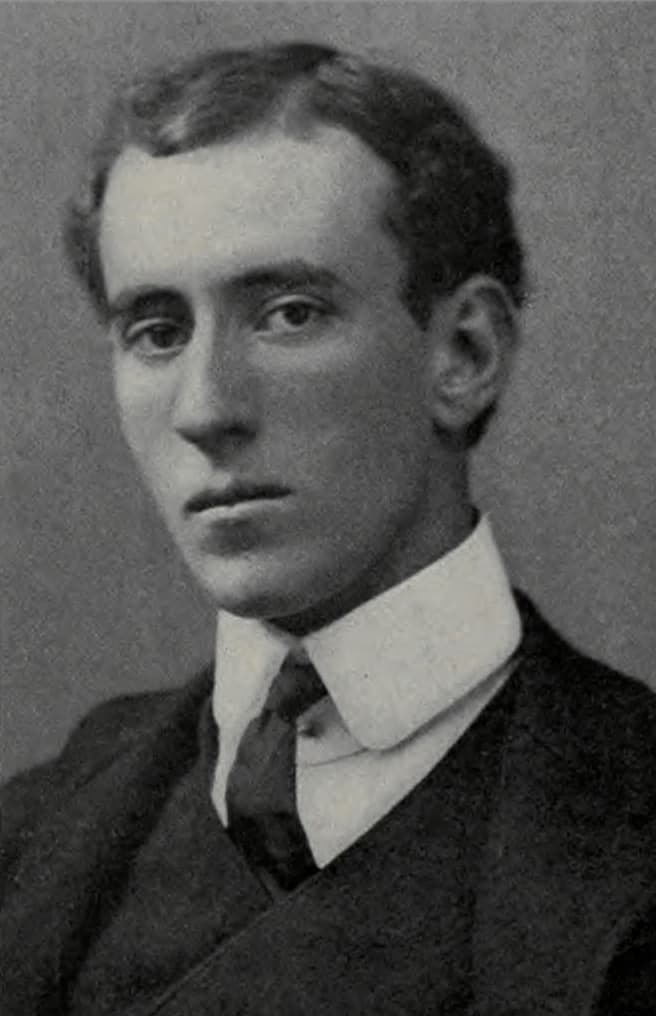
William C. de Mille
director, producer, writer
- Birth name:
- William Churchill De Mille
- Born:
- 1878-07-25, Washington, District of Columbia, USA
- Died:
- 1955-03-05, Playa del Rey, Los Angeles, California, USA
- Professions:
- director, producer, writer
Biography
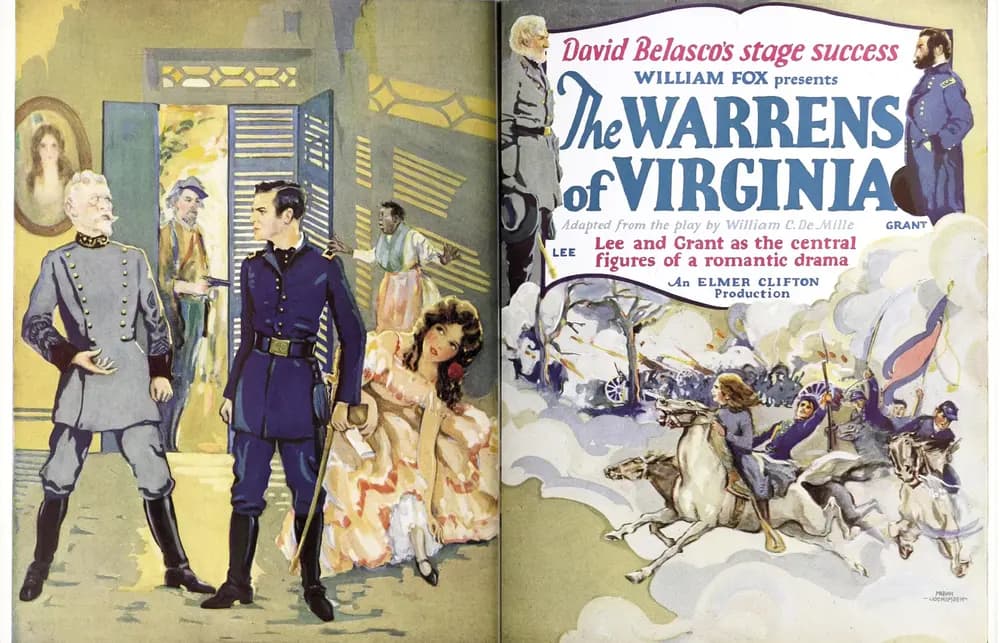
Born William Churchill de Mille in Washington, North Carolina, on July 25, 1878, he inherited a profound theatrical legacy. The elder brother to cinematic titan Cecil B. DeMille (W.C. notably retained the original family spelling), and father to the acclaimed Tony Award-winning choreographer Agnes de Mille, his lineage was steeped in the dramatic arts. His father, Henry C. DeMille, was a prolific playwright with six Broadway productions between 1887 and 1890, while his mother, Beatrice DeMille (née Matilda Beatrice Samuel), co-penned “The Greatest Thing in the World,” which graced Broadway in 1900. Given this rich heritage, it seemed almost predestined that after graduating from Columbia University, W.C. would carve out his own successful career as a Broadway playwright. His debut play, “Strongheart,” premiered on January 30, 1905, at the Hudson Theatre, running for 66 performances before a brief revival at the Savoy Theatre later that year added another 32. The farce “The Genius” followed, playing in repertory for 35 performances at the Bijou Theatre from Halloween Day 1906. Greater success arrived with “Classmates,” a collaboration with Margaret Turnbull, which enjoyed a robust 102-performance run after its Hudson Theatre opening on August 29, 1907. His breakthrough, however, was “The Warrens of Virginia,” which opened at the Belasco Theatre on December 3, 1907. Staged by the legendary Broadway impresario David Belasco, the production famously featured W.C.’s brother Cecil in the cast and marked the Broadway debut of a nascent Canadian star, Mary Pickford. The play proved a sensation, transferring to the Stuyvesant Theatre on May 4, 1908, and accumulating an impressive 380 performances. A subsequent collaboration with his brother, “The Royal Mounted,” debuted at the Garrick Theatre on April 6, 1908, but, co-directed by C.B. and Cyril Scott, closed after a mere 32 performances. Three years later, W.C. struck gold again with “The Woman,” a political thriller that opened at the Republic Theatre on September 19, 1911. This intricate drama explored the machinations of a group of New York representatives and their governor, who, much like the schemers in “Mr. Smith Goes to Washington” (1939), conspire to discredit an outspoken opponent of their favored legislation. Rich with confrontation, negotiation, calumny, and double-dealing, the play was notable for its focus on how individuals shape politics, rather than merely being shaped by it. De Mille masterfully navigated the power dynamics between characters, allowing each voice to resonate without prejudice, constantly challenging the audience's perceptions. In this world, no character remained innocent; heroes and villains proved to be two sides of the same political coin. “The Woman” was a significant hit, playing for 247 performances, though it would be two years before his next work, “A Tragedy of the Future,” appeared in repertory for 115 performances starting May 14, 1913. His next collaboration with C.B., “After Five,” debuted at the Fulton Theatre on October 29, 1913, but proved a swift failure, lasting only 13 performances. He would not return to Broadway for nearly 16 years. W.C. might have remained a dedicated Broadway playwright had fate not led him to join his younger brother in the burgeoning world of Hollywood. He initiated his cinematic career in 1914 at Famous Players-Lasky (later Paramount Pictures), ascending to the role of director within the very corporation his brother co-managed as a part-owner (their mother, Beatrice, also contributed, writing a dozen screenplays for the studio from 1916-1917). Amidst the formidable egos of Adolph Zukor and Jesse Lasky, C.B. cast an immense shadow over the Paramount lot, reigning as the era's most successful director—the Steven Spielberg of the early 20th century. At Famous Players-Lasky-Paramount, W.C. distinguished himself as a director, screenwriter, and producer, earning profound respect within the Hollywood community. Many in Hollywood considered him a director of the highest caliber, often equaling or surpassing his brother’s artistry, though tragically, few of his silent pictures—the medium in which he primarily worked—have endured. “Variety,” the esteemed bible of show business, famously lauded his 1920 adaptation of Leonard Merrick’s comic novel, “Conrad in Quest of His Youth,” proclaiming, “Here is a better picture than has been made by any director . . . at any time.” While C.B. was grandly titled Director-General at Paramount, W.C. was affectionately known as “Pop” by his colleagues. Unlike his brother, who was a maestro of spectacle and mise-en-scène often compelled by the studio board to tackle contemporary themes, W.C. gravitated towards intimate narratives, deeply rooted in universal human values, never cultivating a reputation as a purely visual director. By the late 1920s, as “talkies” began their inexorable displacement of silent films, W.C. expressed disdain for the new medium, deeming it inferior—a common sentiment among many cineastes of the time. Many critics and filmmakers believed the moving picture had reached its artistic zenith in the mid-1920s, lamenting the abandonment of the intricate craft of visual storytelling for what they considered a mere novelty: sound. His final film, “His Double Life” (1933), co-directed with Arthur Hopkins, was shot in New York that same year. W.C. made an attempt to reconnect with the theater, with “Poor Old Jim” playing in repertory as part of the 1929 Little Theatre Tournament, but this marked his last foray as a Broadway playwright. He produced and staged Henry Myers’ comedy “Hallowe’en” in 1936, yet the play endured for only 12 performances at the Vanderbilt Theatre. Broadway was shifting, making way for a new generation, epitomized by his own daughter, Agnes De Mille, who would achieve theatrical immortality with her revolutionary choreography for Richard Rodgers’ and Oscar Hammerstein II’s “Oklahoma!” and later winning the 1947 Tony Award for Best Choreography for their “Brigadoon.” The combined forces of talking pictures and the Great Depression irrevocably altered Broadway’s landscape as a hub of popular entertainment. Where the 1920s boasted over 70 theaters offering a minimum of eight shows weekly, by the mid-1930s, many grand palaces had been repurposed into movie theaters, contributing to 42nd Street’s descent into a district of all-night grindhouses. The advent of realism and social commitment championed by innovative companies like the Group Theater ushered in a theatrical revolution hostile to the old guard of playwrights who had once illuminated Old Broadway. While musicals persisted, the era of crowds bustling from theater to theater, seeking out diverse dramatic offerings, had largely faded. William C. De Mille served as the second president of the Academy of Motion Picture Arts and Sciences. He passed away on March 8, 1955, at the age of 76.
Filmography
Written (1)
Knowledge Base
Frequently Asked Questions about William C. de Mille
Community
Comments
Log in to comment.
Loading comments…