DbcultAccessing Vault...
Film vs Film
Select two cult films to compare side by side.
Love Everlasting Synopsis
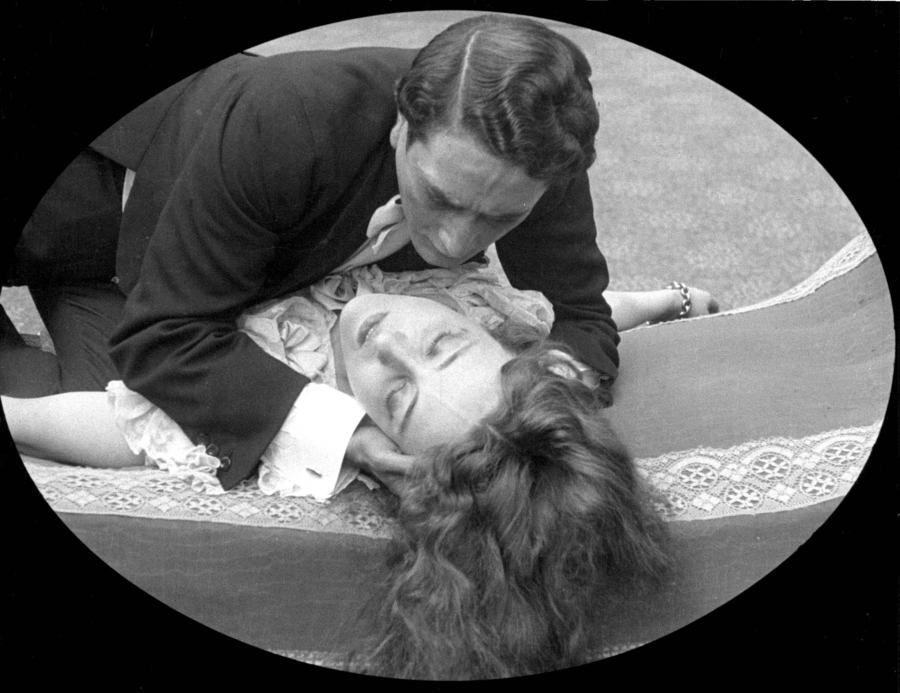
Leslie Swayne, an adventurer, in order to obtain enough money to satisfy the needs of his extravagant life, has been bribed to steal the plans of the fortification from the staff officers of the Grand Duchy of Wallenstein. This undertaking, which at one time would have seemed difficult to him, becomes very easy, due to the friendship between himself and Colonel Julius Holbein, chief of the staff, and father of Elsa, for whom Swayne has shown a great deal of friendship, and in return he has Elsa's sincere love. After a dinner held at the Colonel's, during which the villain Swayne whispered sweet words of love into Elsa's ear, he succeeds in stealing the desired documents, and, protected by the darkness of the night, he escapes. Overcome by the sad reality, the Colonel is in a desperate state of mind. Elsa tries to efface from her mind her terrible suspicions, but in going to the hotel she learns of the sudden departure of Swayne, and her suspicions are confirmed. Colonel Holbein, to whom the precious document had been entrusted, is suspected as a traitor. This man shot himself for being so wrongfully accused. Elsa is asked by the Grand Duchy of Wallenstein to leave the Duchy, and is taken to one of the stations of the domain, where she is abandoned. Possessed of the qualities of a pianist and singer, under the false name of Marjorie Manners, she becomes famous. At her first performance she receives flowers from a large number of admirers, and long applause, but the memory of her father comes to her suddenly and that recollection takes away the joy of her triumph. One evening, while she is eating on the terrace of a hotel surrounded by ardent admirers, Marjorie is surprised at the sight of a young man, sad and pale like herself, who is observing her with a languid look. The pale young man is the Prince Arthur of Wallenstein, the son of the Grand Duke, who has come to the Riviera to recuperate from a long illness, under the name of Count L'Estrange. Surprised by the divine beauty and charm of Marjorie, he is a constant visitor at the theater. One morning they chance to meet and immediately they understand each other and a sense of sympathy seems to envelop their souls. They gaze into each other's eyes and seal their unspoken troth by a lingering kiss. From that day on their love becomes more intense and soon they are married. On board a ship the living apparition of the villain, Swayne, appears before them. Marjorie faints. Arthur calls for help and in the meanwhile Swayne approaches Marjorie, begging for her pardon and love. She repulses him violently, and just at that, instant Arthur returns. Swayne, to avenge himself, advises the Prince's country that the Prince amuses himself with sweet woman while the Duchy is in danger, and the Duke of Wallenstein recalls his son home. While Marjorie and Arthur are together at the hotel the message arrives, and his wife finds out who is her husband. She realizes then that she could not hide her true name any longer, and Colonel Theubner, an old friend of her poor father, tells the Prince the truth. She gets up and departs like a crazy person, and a few days later she returns to the theater which she had left. Arthur, through the Colonel, learns Elsa's history and the reason why she is compelled to go upon the stage, but in spite of this information he continues to look for her. He finds her, pale and trembling. His eyes fixed upon her from his box in the theater. Suddenly Elsa observes his look. She becomes pale, trembles, and tries to control herself, but drops to the floor. The curtain falls; the Prince hurries to her and while he feels her getting cold in his arms, he hears these feeble words, "But my love shall never die." Poor Elsa, after so many troubles and anxieties, had taken poison, as she wished to die for him upon the stage that brought her so much applause.
The Gorgona Synopsis
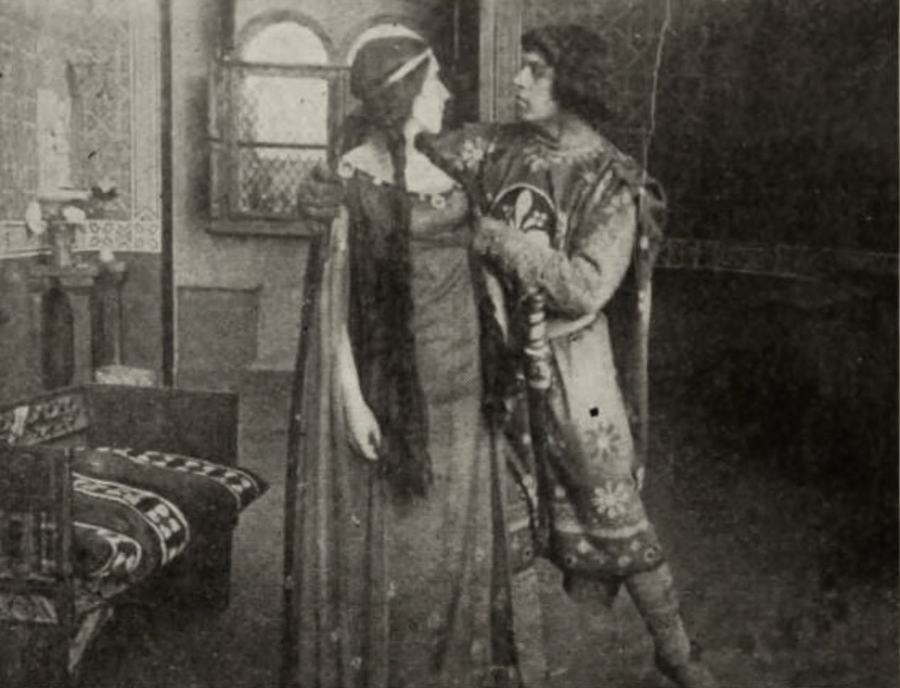
The action of this picture takes place in Pisa at the beginning of the XII century during the culmination of the Italian Sea republics, and commences exactly at the moment when the Pisan fleet starts with the allies to the conquest of the Balearic Islands in order to deliver the twenty thousand Christians from the Turkish yoke. Marcel Figuinaldo and his son, Lamberto, are sent by the City of Florence to command the army which is to guard Pisa while the Republican Navy is fighting in the Mediterranean Sea. But Lamberto, rather than remain inactive outside Pisa, prefers to sail and is eager to have the chief command of the fleet. He asks Henry "the Coscetto," who has been elected commander-in-chief of the navy, to relinquish his power and to pass it over to him. Naturally the "Coscetto" refuses to do so, and then Lamberto threatens him to take revenge by trying to make the Gorgona, Henry's betrothed, fall in love with him during Henry's absence. Henry sails, and Lamberto keeps his word. One night he leaves the barracks and enters Gorgona's home while the girl is alone, praying and keeping the sacred lamp burning. A charming love scene takes place between the two. Meanwhile Marcel, Lamberto's father, and commander-in-chief, strictly forbids the soldiers to leave the barracks and enter the City of Pisa, under pain of death. Lamberto having been discovered, is therefore, by his own father, sentenced to be beheaded. Before the appointed hour, Lamberto asks his father to let him go once more to bid farewell to Gorgona, under oath to come back before dawn. Marcel consents, but should Lamberto fail to return in time, he himself would have to die in his stead. The girl endeavors to prevent Lamberto from going back to the barracks and thus avoid meeting his fate. The time flies and daybreak finds Lamberto still there. Suddenly the news is spread that the victorious ships are in sight, and Marcel, amid the general excitement, enters Pisa to fetch the Gorgona and to escort her towards the victors, with the votive lamp. He finds the girl weeping and kneeling by Lamberto's body, the young man having killed himself to atone for his broken oath. Outside the crowd was still applauding the Gorgona and the victors.
"Love Everlasting" holds a slight edge in general audience appreciation, but "The Gorgona" offers its own unique cult appeal.
Suggested Watch:
Love Everlasting