DbcultAccessing Vault...
Film vs Film
Select two cult films to compare side by side.
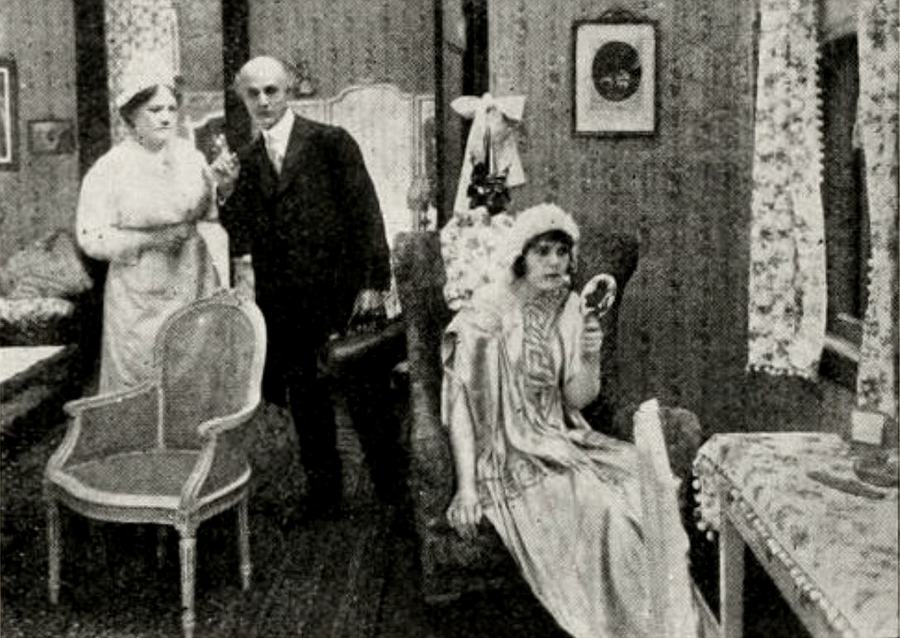
Pamela Congreve Synopsis
Pamela Congreve, the daughter of an old fisherman, is a carefree child of nature, whose heart has been won by Lord Charteris, a treacherous noble, who is the secret leader of a band of smugglers. Charteris tells Pamela's father of the wealth he will win if he joins the smugglers, and the deluded old man finally consents. The smugglers land a cargo on the sea coast, but the suspicions of the revenue officers are aroused and they pursue the smugglers. Lord Charteris and the old fisherman are overtaken, and, to save himself from capture, Charteris tells the coast guards of his rank and claims that he captured his companion, whom he denounces as a smuggler. In spite of Pamela's pleas, Charteris refuses to aid him, and the old man is put to death. Vowing to be revenged upon the treacherous Charteris, Pamela goes out into the world. She obtains employment at a wayside inn, and there once more meets Charteris. She stabs him, and believes that she has killed him, but it is merely a ruse of the wily noble. Pamela joins a troupe of traveling actors, and goes to London, where she soon becomes one of the reigning favorites. Pamela's chief admirer is the Duke of Harlow. He asks her to marry him, but she refuses, and struggles vainly to conceal her deep love for him, feeling that her past makes her unfit to be his wife. The Duke of Harlow's wealth has made Lord and Lady Trevor consider him as a desirable husband for Kitty, their daughter, but that strong-willed person has already selected a future husband who boasts neither wealth nor title. So Kitty and her beloved go to Pamela, whom they know the Duke adores, and beg her to accept him. Then Kitty will not have to wed him. Pamela promises to aid the young couple, and in order to do so, manages to win an invitation to Lord Trevor's ball. At the grand ball at Trevor House the load of guilt is lifted from Pamela's heart for she meets Lord Charteris again, and realizes that he still lives. Charteris is as unscrupulous as ever, and determines to steal the Trevor jewels. An opportunity presents itself when Trevor shows his guests the famous gems, and after they are replaced in the strong box the key falls to the floor, and is found by Charteris. Pamela, however, suspicious of the man she hates, keeps watch during the night and discovers him in the act of stealing the gems, but Charteris adroitly directs the suspicion upon Pamela, playing upon the prejudice of the others for "the stage-woman." Harlow takes her part. The Duke threatens to prove Charteris to be a scoundrel, and the latter, fearing that he will be exposed, plans to silence Harlow forever. The cowardly plot does not succeed, for word is brought to Pamela and she reaches Harlow in time to warn him. Charteris later succeeds in kidnapping Pamela, but they are overtaken by Harlow, and Charteris is killed, while Pamela, now convinced that her "past" is buried, promises to marry the man she loves.
Milestones of Life Synopsis
A man and a woman were friends in childhood, and in their "mud-pie days" planned how he would be a knight, while she would be the lady fair, who would give him her glove as a token for slaying a dragon. But the "serpent" entered their miniature garden of Eden. She was a grown-up young woman, and the future "knight" was only a small boy. She was amused at the way he followed her around and convulsed when he formally proposed by means of a grimy note written with a blunt lead pencil on a torn scrap of paper. It was so ridiculous that she kept the note, and bad many a good laugh over it. Then she married a man older than herself and vanished from the boy's life. He had somber thoughts for a time, but men of 8 do not abandon life for love, and he soon drifted back to his early sweetheart, so that it may be said that in the Springtime of life they were chums and admirers. With "the summertime," when the girl had blossomed into beautiful young womanhood, and the boy was manly and self-confident, their troth was plighted. "The other woman" came to the wedding, and the little bride rather resented the attentions she paid the bridegroom. It has been said that a woman never forgets the men who propose to her, and that the first proposal is remembered longest. So "the other woman" had a kindly place for the "man" in her heart, although she never dreamed of being in love with him. She liked, however, to think that he still remembered the "beautiful princess of his dreams," although the fact is that he had forgotten all about those experiences of his childhood. For a number of years after their wedding, the other woman did not figure in their lives. Then fate brought them to the same city to live, and their paths again crossed. The wife had aged and was gloomy. She thought far too much of her son who had passed away in infancy, ignoring the living to think sadly of the dead. Her husband's love was slowly slipping away from her, being replaced by a spirit of indifference. When the wife thought of the other woman, it was with ill-concealed dislike. She resented the fact that "the other woman" never forgot the childish proposal of the husband, and was jealous where jealousy was unfounded. In the Autumn of life they parted. It was the fault of "the other woman." Her husband was not as attentive as he should have been, and illness brought on a morbid frame of mind. Unhappily she heard her doctor telling her nurse that his patient had but a year of life to live. Then she was confronted with her great temptation. What should she do with that last year? Should she drift along as she had been, still concealing the aversion she felt for her husband, or should she enjoy the fleeting months that were left her? While debating this problem, she met the man, and he told her calmly that he was on his way to the west on a business trip. So she reached a rash decision. She believed that the man still loved her, and she thought he would make her happy. She promptly followed him, boarded the train and astonished him by her confession of love and affection. It took him but a few minutes to disillusion her, but the problem that confronted them was how the news could be kept from the husband, for the woman had left him a letter that would have blasted her name. The man took desperate chances, leaped from the flying train, and by a clever ruse, kept the note from the husband, in fact fairly plucked it out of his hands, and yet never let him suspect it. Left alone on the train, the woman was in an accident, a slight one it is true, but the shock was fatal to her in her enfeebled state, and she passed away. The dead woman's husband never knew, for "The Man" fortunately made him believe that the victim was on her way to see her old nurse when she was stricken. The wife learned of the railroad trip by accident; however, there were hasty words exchanged, and "the man'' and "the wife" separated, as they believed, forever. The winter of life opened sadly and drearily for them. Neither could forget the other, but each was too proud to make advances. The man lived in the city, the wife in the little rural community where they lived in their childhood. The wife, on an errand of mercy, passed a tiny house, and saw that it was in flames. She burst in the door, saw a baby lying helpless on the floor, and bravely tried to rescue it. The smoke overcame her, and she would have perished had it not been that her husband was passing, went in when he heard that a woman and a baby were in peril, and at the risk of his own life, saved the others. Later there were mutual explanations. The wife found that her suspicions were unjustified, and the man agreed that he had been proud and unbending at a time when a few kind words might have saved the situation. So they mutually forgave and forgot, and some years later passed through the shadows into the beyond, rejoicing that reconciliation had come before it was too late.
"Pamela Congreve" holds a slight edge in general audience appreciation, but "Milestones of Life" offers its own unique cult appeal.
Suggested Watch:
Pamela Congreve