Summary
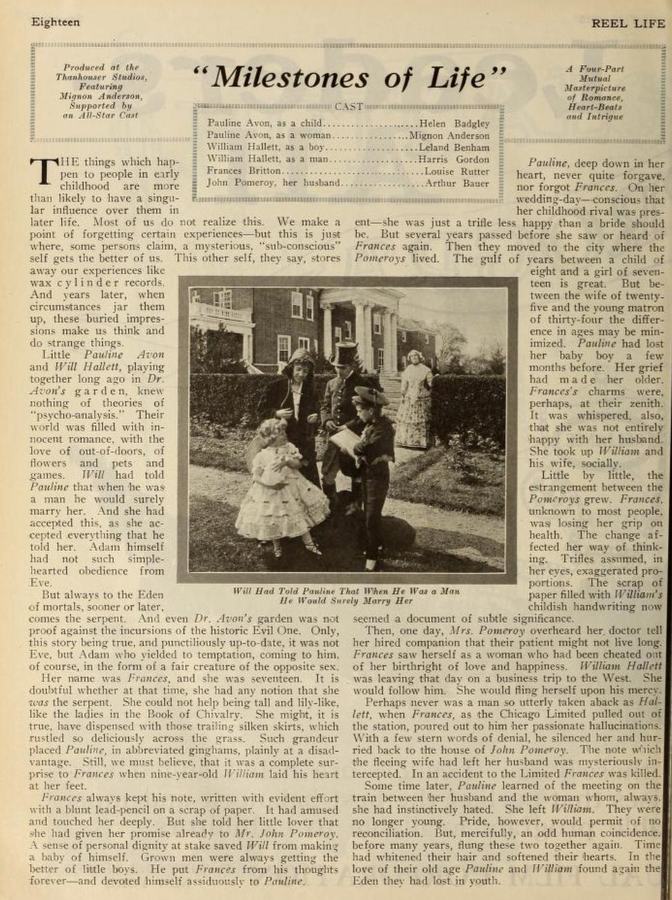
In a narrative tapestry woven across the very fabric of existence, 'Milestones of Life' meticulously charts the intertwined destinies of a man and a woman, commencing from the ephemeral innocence of their 'mud-pie days.' Their childhood reveries, where he was the valiant knight destined to receive a token from his fair lady, are swiftly eclipsed by the harsh realities of burgeoning adolescence. The girl, years his senior, finds amusement in the small boy's earnest, if clumsy, declaration of love—a grimy note penned with a blunt pencil, a relic she keeps for its sheer comedic value. Her subsequent marriage to an older man ushers in their first separation, a poignant foreshadowing of life's capricious nature, though the boy's youthful heart soon finds solace anew.
Years later, in the vibrant 'summertime' of their youth, fate orchestrates their reunion. He, now a self-assured man, and she, a woman of captivating beauty, pledge their troth. Yet, even this blissful union is tinged with the spectral presence of 'the other woman'—the girl from his childhood, now a married acquaintance. Unbeknownst to the groom, who has long forgotten their youthful pact, she harbors a sentimental attachment to the memory of his first, childish proposal, a harmless sentiment that nonetheless stirs a nascent jealousy in his new bride.
As the narrative descends into the 'autumn' of their lives, a somber transformation takes hold. The wife, consumed by an inconsolable grief for their infant son, withdraws into a desolate world of mourning, inadvertently alienating her husband whose love slowly wanes into indifference. Their paths again cross with 'the other woman,' now gravely ill and facing her mortality with a desperate yearning for happiness. Misinterpreting his past kindness for enduring affection, she embarks on a reckless pursuit, confessing her love on a train journey. The man, caught in a moral maelstrom, swiftly disabuses her of her illusions, then embarks on a daring, almost suicidal, feat to retrieve a compromising letter she left for her husband, thus preserving her reputation. Tragically, a minor train accident, coupled with her fragile health, claims her life, leaving the man to orchestrate a compassionate deception to shield her husband from the truth. The wife, discovering the illicit journey, confronts her husband, leading to a bitter separation, seemingly irrevocable.
'The winter of life' finds them isolated, prisoners of their own pride and sorrow, until a serendipitous act of heroism ignites the embers of reconciliation. The wife, in a selfless act of mercy, attempts to save a baby from a burning house, only to be overcome by smoke. Her estranged husband, passing by, bravely risks his life to rescue both her and the infant. This crucible of shared peril and vulnerability shatters their hardened resolve, leading to mutual confessions, forgiveness, and a profound understanding. Their final years are spent in renewed harmony, a testament to love's enduring power, culminating in a peaceful passage into the beyond, united in a reconciliation hard-won but eternally cherished.
Synopsis
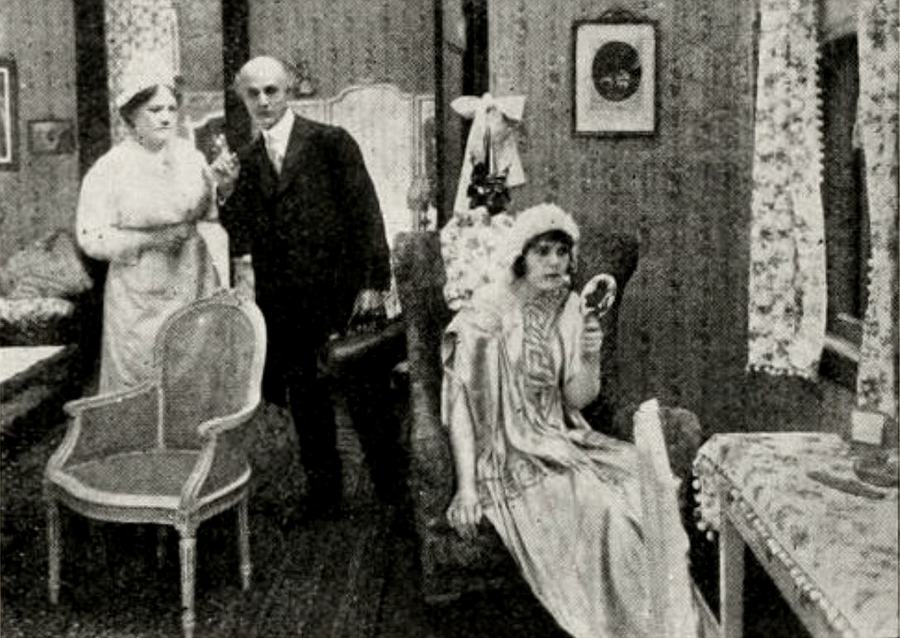
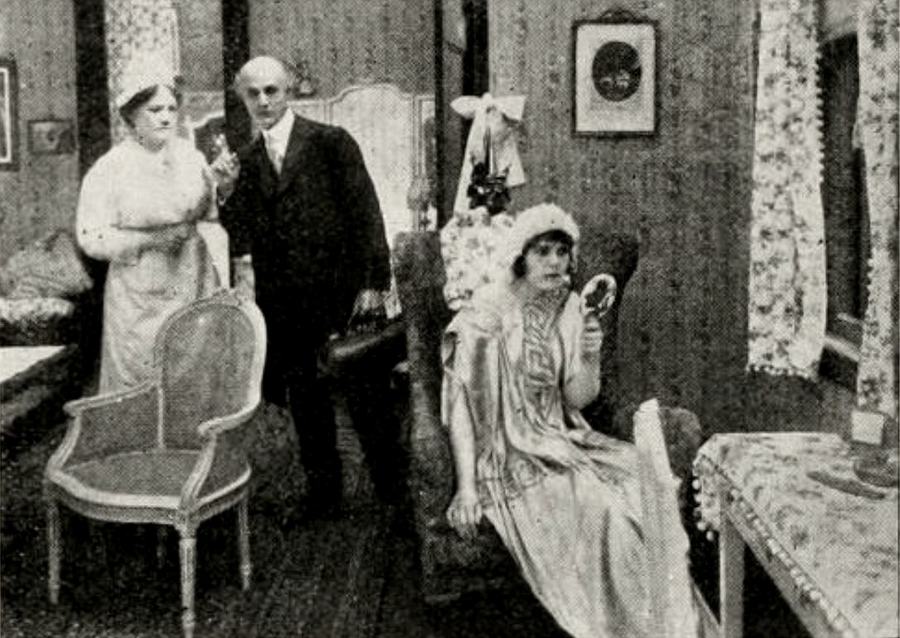
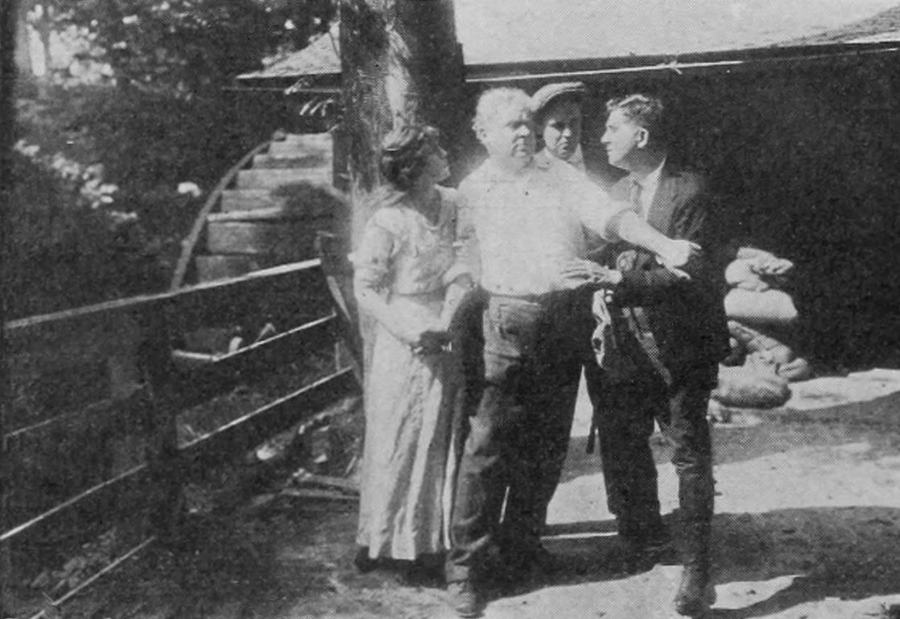
A man and a woman were friends in childhood, and in their "mud-pie days" planned how he would be a knight, while she would be the lady fair, who would give him her glove as a token for slaying a dragon. But the "serpent" entered their miniature garden of Eden. She was a grown-up young woman, and the future "knight" was only a small boy. She was amused at the way he followed her around and convulsed when he formally proposed by means of a grimy note written with a blunt lead pencil on a torn scrap of paper. It was so ridiculous that she kept the note, and bad many a good laugh over it. Then she married a man older than herself and vanished from the boy's life. He had somber thoughts for a time, but men of 8 do not abandon life for love, and he soon drifted back to his early sweetheart, so that it may be said that in the Springtime of life they were chums and admirers. With "the summertime," when the girl had blossomed into beautiful young womanhood, and the boy was manly and self-confident, their troth was plighted. "The other woman" came to the wedding, and the little bride rather resented the attentions she paid the bridegroom. It has been said that a woman never forgets the men who propose to her, and that the first proposal is remembered longest. So "the other woman" had a kindly place for the "man" in her heart, although she never dreamed of being in love with him. She liked, however, to think that he still remembered the "beautiful princess of his dreams," although the fact is that he had forgotten all about those experiences of his childhood. For a number of years after their wedding, the other woman did not figure in their lives. Then fate brought them to the same city to live, and their paths again crossed. The wife had aged and was gloomy. She thought far too much of her son who had passed away in infancy, ignoring the living to think sadly of the dead. Her husband's love was slowly slipping away from her, being replaced by a spirit of indifference. When the wife thought of the other woman, it was with ill-concealed dislike. She resented the fact that "the other woman" never forgot the childish proposal of the husband, and was jealous where jealousy was unfounded. In the Autumn of life they parted. It was the fault of "the other woman." Her husband was not as attentive as he should have been, and illness brought on a morbid frame of mind. Unhappily she heard her doctor telling her nurse that his patient had but a year of life to live. Then she was confronted with her great temptation. What should she do with that last year? Should she drift along as she had been, still concealing the aversion she felt for her husband, or should she enjoy the fleeting months that were left her? While debating this problem, she met the man, and he told her calmly that he was on his way to the west on a business trip. So she reached a rash decision. She believed that the man still loved her, and she thought he would make her happy. She promptly followed him, boarded the train and astonished him by her confession of love and affection. It took him but a few minutes to disillusion her, but the problem that confronted them was how the news could be kept from the husband, for the woman had left him a letter that would have blasted her name. The man took desperate chances, leaped from the flying train, and by a clever ruse, kept the note from the husband, in fact fairly plucked it out of his hands, and yet never let him suspect it. Left alone on the train, the woman was in an accident, a slight one it is true, but the shock was fatal to her in her enfeebled state, and she passed away. The dead woman's husband never knew, for "The Man" fortunately made him believe that the victim was on her way to see her old nurse when she was stricken. The wife learned of the railroad trip by accident; however, there were hasty words exchanged, and "the man'' and "the wife" separated, as they believed, forever. The winter of life opened sadly and drearily for them. Neither could forget the other, but each was too proud to make advances. The man lived in the city, the wife in the little rural community where they lived in their childhood. The wife, on an errand of mercy, passed a tiny house, and saw that it was in flames. She burst in the door, saw a baby lying helpless on the floor, and bravely tried to rescue it. The smoke overcame her, and she would have perished had it not been that her husband was passing, went in when he heard that a woman and a baby were in peril, and at the risk of his own life, saved the others. Later there were mutual explanations. The wife found that her suspicions were unjustified, and the man agreed that he had been proud and unbending at a time when a few kind words might have saved the situation. So they mutually forgave and forgot, and some years later passed through the shadows into the beyond, rejoicing that reconciliation had come before it was too late.
Review Excerpt
"
Step into the sweeping, multi-generational saga that is Milestones of Life (slug: milestones-of-life), a cinematic endeavor that transcends mere storytelling to become a profound meditation on the human condition itself. This isn't just a film; it's a meticulously crafted chronicle of love's intricate dance with fate, pride, and the inexorable march of time. From the innocent pledges of childhood to the hard-won wisdom of old age, the narrative unfolds with an almost epic scope, inviting us..."