
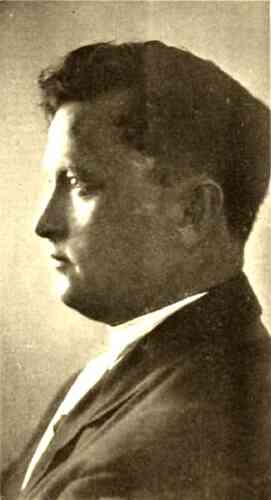
Thomas H. Ince
director, miscellaneous, producer
- Birth name:
- Thomas Harper Ince
- Born:
- 1880-11-16, Newport, Rhode Island, USA
- Died:
- 1924-11-19, Beverly Hills, California, USA
- Professions:
- director, miscellaneous, producer
Biography
Thomas H. Ince, a scion of stage performers, made his theatrical debut at the tender age of six. He honed his craft with various stock companies before gracing Broadway's stage at just fifteen. The erratic nature of vaudeville, however, forced him to diversify, leading him to stints as a lifeguard, promoter, and occasional actor. Though his stage aspirations ultimately faltered, Ince pivoted to the nascent film industry, joining Biograph in 1910. After contributing to a single picture, his talent caught the eye of Carl Laemmle, who brought him aboard Independent Motion Pictures as a director. To escape the suffocating grip of the Motion Pictures Patent Company—a trust intent on monopolizing film production and stifling independents—Ince briefly relocated to Cuba to shoot films, though his output there remained modest. A year later, in 1911, he aligned with the New York Motion Picture Corp. (NYMPC) and journeyed to California, where he would become instrumental in shaping the Western genre. Ince pioneered a meticulous approach, demanding that all scripts be exhaustively planned prior to filming. This innovative methodology allowed him to concurrently shoot multiple scenes with a team of assistant directors, a roster that notably included Francis Ford, the elder brother of the legendary John Ford. The year 1912 saw NYMPC and other independent entities coalesce into what would become Universal Pictures. Around this time, Ince manifested his grand vision, establishing "Inceville" in the Santa Monica Mountains—an entire city of motion picture sets serving as the backdrop for countless outdoor scenes. Late in 1912, he engaged William Desmond Taylor for a role in his 1914 feature, *Counterfeiters*. A remarkably prolific year, 1913, saw Ince churn out over 150 films, predominantly Westerns and Civil War dramas, while also cultivating a stable of future directorial luminaries including Frank Borzage, Fred Niblo, Jack Conway, and Henry King. By 1914, Ince brought William S. Hart into his fold, not just as an actor, but as a talent capable of directing his own pictures. Following the ambitious *The Battle of Gettysburg* (1913), Ince progressively shifted his focus from directing to producing, championing longer features. He revolutionized film production, employing thousands of technicians and implementing an assembly-line methodology to maximize output. In 1915, he joined forces with titans D.W. Griffith and Mack Sennett to establish the Triangle Motion Picture Company, constructing its headquarters on Washington Boulevard in Culver City, a site now occupied by Sony Pictures. The star power of William S. Hart proved a crucial lifeline, ensuring the company's financial stability. Ince's 1916 anti-war epic, *Civilization*, a $100,000 investment, yielded a substantial return of $800,000. Ever on the hunt for fresh talent, Ince secured Olive Thomas, the burgeoning sensation of the Ziegfeld Midnight Frolic, to headline his cinematic ventures. As World War I concluded, Ince severed ties with Triangle and, surprisingly, partnered with his erstwhile rival, Adolph Zukor, to establish Paramount/Artcraft. This new venture led to the construction of another Culver City studio, distinguished by its impressive Mount Vernon-inspired Southern mansion facade—a property later acquired by David O. Selznick. Ince cultivated a popular series of comedies starring Douglas MacLean and Doris May, commencing with the successful *23 1/2 Hours' Leave* (1919). However, the departure of William S. Hart upon the expiration of his contract coincided with Zukor's decision to oust Ince from Paramount/Artcraft. Undeterred, in December 1919, Ince, alongside fellow directors Mack Sennett, Marshall Neilan, Maurice Tourneur, Allan Dwan, and others, formed Associated Producers, an alliance dedicated to independent filmmaking. Roscoe 'Fatty' Arbuckle was considered for the group but ultimately chose not to join. By 1922, Associated Producers merged with First National. A somber note struck on February 1, 1922, when Paramount director William Desmond Taylor was found shot to death in his bungalow. Among the early, though never seriously considered, suspects was Mack Sennett, who provided an alibi stating he had spent that night at Ince's residence. In 1924, while a guest aboard newspaper magnate William Randolph Hearst's yacht, Ince was suddenly overcome by a severe illness. He was swiftly transported by train to Del Mar, where his wife, her son, and a physician met him before accompanying him home, where he passed away. Although the Los Angeles Times allegedly ran the explosive headline "Movie producer Shot on Hearst yacht!", other reputable papers, including The New York Times, attributed his death to heart failure. A particularly sensational narrative surrounding Ince's demise claimed Hearst himself was the shooter, with the intended target being Charles Chaplin, whom Hearst reportedly suspected of an illicit affair with his mistress, actress Marion Davies. This version of events posited that Hearst stumbled upon Davies and Chaplin in bed, discharged several shots, striking Ince instead of Chaplin. Further fueling the speculation, a rumor suggested columnist Louella Parsons was present and witnessed the shooting, though counter-reports place Parsons in New York at that time. The story goes that Hearst, in exchange for Parsons' silence, guaranteed her a lifetime position as the Hollywood reporter for his newspaper empire (despite her already being employed by Hearst as a reporter in 1923). However, Ince's biographers largely dismiss the Hearst conspiracy, positing instead that Ince had been grappling with chronic ulcers and had a history of angina and a prior heart attack, suggesting a natural cause for his sudden passing.
Filmography
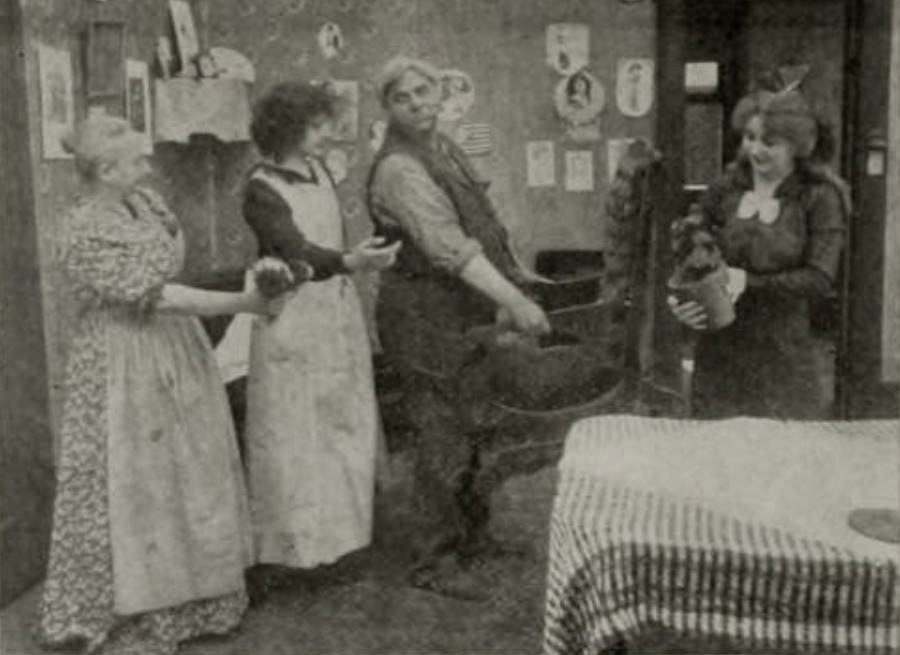
Directed (1)
Knowledge Base
Frequently Asked Questions about Thomas H. Ince
Community
Comments
Log in to comment.