Summary
A cherub-faced child perches on the arthritic knee of her bachelor uncle, coaxing from him the confession he has hoarded like contraband: once upon a gilded yesterday, John Dale—celebrated barrister, citadel of self-sufficiency—stepped aboard a millionaire’s yacht and found his ironclad heart punctured by the arrow Louise Tate never meant to loose. The Tate household—James the patriarch, a wife whose pearls become Judas coins, Louise the moon-bright daughter, Gerald the prodigal son—unravels like silk caught on barbed wire. College cards, a mother’s necklace slipping to the parquet, a pawnbroker’s ticket, a racetrack’s roar: Gerald’s expulsion from Eden is scored by clattering gallops and the metallic slam of a prison gate. Four calendars are torn before he limps back to the city, shadow-blackmailed by old cellmates who dispatch him, masked, to the Charity Ball where chandeliers drip like frozen tears. There, a single gasp from Louise—struck stone-still at the sight of her fugitive brother—sets off a ricochet of misread silhouettes: John spies a stranger’s lips on his betrothed, shatters a crystal glass, and flees across oceans, leaving Louise to fade like vellum in rain. Gerald, reborn in factory soot, re-imprisoned, redeemed by shielding a warden, returns too late to a bedroom where rose-print wallpaper blanches at his sister’s final breath. A deathbed oath—to track John and exhume the truth—propels Gerald, half-ghost, to the very mansion his gang targets; moonlight glints off Louise’s photograph clutched to his chest, and the burglar becomes scapegoat-savior, intercepting a bullet meant for the man whose distrust murdered love. As Gerald’s blood pools beneath John’s trembling revolver, the mosaic clicks: the kiss was fraternal, the silence sisterly, the heartbreak collateral. The tale folds back to the fireside, the child still curled in the arms of a man now carved hollow, whispering the epitaph of every paradise lost: “I broke her heart, pet. After the ball.”
Synopsis
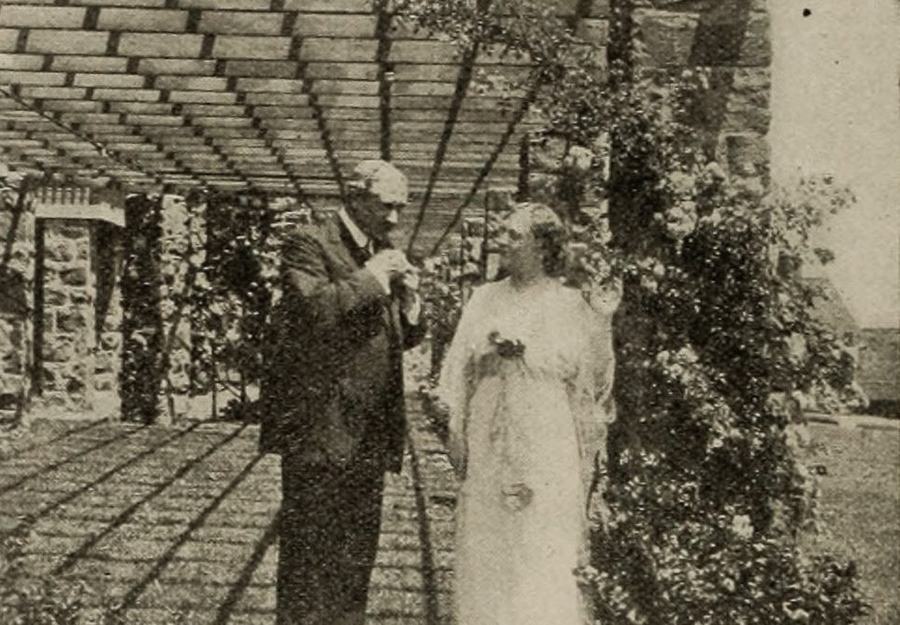
A little maiden / Climbed an old man's knee, / Begged for a story. / Oh, Uncle please. / Why are you single? / Why live alone? / Have you no babies? / Have you no home? The story he tells her follows: John Dale is an eminent bachelor lawyer who has never felt the sting of Cupid's dart. A millionaire friend of John's invites him to join a yachting party. The girl that John may have been waiting for appears in the person of Louise Tate, who is accompanied by her father, James Tate; it is love at first sight. John is made a welcome visitor at the Tate home. The family consists of four persons: Mr. and Mrs. Tate, their daughter Louise, and their son Gerald. While at college Gerald played card games with the other students which caused them to be expelled from the institution. Gerald's father, learning of his son's disgrace, is enraged beyond measure and is about to order Gerald from his home when Louise and her mother intercede for him. Gerald finds his mother's necklace upon the library floor where it had fallen in her attempts to shield her son from the father s attack. Gerald takes the necklace to a pawnbroker and pledges it, intending to gamble and try to win enough money to pay his debts and have sufficient left to redeem the necklace. Gerald soon loses the money on the races. After missing her jewels the mother summons detectives, who find the missing jewels in the pawnshop. While the pawnbroker is receiving his check from Mr. Tate, Gerald walks into the room and is recognized as the one who pawned the necklace. He is ordered from his father's house forever. For his reckless dissipation he is sent to prison for four years. After escaping from prison, he returns to the city to obtain honest employment but is found by one of his former pals, who forces him by threats of exposure to join them again. In the meantime John Dale and Louise have become engaged. The annual Charity Ball is announced. This item comes to the attention of Gerald's underworld friends who select him to go to the ball to play his supposed trade of a thief, yet in his heart, he had made up his mind not to do anything dishonest. He goes to the ball where he meets his sister, Louise, who nearly faints when she sees him. As she totters Gerald places his fingers to his lips to indicate silence, and John just turns in time to catch Louise and assist her to an ante-room. While he goes for a glass of water Gerald appears, and while fondly kissing his sister, is discovered by John, who becomes so enraged that the glass falls from his hand and breaks to shards. Having never met her brother, John stands rooted to the ground by his sweetheart's supposed infidelity and demands to know why the strange man was kissing her. John takes Louise home where the quarrel is renewed and the couple, misunderstanding each other, never met again. John turns over his office to a junior partner and sails for a tour of the world. In the meantime Louise has slowly been dying of a broken heart. Gerald again breaks away from the gang, and under an assumed name, obtains employment in a large factory, where he is discovered and brought back to the prison, where he saves the life of a keeper and his term is shortened for the deed. Returning to the city, he learns of his sister's illness and, without being seen by his parents, he gains admission to her room, and soon he learns for the first time that he had been the cause of the lovers' quarrel. Louise, before she dies, exacts a promise from her brother that he will explain the scene at the ball to John. The death of his sister kills all the ambition in Gerald, who drifts again to his underworld friends, one of whom has selected a place for good pickings, as the owner of the house is away. It happens to be the home of John Dale, who has unexpectedly returned to his native country. John dispatches Briggs, his valet, with a note to Louise, asking if he may call, but is met by an old servant who tells him that Louise is dead. John is stunned by the news. The night of the robbery, Gerald is forced to climb into the window first where he discovers the photograph of Louise and, picking it up exclaims, "My sister," which is heard by John Dale, who draws his revolver and compels Gerald to hold up his hands. In that position he is found by the next member of the gang. He cries to his chum to stand aside as he levels his gun at John, but Gerald sacrifices his own life by jumping in front of John, who, tearing the mask from his visitor's face, discovers it is the man whom he saw kissing his sweetheart that night at the ball. With his last dying breath Gerald says to John "My sister shielded me that night at the ball, because I was an escaped convict." John is thunderstruck, "My God, her brother. What a fool I was not to have listened to her explanation." The scene dissolves back to the little child with her arms around her Uncle John, who murmured, "That's why I'm lonely, / No home at all. / I broke her heart, pet. / After the ball."
Review Excerpt
"
By the time the orchestra’s last waltz dissolves into chandelier dimness, After the Ball has already taught you that every ballroom is a battlefield strewn with invisible landmines called assumptions. Pierce Kingsley and Charles Harris—adapting Charles K. Harris’s weeping ballad—translate a three-minute parlour song into a 50-reel emotional siege weapon, lobbing grenades of irony at anyone who believes the eyes can be trusted. The film, released in the autumn of 1914 when Europe’s trenches wer..."