DbcultAccessing Vault...
6/10
Senior Film Conservator
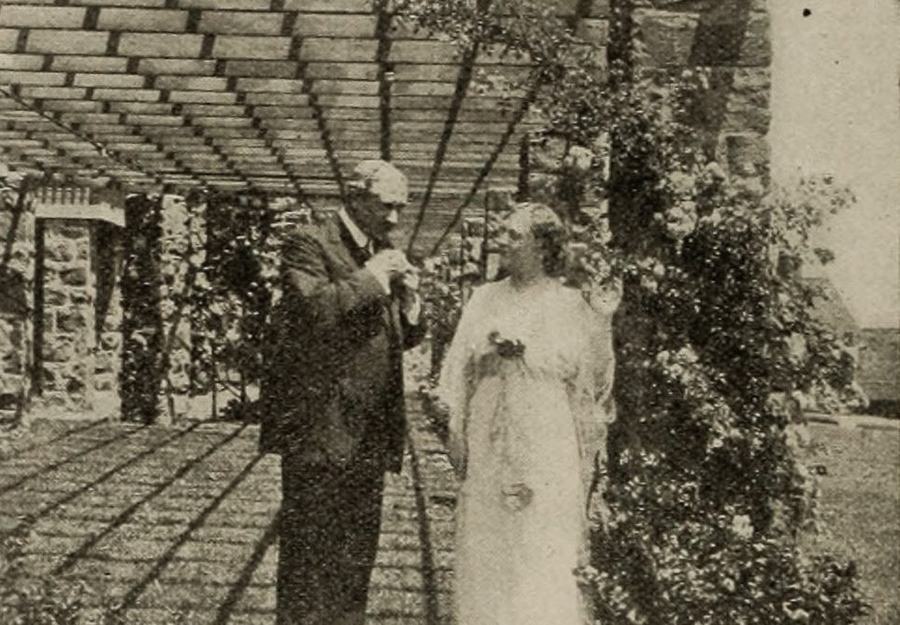
A definitive 6/10 rating for a film that redefined the boundaries of cult cinema. After the Ball remains a cornerstone of transgressive art.
By the time the orchestra’s last waltz dissolves into chandelier dimness, After the Ball has already taught you that every ballroom is a battlefield strewn with invisible landmines called assumptions. Pierce Kingsley and Charles Harris—adapting Charles K. Harris’s weeping ballad—translate a three-minute parlour song into a 50-reel emotional siege weapon, lobbing grenades of irony at anyone who believes the eyes can be trusted. The film, released in the autumn of 1914 when Europe’s trenches were freshly dug, arrives like a psychic premonition: love itself is a frontline, and the casualties are measured in heartbeats.
Director Frank Beal refuses to let luxury comfort; instead he weaponises it. The yacht deck gleams like a surgeon’s scalpel, the Tate townhouse breathes mahogany menace, and the Charity Ball—lit by enough candles to carbonise the night—becomes a panopticon where every pirouette is surveilled by destiny. The camera, normally tethered to theatre proscenium in 1914, here tilts upward to gnaw at ceiling frescoes, as though the house itself were eavesdropping. You feel the corsets tighten, the white gloves sweat, the champagne turn to battery acid.
D.J. Flanagan plays the attorney with a spine so erect it could serve as a courtroom railing. Watch how he buttons his coat—two flicks, surgical, as though sealing a brief against emotion. Yet Flanagan lets panic leak through the lacquer: when Louise collapses at the ball, his pupils dilate like bullet holes in parchment. The performance is a masterclass in silent-film minimalism; a single tremor of his starched collar speaks paragraphs of legal briefs on the consequences of circumstantial evidence.
Effie Shannon’s Louise is no wilting daisy; she’s a lantern in hurricane wind. Notice the way she greets John on the yacht—gloved hand extended not daintily but urgently, as though trying to pull him through the fourth wall into her own oxygen. Later, bedridden by grief, she becomes a negative image: the film stock seems to lose pigment around her, a halo of emulsion surrendering. Her final close-up—eyelids fluttering like trapped moths—was reportedly achieved by smearing petroleum jelly on the lens, a proto-noir diffusion that predates Sunrise by thirteen years.
Gerald King’s performance is the film’s ticking nitrate. Introduced as a collegiate dandy with a champagne grin, he mutates into a Kafkaesque everyman stripped of privilege—expelled, imprisoned, blackmailed. His body language evolves from Ivy-League languor to predatory hunch; shoulders climb toward ears, eyes retreat into raccoon shadows. When he finally steps into John’s study during the botched burglary, the room is so dark only the revolver’s nickel glints and the photograph’s oval cut-out catch light. The moment he whispers “My sister,” the phrase hangs frostily, a confession and a curse.
Clara Knott’s Mrs. Tate is the film’s quiet fulcrum. The necklace she loses is no mere MacGuffin; it’s a rosary of middle-class respectability, each pearl a bead of maternal leverage. When it slips to the library floor, Beal cuts to an insert shot: the strand coils like a shed snakeskin. Later, the pawnbroker’s ticket—filmed in extreme close-up, the ink still glistening—becomes a capitalist communion wafer: Gerald swallows his guilt, but the transaction is irreversible. Silent cinema rarely gets credit for its Marxist undertow; here, jewellery circulates like blood in a closed market where love is collateral.
Watch the Charity Ball sequence again and count the frames between Louise’s gasp and John’s turning head—approximately 28 seconds of screen time, yet the cross-cuts elongate the moment into geological dread. Beal alternates three perspectives: Louise’s horror-struck eyes, Gerald’s pleading finger-to-lips, John’s delayed pivot. Because the film withholds a reverse shot of John’s point-of-view, we inhabit his mis-perception. The glass falls, shatters, and the splinters—rendered via double-exposure—seem to hover mid-air like frozen constellations. In that suspended second, the entire syntax of romantic melodrama is rewritten: love does not die of grand betrayal but of editorial omission.
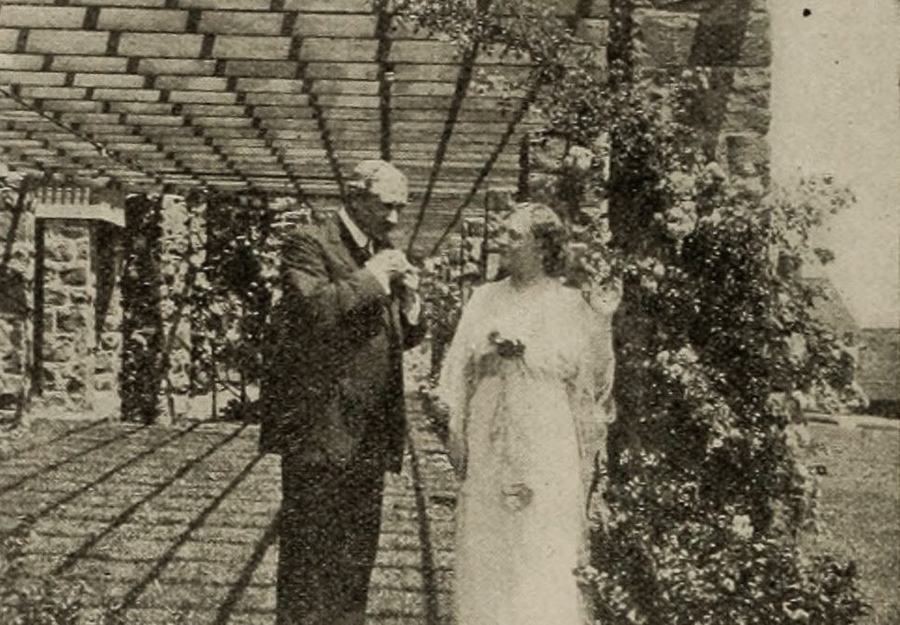
Place it beside The Three of Us and you see how both films weaponise interior space—caves, parlours, cells—to externalise guilt. Yet where Three leans on rustic fatalism, Ball glazes itself with urban cosmopolitan sheen. Pair it with A Message from Mars and note the cosmic comeuppance: both protagonists must be visited by extraterrestrial or sacrificial agents to recognise their moral astigmatism. Meanwhile, Chained to the Past shares the reformatory-redemption arc, but lacks Gerald’s self-immolation—proof that Ball dares a noir ending two decades before the term exists.
Though most extant prints are amber-baked, the original road-show version featured hand-tinted sequences: the Charity Ball blazed lemon-yellow, Louise’s funeral was bathed in cobalt, Gerald’s blood seeped in crimson so vivid it reportedly made Boston society women faint. These chromatic interpolations act like emotional sub-titles, teaching the eye to read tragedy in wavelengths. Contemporary critics carped at the “garishness,” yet the tinting performs what dialogue cannot—an oneiric hyper-reality where grief glows radioactive.
One radical flourish: the camera occasionally aligns with Louise’s optic nerve. We see John’s jealousy not as heroic misunderstanding but as invasive paranoia. The film thus anticipates Laura Mulvey’s critique by six decades; the male gaze is rendered fallible, lethal. Louise’s near-faint is not dainty vapours but a corporeal strike against ocular tyranny—her body rebels against being seen rather than known.
The distributor supplied a cue sheet recommending Harris’s original ballad be played by violin during the prologue, shifting to Wagner’s “Träume” for the yacht courtship, and climaxing with Schumann’s “Tragödie” during Gerald’s death. Thus the very tune that lulled middle-class parlours becomes a Möbius strip: leitmotif of innocence and requiem. Exhibition reports describe audiences recognising the refrain and humming along, transforming the theatre into a collective wake for loves they themselves bungled.
Ending on the niece’s embrace is not sentimental cop-out but structural Möbius. The tale has looped back to its teller, and the uncle’s tears baptise the child into the knowledge that stories are scars. The camera holds on the girl’s eyes—wide, absorptive, already scripting her future heartbreaks. Fade-out. Somewhere, a piano’s last chord trembles like a dangling question mark.
Available today only in fragmentary 35 mm at the Library of Congress and a battered 9.5 mm Pathéscope in Brussels, After the Ball survives like a half-remembered lullaby—maddeningly incomplete yet unforgettable. Its DNA recombines in Letter from an Unknown Woman’s circular melancholy, in Vertigo’s voyeuristic doom, even in Inception’s nesting grief. To watch it is to confront the terrible possibility that our most catastrophic errors hinge not on malice but on a glance misaligned by half a second.
So, should you track down this spectral waltz of a film? If you crave reassurance that love conquers, stay away. If you hunger for the cold slap of recognition—that we are all unreliable narrators of our own passions—then step into the dark. Just remember: somewhere inside the flicker, a champagne glass is always falling, a pearl necklace unstringing, a child’s lullaby asking why Uncle lives alone. And the ball, dear reader, is forever after you.
IMDb —
1929
Community
Log in to comment.