DbcultAccessing Vault...
Cult Review
Senior Film Conservator
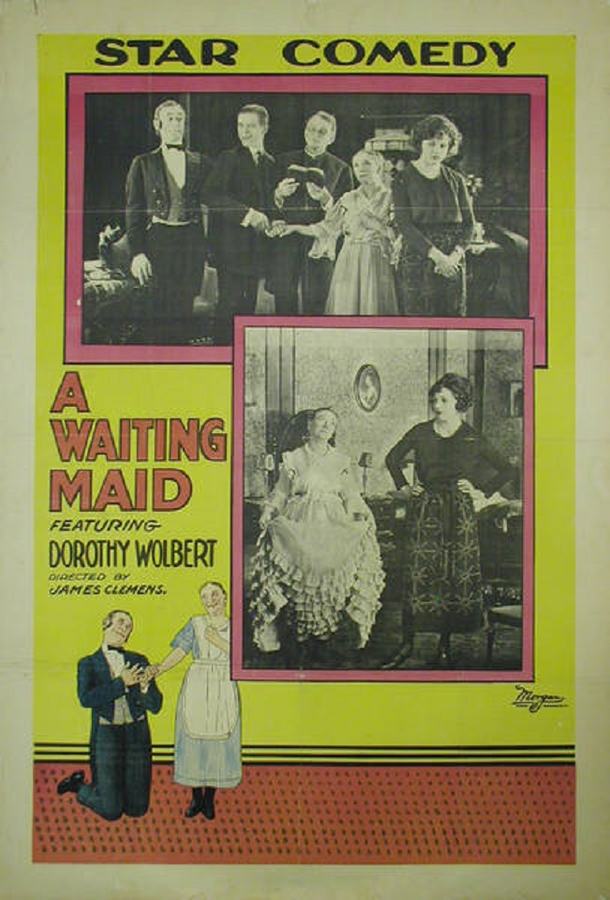
A Waiting Maid (1926) is a forgotten gem of silent cinema that pulses with the same charged tension as The House of Mirth, yet diverges in its focus on working-class yearnings and the corrosive power of unspoken desire. Director Scott Darling, alongside co-writer Frank Roland Conklin, crafts a narrative that is both a period-accurate social critique and an intimate character study, anchored by Dorothea Wolbert's magnetic performance as a kitchen maid whose emotional gambits unravel the fragile order of her household.
The film's opening act is a masterclass in visual storytelling. Wolbert's character, a woman of few words but abundant inner conflict, is introduced through a series of close-ups that capture the duality of her existence—her hands, calloused from labor, juxtaposed with her gaze, often drifting toward the butler as he polishes silverware. Eddie Barry's portrayal of the butler is equally nuanced; his character's restrained demeanor is punctuated by fleeting moments of vulnerability, a silent language that speaks volumes about his own unfulfilled longing. The dynamic between them is charged with a sexual undercurrent that the era's censorship codes would have deemed risqué, yet the filmmakers navigate this with subtlety, using mise-en-scène to convey what dialogue cannot.
The film's pivotal act—the kitchen maid's appropriation of a photograph of the young man's sweetheart—serves as a narrative fulcrum. This act, ostensibly a petty manipulation, reveals deeper layers of desperation and societal disillusionment. The photograph, a symbol of the life she is denied, becomes a weapon in her psychological warfare. Darling's direction here is meticulous, framing the image as both a literal and metaphorical mirror. The young man's arrival, played with charming naivety by an unsung lead, introduces a third force into the equation, forcing the audience to question the ethics of her deception. Is this a story of empowerment or self-destruction? The film resists easy answers, leaving the question to haunt viewers long after the credits roll.
Thematically, A Waiting Maid shares DNA with The Midnight Stage, particularly in its exploration of identity and deception. Yet where that film leans into noir-inflected suspense, Darling and Conklin opt for a more domestic, almost operatic tone. The film's climax—a confrontation that unfolds during a dinner party—echoes the heightened drama of The Red, Red Heart, but with a quieter, more devastating impact. The use of shadows and light in this sequence is particularly striking, with the chandeliers casting fractured patterns that mirror the characters' fractured psyches.
"What distinguishes A Waiting Maid from its contemporaries is its refusal to vilify or sanctify its protagonists. Both Wolbert and Barry embody the tragic futility of their social positions, their desires rendered futile by the very structures they serve."
The film's exploration of class is as relevant today as it was in 1926. The kitchen maid's aspirations are not for revolutionary upheaval but for a sliver of recognition within a system that silences her. This is subtly contrasted with the butler's own position as an enforcer of that system, a role that traps him in a purgatory of propriety. The writers' decision to avoid a tidy resolution—opting instead for an ambiguous ending where the maid walks away, her fate uncertain—is a bold choice that elevates the film beyond mere melodrama into the realm of existential inquiry.
Technically, the film is a marvel of early sound-era innovation. The camera work, with its lingering shots on objects—a teacup, a pocket watch, a frayed ribbon—invites the viewer to read meaning into the mundane. The editing, though occasionally brisk by modern standards, maintains a rhythm that mirrors the characters' emotional cadences. Notably, the film's score, though uncredited in most records, is a haunting blend of strings and piano that amplifies the emotional stakes without overpowering the visual narrative.
Comparisons to Are Flirts Foolish? are inevitable, given both films' focus on female agency and societal constraints. However, A Waiting Maid distinguishes itself through its depth of character development. Wolbert's performance, in particular, is a masterclass in silent acting; her eyes convey a lifetime of unspoken grievances, and her body language—a slight hunch of the shoulders, a fleeting touch to the heart—reveals a vulnerability that words could never capture.
In an age where modern cinema often prioritizes spectacle over substance, A Waiting Maid is a reminder of the power of restraint. It is a film that demands active engagement from its audience, rewarding those who linger on its frames and question its moral ambiguities. While it may lack the visceral thrills of The Iced Bullet, its emotional resonance is far more enduring. For cinephiles and historians alike, this film is a vital artifact of early 20th-century storytelling, one that continues to resonate with its unflinching examination of love, class, and the human condition.
For those seeking similar narratives of domestic tension, Snares of Paris offers a French take on similar themes, while The Lure of New York explores urban ambition with a comparable social critique. Yet A Waiting Maid remains singular in its ability to make the intimate feel epic, and the mundane feel profound. It is a film that lingers, not merely as entertainment, but as an invitation to reflect on the quiet wars fought within the walls of privilege and poverty alike.

IMDb 6.3
1926
Community
Log in to comment.