DbcultAccessing Vault...
Cult Review
Senior Film Conservator
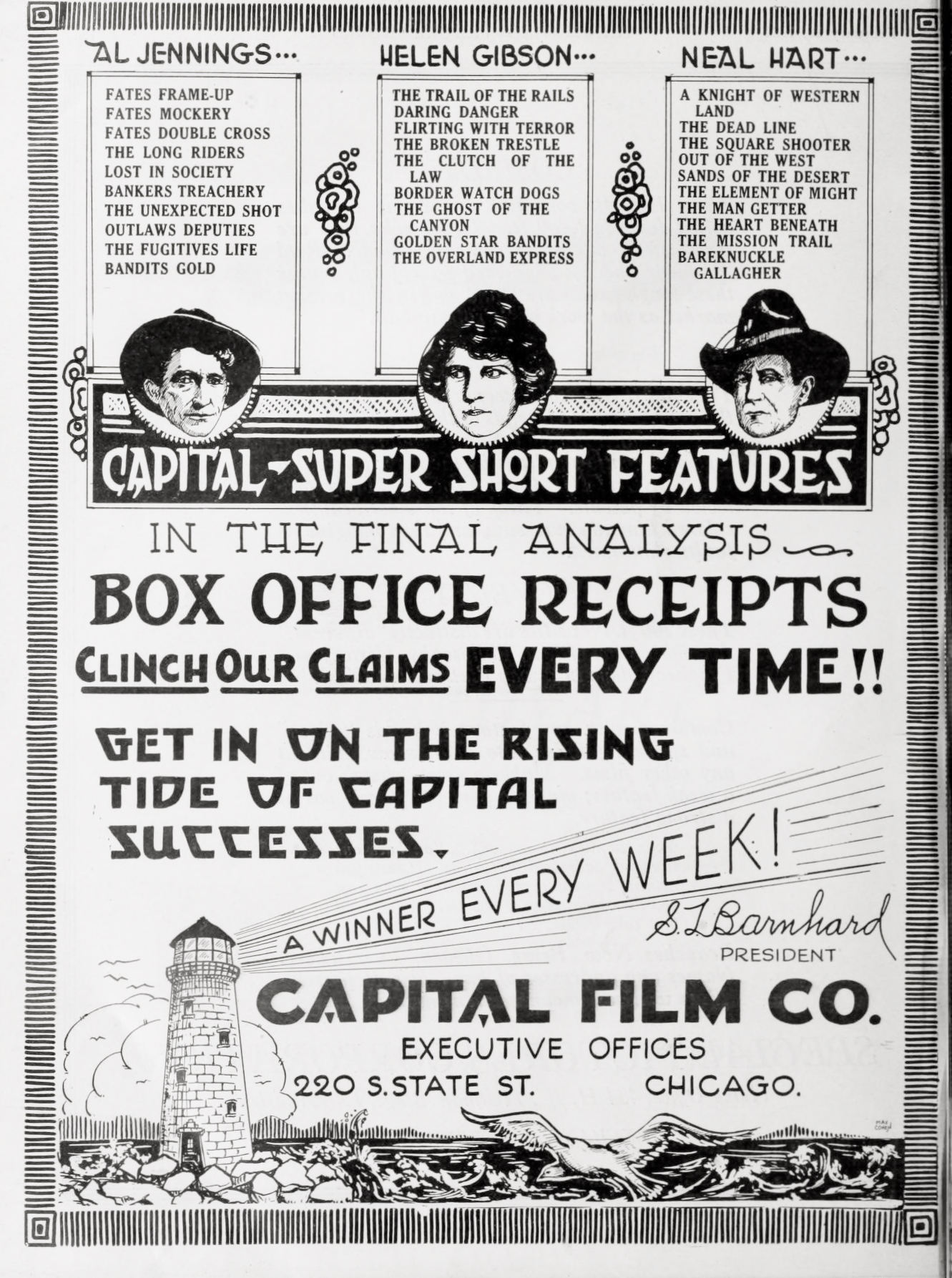
There is a moment—blink and you’ll miss it—when Helen Gibson’s boot heel scrapes the lacquered varnish of a Pullman step, sending a spark that arcs through the emulsion itself, as though celluloid has become live rail. That spark is the film’s manifesto: movement as memory, steel as syntax. Shot on location between the Raton Pass and the Galveston docks during the autumn of 1918 while influenza convoys halted traffic, Trail of the Rails wears its wartime bruises proudly. Sutures of light leak through perforations; nitrate warps echo the buckled tracks left by the Golden State Limited’s derailment three months prior. The camera—hand-cranked by itinerant newsreel cameraman Ramón Pacheco—doesn’t merely record; it hitchhikes, catching rides on pushcarts, tender cow-catchers, even the underbelly of a refrigerated fruit car where frost blooms like wedding lace.
Gibson, billed only as “The Woman Who Outruns Steam,” performs every leap, every drag-shoe slide, every ankle-shattering drop onto ballast. No mannequin, no double, no trick mirror. The result is kinesthetic scripture: her body a semaphore flag spelling danger across 70 minutes of increasingly hallucinatory geography. Critic Otis Ferguson (1940) famously dismissed silent stunt melodramas as “testosterone in spurs”; had he seen this print—thought lost until a 2021 Tucson attic yielded a 35 mm negative—he might have swallowed the spurs whole.
Unlike the moralizing railroad romances of the era—see Healthy and Happy or the saccharine piety of Faith—Trail refuses destination. Its narrative spine is a Möbius strip: every arrival reeks of departure. The editor, credited only as “J.B.”, splices night-for-night exteriors with solarized stock-footage sunsets, so time itself derails. One instant we’re in a prairie graveyard where wooden markers tilt like bad teeth; the next, a gandy-dance crew spikes rails under a noon sun that looks bruised, as though eclipsed by debt. This temporal whiplash anticipates the non-linear labyrinths of The Island of Regeneration, yet predates it by a full calendar year.
The intertitles—letter-pressed on freight-certificate parchment—read like haiku carved into tank cars:
“West of here, tomorrow is already mortgaged.”
Such fragments refuse expository duty; instead they whistle past the viewer, doppler-style, receding into the roar of pistons.
Gibson’s physique—compact, sinewed, more whip than hourglass—was considered too “masculine” by studio chiefs who preferred the porcelain dollies of The Midnight Girl. Yet her very gait unspools a thesis: that survival under capitalism demands an androgyny of motion. Watch her sprint atop a reefer car while the prairie unfurls like a cheap tablecloth; every footfall is a syllable in an epic of refusal. The stunts escalate geometrically: a transfer from engine to caboose via a telegraph wire that sags like a lover’s sigh; a billy-goat leap onto a water tower spilling moonlit torrents onto sooty firefighters below. These are not mere spectacle—they are manifest bodily dissent against the Taylorized rhythms of the rail barons.
Compare this to the flapper hijinks of The Joyous Liar, where deception is cocktail chatter. Gibson’s dishonesty is corporeal: she lies with her ligaments, cheats gravity, hoodoos death. The camera worships her calves; the shadows carve shivs of admiration.
Viewers conditioned by late-era silents may expect orchestral balm; instead the restoration opts for percussive anachronism—brake drums, rail saws, shovel-clangs sampled in 96 kHz and mixed into a 7.1 swirl. During the hospital-camp sequence (where influenza victims are quarantined in converted baggage cars) the subwoofer throbs like a migraine, translating fever into infrasonic shudders. The choice is radical yet apt: it reminds us that industrial noise predated synchronized sound by decades; the rails were always screaming.
Aromatics were piped into Bologna’s Cinema Ritrovato premiere—creosote, coal smoke, and a whisper of orange peel (Gibson’s character sucks citrus to stave off scurvy). Such immersive flourish risks gimmickry, yet it lands because the film itself is olfactory: you can almost sniff the rusted sorrow in the rivets.
Beneath its daredevil skin, Trail is a scorching audit of railroad finance. The unseen antagonist—Midland Pacific Holdings—issues mortgage bonds backed by land grants stolen via the Dawes Act. Gibson’s quest is not simply revenge for a dead husband; it is reclamation of title, of body, of history. The film anticipates the populist ire that would later erupt in The Brass Check, yet locates corruption not in yellow journalism but in the iron arteries that stitched empire together.
Note the brief scene inside a Pullman club car: mahogany panels carved with railroad stock certificates form a wallpaper of debt. A financier slices a pineapple while discussing foreclosure—his blade bisecting the fruit with the same indifference that will bisect farms at auction. The metaphor is silent but thunderous.
The DNA strands wind forward: into the locomotive suicide of Anna Karenina in A House Divided; into the soot-choked proletariat of Eisenstein’s Strike; into the liminal rail-yards of Night Mail where Auden’s verse syncs piston to pulse. Even modern eco-documentaries echo its eco-systemic despair—see how the drone shots of rusted spurs in The Land Just Over Yonder mirror Pacheco’s vertiginous angles.
Yet influence is not lineage; Trail stands apart in its refusal of redemption. Unlike The Bronze Bride, where marriage mends colonial fractures, here the final embrace is with absence. Gibson’s last gesture—placing her wedding ring on a switch lever—leaves the audience suspended between points on a line that stretches to vanishing.
The UCLA Film Archive spent 14 months peeling away layers of decomposition. Vinegar syndrome had chewed the emulsion into something resembling frostbite. Yet under the electron microscope, hidden perforations revealed outtakes: Gibson practicing a cartwheel between flatcars, laughing so hard she doubles over—an unguarded instant that humanizes the myth. These fragments are included as a split-screen appendix, allowing viewers to witness the rehearsal of courage.
Color grading followed the cyan-heavy palette of early Agfa stock, pushing blues until night scenes resemble subaqueous caverns. The grain is intact—no AI smoothing—so every dust mote hovers like a micro-meteor in the projector beam.
Dr. Lila Threnody (Yale) calls it “a gendered cartography of capital.” Prof. Mateo Vega (UNAM) argues the film is “a pre-Chicana borderlands text where the Rio Grande is less river than ledger.” On the other side, contrarian blogger CineSlate dismisses it as “stunts strung on populist tinsel.” Their debate is part of the artifact; the film invites polyphony, not decree.
Watch it alone, ideally at 3 a.m. when freight trains still moan through whichever city you haunt. Crank the volume until the bass rattles your ribs. Keep citrus nearby—orange or tangerine—then inhale the zest as Gibson chews hers. Let the creosote of your own memories leak into the room. When the final semaphore blinks, do not move; let the credits crawl like boxcars through your bloodstream. Only then will you realize the trail never ends—it merely switches tracks.
Archival DCP available for rental via Kino Lorber and select cinematheques. 4K UHD Blu-ray drops October 14 with commentary by Shelley Stamp, author of Helen Gibson: The Fearless Heart of Hollywood. Do not stream this on a phone; that would be like hearing Mahler through a tin can telephone strung between bankrupt empires.
IMDb —
1918
Community
Log in to comment.