DbcultAccessing Vault...
Cult Review
Senior Film Conservator
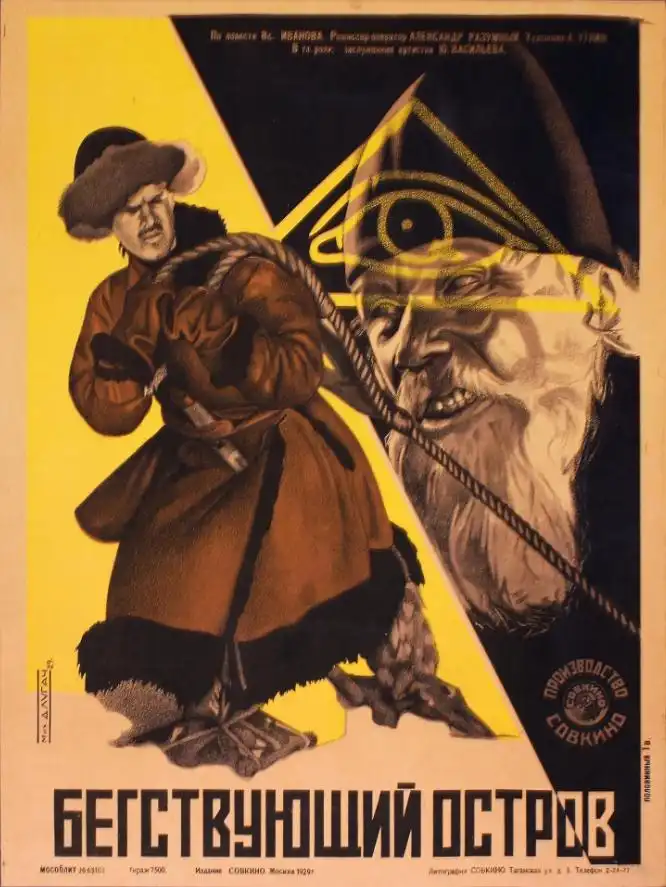
If you are looking for an action movie, this is definitely not it. You should probably watch it today if you like old silent films that feel like they were filmed in a basement. It is perfect for people who like to look at textures, like old wool coats or flickering candles. But if you hate slow pacing and movies with no talking, you will probably be bored to death by the ten-minute mark.
I found a copy of Begstvuyushchiy ostrov (The Escaping Island) and it's a lot weirder than I expected. It’s from 1929, so you know exactly what you're getting into with the grainy film. But there is somthing about the way it looks that stayed with me after I turned off the screen.
The movie starts with Gavriil, played by V. Goffman, who looks like he has never seen the sun. He lives on this island monastery and everything is dark and very, very quiet. Then he goes to the city. The movie suddenly changes its rhythm and becomes all about the "vibrant life" of the early Soviet years.
It’s funny because the city scenes look like a fever dream. There are shots of machines and people moving fast, and Gavriil just stands there looking confused. I think his hat is slightly crooked in every shot in the city. It’s a small detail, but it made him feel more real to me.
You can tell the director wanted us to think the city is better than the monastery. It’s a classic Soviet theme, kind of like what you see in The White Eagle. But the monastery scenes are actually much more beautiful in a creepy way. The shadows are long and everyone has these huge, messy beards.
The way the monks look at Gavriil when he comes back is the best part. They look at him like he’s grown a second head. One old monk has a reaction shot that lingers for so long I thought the film had jammed. It becomes almost funny, then it gets uncomfortable.
Gavriil starts talking about what he saw and the whole place just falls apart. It isn't a fast argument. It’s a slow, grinding realization that their world is tiny. The script by Ekaterina Vinogradskaya is actually pretty smart about how people get scared of change.
There is a scene where they are eating soup and the silence is so heavy. You can almost feel the movie trying to convince you that the soup is sad. I found myself focusing on the way the spoons hit the wooden bowls. It’s very tactile.
I kept thinking about The Outlaw and His Wife while watching this. Both movies are about people trying to hide from the world on a piece of land. But in this one, the world eventually just walks right in. Or rather, the people inside decide they want to walk out.
One thing that bothered me was a scene in the middle where a bunch of monks are just standing around. It goes on about 30 seconds too long. I think the editor might have fallen asleep for a moment there. Or maybe it was supposed to be profound? I don't know.
The actress Yuliya Vasileva shows up and she brings a different energy. It stops being just a movie about dusty men and starts feeling like it has a heart. Her scenes are short, but they matter. I wish there was more of her, honestly.
The whole "escape" at the end feels a bit messy. It’s not a grand escape like in a modern movie. It’s more like a group of people quietly deciding to leave a room. It has this oddly empty feeling, like some of the extras didn't show up that day. But maybe that was the point? That leaving is just a quiet choice.
I noticed that the film quality gets much worse during the outdoor scenes. There is a lot of flickering. It makes it hard to see what’s happening in the background, but it adds to the historical weight of it all. You feel like you are looking at a ghost. 👻
If you have the patience for a 1920s drama, give it a shot. It isn't perfect and the propaganda is a bit thick sometimes. But the faces of those monks... man, those are some serious faces. I’ll probably be thinking about that one monk's beard for at least a week.
It’s definitely better than some other stuff from that era. It doesn't feel as stiff as The Black Secret. There is a real human pulse under all the Soviet messaging. Just don't expect any explosions or happy endings where everyone gets a medal.
IMDb 5.8
1917
Community
Log in to comment.