DbcultAccessing Vault...
6.8/10
Senior Film Conservator
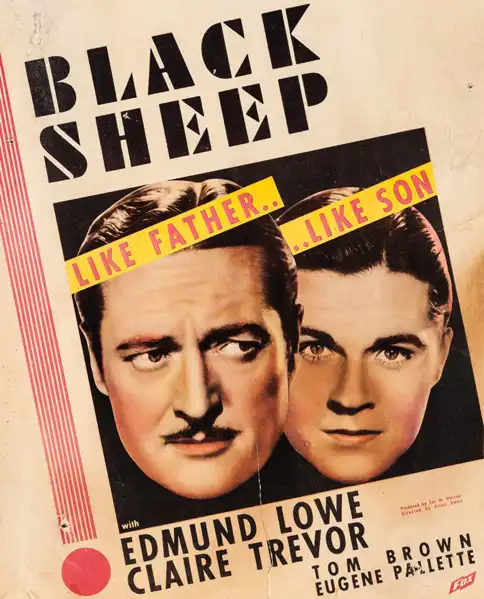
A definitive 6.8/10 rating for a film that redefined the boundaries of cult cinema. Black Sheep remains a cornerstone of transgressive art.
If you have about 75 minutes to kill and you like the way people used to talk in the 30s, then Black Sheep is worth a look.
It’s for people who enjoy movies where everyone wears a suit even when they are in the middle of the ocean.
If you hate old-fashioned coincidences that make no sense, you’ll probably want to skip this one. 🚢
The whole thing stars Edmund Lowe as John P. Rogers.
He plays a professional gambler who is way too smooth for his own good.
He’s on this big ship, looking for people to take money from, I guess.
But then he sees this young guy, played by Tom Brown, who is clearly about to get his life ruined by a lady thief.
Lowe’s character decides to be a hero for once, which is a nice change of pace for a guy who usually just deals cards.
The twist is that the kid is his son.
It’s one of those movie moments where you just have to accept that out of all the boats in the world, they ended up on the same one.
I really liked the way Edmund Lowe carried himself in this.
He has this mustache that looks like it was drawn on with a very steady hand.
He doesn't overact, which is rare for 1935.
He just kind of glides through the scenes.
The kid, Tom Brown, is okay, but he looks so young it’s hard to believe he’s getting into this much trouble.
There is a scene where they are sitting at a table and you can see Lowe looking at him with this weirdly sad expression.
It’s not a big emotional blowout.
It’s just a small look that tells you he regrets some things.
The lady thief subplot feels a bit rushed.
Adrienne Ames is good as the femme fatale type, but she doesn't get enough to do besides looking suspicious.
Claire Trevor is in this too, and she’s always a win.
She has this energy that makes the movie move faster whenever she's on screen.
The movie reminds me a little bit of Wonder Bar because of the high-society-people-behaving-badly vibe.
But it’s much smaller and more personal.
The set for the ship is actually pretty cool.
You can tell it's just a bunch of wooden boards and paint, but it feels cozy.
I noticed that in the dining room scenes, the extras are all eating the same thing.
It looks like some kind of weird soup.
There’s a bit of comedy too, mostly from the side characters who seem like they wandered in from a different movie.
Herbert Mundin is there to be funny, and he usually is.
The pacing is a bit jumpy.
One minute they are talking about feelings, and the next there is a jewel heist happening.
It doesn't always make sense, but it keeps you from getting bored.
I think the writer, Allan Dwan, just wanted to get to the ending quickly.
If you've seen April Showers, you know how these family dramas can get a bit mushy.
This one stays a bit tougher because of the gambling stuff.
I caught a small mistake where a guy’s tie changes between shots.
It’s the kind of thing you only see if you’re really looking.
The music is just... there.
It’s that typical 1930s background noise that sounds like a tiny orchestra is hiding in the closet.
The ending is a bit abrupt.
It doesn't really wrap everything up in a neat bow, which I actually liked.
It feels more like a real slice of life, even with the crazy coincidence.
Is it a masterpiece? No.
But it’s got a lot of heart for a movie about a guy who cheats at cards.
It’s better than a lot of the other stuff from that year.
I’d say give it a watch if you find it on a rainy afternoon.
It’s better than scrolling through your phone for an hour. 🃏
One more thing—the lighting in the late-night deck scene is actually really pretty.
It makes the ocean look like a big black void, which fits the mood.
Anyway, that’s my take.
Not every movie has to change your life.
Sometimes you just want to see a cool guy in a tux do the right thing for once.
IMDb 6.3
1932
Community
Log in to comment.