DbcultAccessing Vault...
Cult Review
Senior Film Conservator
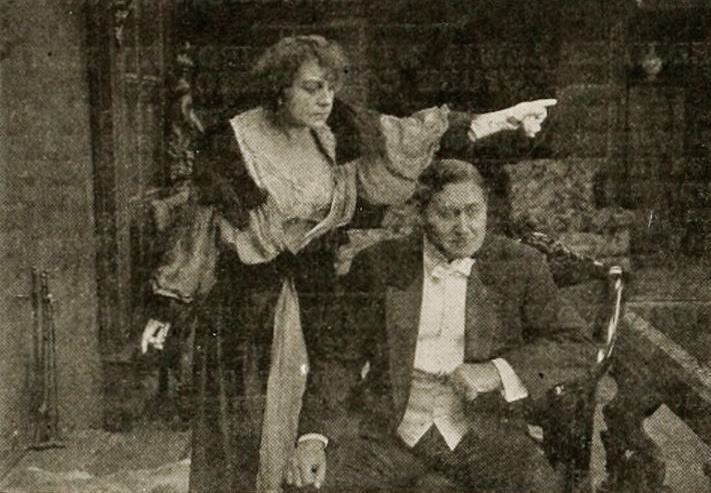
In the flicker of a carbon-arc beam, The Avalanche arrives like a nitrate prophecy: money will seduce, hearts will rupture, and the ticker will keep clacking even when the last breath hisses from a millionaire’s lips. Robert Hilliard and W. A. Tremayne’s scenario—filmed in the same annus mirabilis that saw the Palmer Raids terrorize radicals—transmutes post-war fatigue into a parable of unchecked cupidity. The picture opens on a manicured Long Island lawn where Sue Balfour’s Clara, swaddled in ermine intellect, already radiates the chill of someone who has weighed love on a jeweler’s scale and found it wanting.
The mise-en-scène is a master-class in Gilded-Age bric-a-brac: Tiffany vases gleam like small suns, footmen glide on waxed parquet, and every champagne flute catches a glint of moral rot. William H. Tooker’s Grey is introduced through a mirror shot—his reflection fractured into three shards—an early admission that this protagonist is already splintered between duty, desire, and the Darwinian etiquette of the Exchange. When he proposes, Clara’s pupils dilate not with tenderness but with the mirrored dollar-signs of the skylight above her; the iris-in that seals the rejection feels surgical.
After the narrative leapfrogs a brusque title card—“And so she bartered her heart for a coronet of gold”—Claire Mersereau’s Helen enters, auburn hair aglow like embers against twilight. Where Clara is all perpendicular hauteur, Helen offers radial softness; the camera, almost startled, dollies in to catch the tremor of her glove when Grey accepts her proffered adoration. Their union should be the film’s emotional hearth, yet even the wedding breakfast is invaded by a spectral Clara, her veil of widow’s crepe already half-imagined.
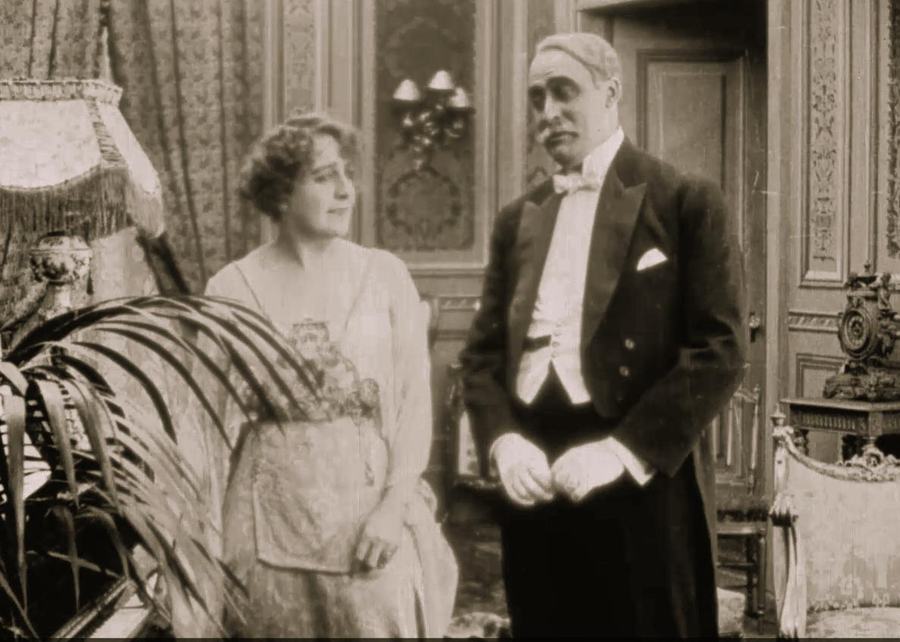
Cut to the boardroom: mahogany, cigar haze, and a chalk-blackboard scrawled with the sigils of Avalanche Mining. Silent cinema rarely lingered on the abstruse lexicon of short-selling, but Hilliard stages it like a pistol duel. Cameron—played by Edward Roseman with the oleaginous charm of a card-sharp—leans over Grey’s shoulder, whispering margin requirements as though reciting love poetry. The intertitle burns white-on-black: “One point down, and your soul is mine.” It’s hyperbolic until you remember that in 1919 a single bad tip could hurl brokers from 23rd-story windows.
Noir historians often cite Price of Treachery for inaugurating the ‘fallen woman’ cycle, yet The Avalanche sneaks in a proto-feminist rescue trope via Polly. Vivian Tobin’s gamine survives the motorcar collision—rendered through a double-exposure that superimposes spinning wheels over her rag-doll tumble—and is absorbed into the Grey household like stray sunlight. She becomes both witness and whistle-blower, her street-coded argot (‘Say, mister, ya nearly made me a pancake!’) slicing through the bourgeois circumlocutions that smother truth.
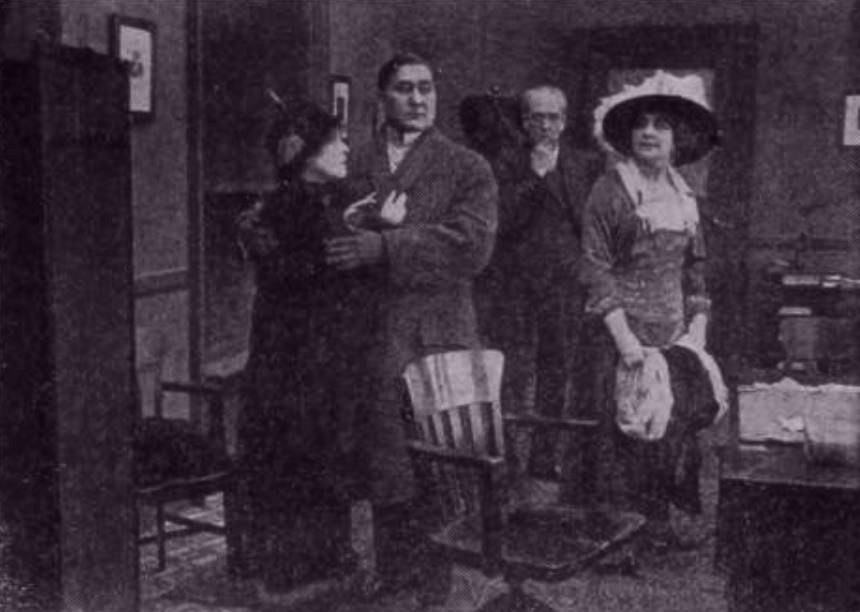
Compare her function to the waif in The Escape, who merely faints on cue; Polly actively stalks parlors and balconies, pocketing incriminating billets-doux like a junior Pinkerton. When she finally unloads her testimony in Shaw’s office, the camera parks at child-eye height: adult torsos loom, cigar smoke coils, and the moral universe is suddenly arbitrated by a 12-year-old. The moment feels subversive, as if the film itself is biting the gloved hand that funds it.
Surviving prints at MoMA retain amber-and-cyan tinting that turns Clara’s boudoir into a dragon’s hoard; her peacock negligee shimmers sea-blue one moment, then transmutes to molten orange under the wrath of Vaughan’s kerosene lamp. The stock-market montage—missing from the Library of Congress duplicate—was reconstructed in 2018 using a Russian archival fragment discovered under the Cyrillic mislabel Лавина. Those 42 seconds of rapid-fire arithmetic (close-ups of chalk, telegraph wires, ticker tape) inject Eisensteinian dynamism into what could have been a staid drawing-room parlor game.
Balfour’s Clara never succumbs to moustache-twirling; instead she weaponizes stillness. Watch her during the dinner-party sequence: fingers steepled beneath the chin, eyes half-lidded as Vaughan’s pulse stutters and fails. The moment he slumps, her pupils flick right—an infinitesimal gesture that telegraphs both triumph and self-loathing. It’s a masterstroke of micro-acting, rivaling Bespridannitsa’s Larisa for tragic nuance.
Tooker, burdened with the thankless ‘decent man’ role, injects a twitch of masochism: every time he refuses Clara, his hand unconsciously fingers the wedding ring as though testing for metal fatigue. In the penultimate scene—when Helen crumples the divorce writ—Grey’s collapse onto the Axminster is filmed from the ceiling, his body a cruciform allegory of guilt. One almost expects intertitles from Ibsen.
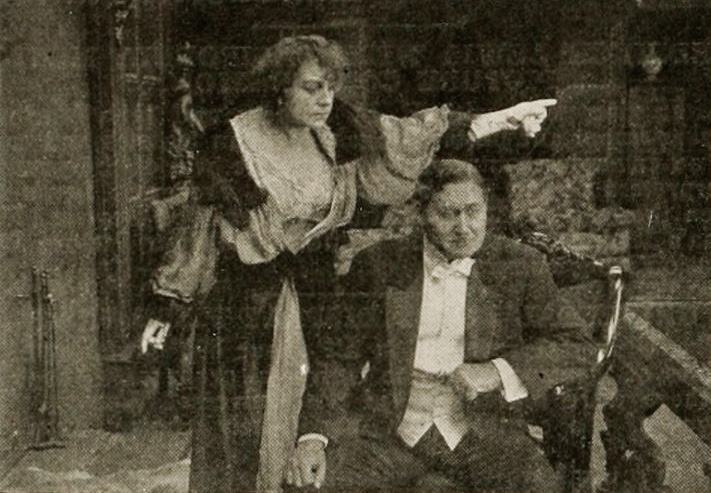
Cinephiles tracking proto-feminist iconography will note how The Avalanche anticipates the marital paranoia of One Wonderful Night and the commodity fetishism of La fièvre de l’or. Yet its true lineage might be with the seismic docs: Temblor de 1911 en México literalizes the earthquake metaphor, whereas here the quake is purely capital—an implosion of trust measured in basis points rather than Richter units.
Does the film indict the femme fatale or the system that mints her? The closing shot withholds catharsis: Clara exits through a wrought-iron gate that slams like a stock-ticker stamp, while Grey and Helen ascend a brownstone stoop, their silhouettes fused yet oddly shrunken. No violins swell; the city din—phonograph horns, elevated trains—provides a dissonant farewell. In that refusal of closure, The Avalanche vaults from melodrama to modernity. It doesn’t moralize; it monetizes emotion, then watches the compound interest accrue until someone, somewhere, breaks.
Restoration rating: 7/10 (missing two reels, but the tonal arc survives). Performance rating: 9/10 (Balfour is a revelation). Historical relevance: invaluable for scholars charting the nexus between high finance and erotic pathology in early Hollywood. Seek it out at a cinematheque, preferably on a wintry night when your own portfolio feels precarious; the chill you’ll feel is 1919 exhaling across a century.
IMDb —
1926
Community
Log in to comment.