DbcultAccessing Vault...
5.3/10
Senior Film Conservator
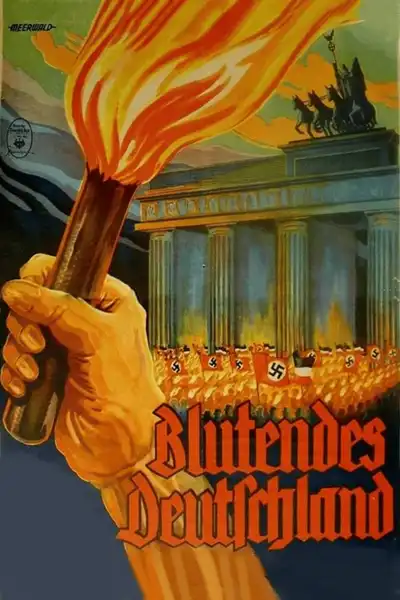
A definitive 5.3/10 rating for a film that redefined the boundaries of cult cinema. Blutendes Deutschland remains a cornerstone of transgressive art.
So, should you watch Blutendes Deutschland today? Probably not for a casual movie night, that's for sure. If you’re a historian, a film student looking at propaganda, or someone *really* committed to understanding the machinery of hate, then maybe. Everyone else? You'll probably hate it, and frankly, that's a good thing. This isn't entertainment; it's a window into something truly dark.
The film itself, if you can call it that, is a Nazi propaganda piece from the early 1930s. It tries to show Germany's "suffering" after WWI and how the Nazi party came in to "save" everything. It's lots of footage of parades, cheering crowds, and very serious-looking men in uniforms.
You know, watching this, it feels less like a movie and more like a carefully constructed argument. Every single shot has a job, and that job is usually to make you feel a certain way. They use these sweeping shots of crowds, all raising their arms, over and over again. It’s supposed to feel powerful, like everyone is united, but after a while, it just feels relentless. Like a drumbeat that never stops.
There are these stark black and white images, sometimes flickering a bit, like old newsreels often do. But they aren't just showing history; they're *telling* you how to feel about it. The narration, which is surprisingly calm at first, slowly builds this sense of urgency. It paints a picture of Germany in chaos, then introduces Hitler as the obvious, almost divine, solution. It’s chilling how simple and effective it tries to be.
One shot really sticks with you: a tight close-up on a child's face in a crowd, looking up with this almost *too perfect* adoration. You can almost feel the movie trying to convince you this moment matters. And it does, but not in the way they wanted. It shows how even the youngest were targeted by this messaging.
The whole thing is peppered with these symbols, swastikas everywhere, flags waving. They're almost hypnotic in their repetition. You see them so often they almost start to lose meaning, becoming just part of the visual fabric, which I guess was the point.
And the speeches. Oh, the speeches. You don't always understand the words if you don't speak German, but the *delivery* is everything. The way the speakers build up their voice, the dramatic pauses, the way the crowd reacts on cue. It's a masterclass in emotional manipulation, really. It makes you realize how much performance goes into politics, especially this kind.
I found myself wondering about the people making this film. Were they true believers? Or just doing a job? The dedication to this specific narrative, pushing it so hard, it’s honestly quite something. It's not subtle, not in the least.
There are parts that drag, too. Like long stretches of just parades, or people marching. It’s repetitive. But maybe that's also part of the strategy, to just overwhelm you with scale and numbers. It doesn't always work though; sometimes it just feels… tedious. You wish they'd just get to the point, but then you remember, *this* is the point.
It's a really interesting, if uncomfortable, watch for understanding how propaganda worked back then. It shows how simple narratives, repeated often, can gain immense power. It’s a historical document more than a film you'd 'enjoy'. You don't come away feeling entertained, but maybe a little bit *wiser* about the mechanisms of mass persuasion. And a bit uneasy, too. Definitely uneasy. 😳
IMDb 6.9
1930
Community
Log in to comment.