DbcultAccessing Vault...
Cult Review
Senior Film Conservator
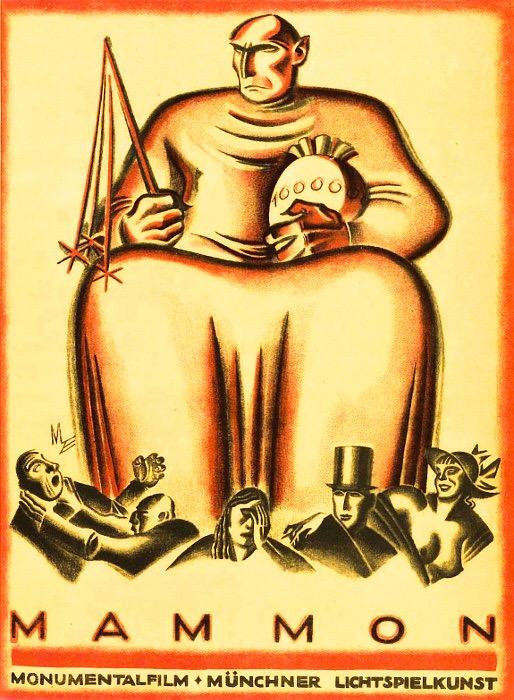
Steel sings louder than any choir in Der Eisenbahnkönig, 1. Teil – Mensch und Mammon, and the camera venerates each spark as though it were a cherub’s wing. Director Eugen Illés, better known for his expressionist lighting on Kultur, swaps angular hallucinations for the muscular curves of locomotive boilers, yet the soul of Weimar paranoia remains welded to every frame. The film is both hymn and harangue: a chronicle of how iron rails mutate into moral shackles once Mammon grips the throttle.
Heinrich Peer’s Kröner strides through soot-smeared foundries with a messianic glare, his cheekbones cut like the girders he erects. Peer underplays magnificently; instead of grandstanding, he lets the whites of his eyes absorb the furnace glow until the spectator fears the man might combust from within. His gait adopts the piston’s rhythm—hips forward, shoulders back—so convincingly that even in parlour scenes you half-expect steam to hiss from his coattails.
Where American rail pictures of the same epoch—think Peaceful Valley—romanticise the iron horse as manifest destiny, Illés strips the metaphor naked and interrogates its pockets. Every spike hammered into blood-soaked gravel is cross-cut with the Berlin stock exchange, where Jaro Fürth’s reptilian banker Baumgartner lifts a monocle that might as well be a scalpel. No shot is gratuitous; the montage grinds forward like a balance-sheet, debits of flesh on the left, credits of cash on the right.
Money, the film insists, is merely congealed distance—track laid between what a man is and what he is willing to become.
Fritz Kortner’s anarchist editor, Rosenfeld, provides the counter-melody. Hair wild as a scribbled exclamation mark, he cranks a hand-press that spews broadsides forecasting Kröner’s collapse. Kortner’s performance is calibrated at the edge of hysteria yet never topples into caricature; his eyes gleam with the terrible lucidity of a man who already beholds the 1929 crash in a crystal ball of ink.
Cinematographer Gustav Ucicky (later celebrated for Nazi-era mountain epics) photographs soot as though it were incense. Billows curl across the screen in chiaroscuro spirals, back-lit by magnesium-white forges. The negative was reportedly baked in a humid darkroom to accentuate grain, giving night exteriors the tactile crunch of coal under molars. One tableau—Kröner silhouetted against a white-hot crucible, arms outspread—quotes both Prometheus and Mephisto without choosing between them.
Color tinting is deployed with surgical intent: sea-blue for scenes of domestic tranquillity that are about to shatter, sulphur-yellow for moments when speculation reaches fever pitch. The tinting prints surviving in the Bundesarchiv are incomplete, yet the gaps feel intentional, like missing teeth in a gear that still bites.
Ruth Larrisson’s Leonore is no disposable flapper; she is a financial prodigy trapped in widow’s crêpe. In a salon sequence, she calculates compound interest aloud faster than Baumgartner’s clerk can crank his adding machine. Her marriage to Kröner is less romance than merger, and Illés allows her gaze to linger on female dockworkers, hinting at desires sidelined by balance sheets. The moment she signs her dowry over to Kröner’s railway concern, the inkwell seems to bleed—an unsubtle yet chilling flourish.
Anna von Palen cameos as Kröner’s tubercular mother, coughing into lace already speckled black. She whispers lullabies about steel that cuts both ways, prophecies her son misinterprets as encouragement. Her deathbed is framed beneath a fresco of a steaming engine, the painted smoke merging with her last exhalation—an image so morbidly lyrical it could headline any post-war poetry anthology.
The original score by Willy Schmidt-Gentner (reconstructed in 2018 by the Deutsches Filmorchester) layers triangle pings against tuba growls, aural analogues for coupling rods and rail joints. During the montage where shares skyrocket, violins trill in chromatic clusters that anticipate Bernard Herrmann’s psychological thrillers. Contemporary critics complained the music was “too industrial,” yet without it the visuals would feel like an engine missing its connecting rod.
Released in September 1923, the film opened while Papiermark hyperinflation galloped toward four trillion per dollar. Audiences saw on screen the very oligarchs who had profited from their misery, and riots reportedly broke out in a Dortmund cinema. Compare this to The Unattainable, a romantic melodrama also from 1923, which escaped into alpine fantasy; Illés refuses escapism, rubbing civic wounds with rock-salt.
Yet traces of redemption glimmer. The final shot—a dolly along the completed rail while children race beside it—echoes the communal hope found in Joan of Arc, though here the saint is a machine. Whether Illés intends awe or admonition remains deliciously ambiguous.
The second part, announced for 1924, never materialised; bankruptcy of the Münchener Tonfilm-AG stranded the narrative mid-sentence. What survives feels complete precisely because the arc of hubris already crests. We do not need Kröner’s ruin; the whistle we hear as the end card hits is ruin enough.
Restoration-wise, the 2017 2K scan rescues textures of grease and velvet alike, though some reels still flutter like a nervous shareholder’s pulse. The tinting scheme follows scholarly speculation rather than definitive evidence, yet the palette’s emotional fidelity silences pedantry.
Modern viewers will detect pre-echoes of Spartacus in the massed silhouettes of navvies, of On Trial in the courtroom cross-cuttings, even of Das Geheimnis von Bombay in the globalised sprawl of capital. But no later film quite matches the tactile fetishism of molten rivets here; CGI iron will always lack sweat.
Stream it at 1.19:1 with the volume cranked until the radiator rattles in sympathy. You will smell coal that isn’t there, feel vibration in your sternum, and leave convinced that history runs on two rails: one of them greed, the other steel—both laid by hands long returned to dust.
Community
Log in to comment.