DbcultAccessing Vault...
6.7/10
Senior Film Conservator
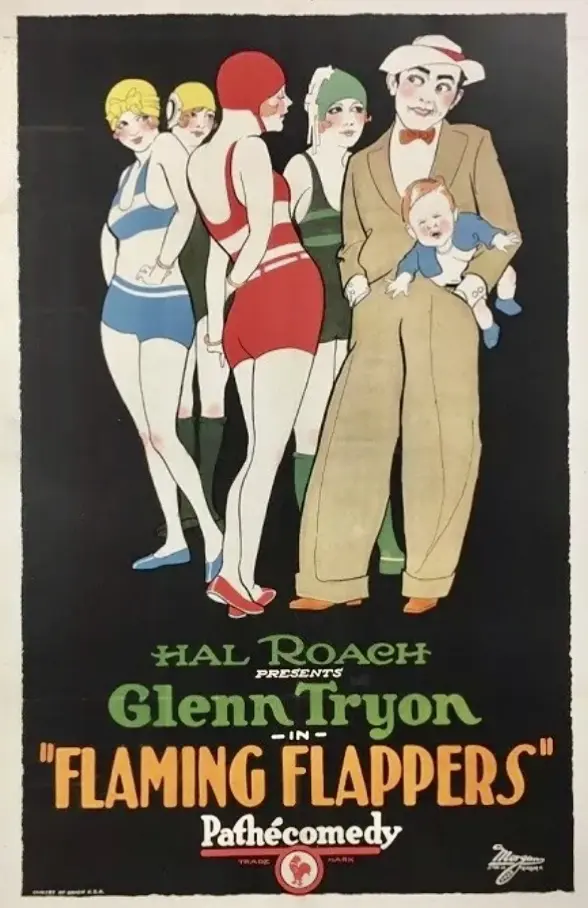
A definitive 6.7/10 rating for a film that redefined the boundaries of cult cinema. Flaming Flappers remains a cornerstone of transgressive art.
Does a century-old silent comedy, particularly one with a rather unassuming plot like Flaming Flappers, still hold any relevance for contemporary audiences? Short answer: yes, but with significant caveats. This particular relic of the Roaring Twenties is less a forgotten gem and more a curious artifact, offering glimpses into the comedic sensibilities of its era rather than delivering consistent belly laughs for modern viewers.
This film is best suited for ardent silent film enthusiasts, film historians, or those with a deep curiosity for early American comedy. It's a fascinating study in the mechanics of slapstick and situational humor before sound cemented narrative structures. Conversely, it is absolutely not for anyone seeking a fast-paced, dialogue-driven, or emotionally complex cinematic experience. If your patience for exaggerated physical comedy and title cards wears thin quickly, look elsewhere.
Early silent comedies, especially those from the mid-1920s, often present a unique challenge to modern criticism. They operate on different wavelengths, with different expectations of pacing, character development, and comedic payoff. Flaming Flappers is no exception, embodying both the charming naiveté and the frustrating limitations of its time.
This film works because of its unpretentious commitment to simple, physical humor and the earnest performances that underpin its narrative. This film fails because its comedic rhythm is often out of sync with modern sensibilities, leading to stretches that feel more laborious than genuinely funny. You should watch it if you appreciate the historical context of cinema and enjoy dissecting the evolution of comedic storytelling.
The plot of Flaming Flappers is, by contemporary standards, remarkably thin. It’s less a meticulously crafted narrative and more a series of vignettes designed to facilitate comedic set pieces. Glen, a character played by Glenn Tryon, finds himself engaged, a piece of news his sister dutifully, if inconveniently, relays to the family. The core of the film’s humor then shifts to the arduous journey home in a perpetually breaking-down car, complicated further by the spontaneous adoption of an orphan baby.
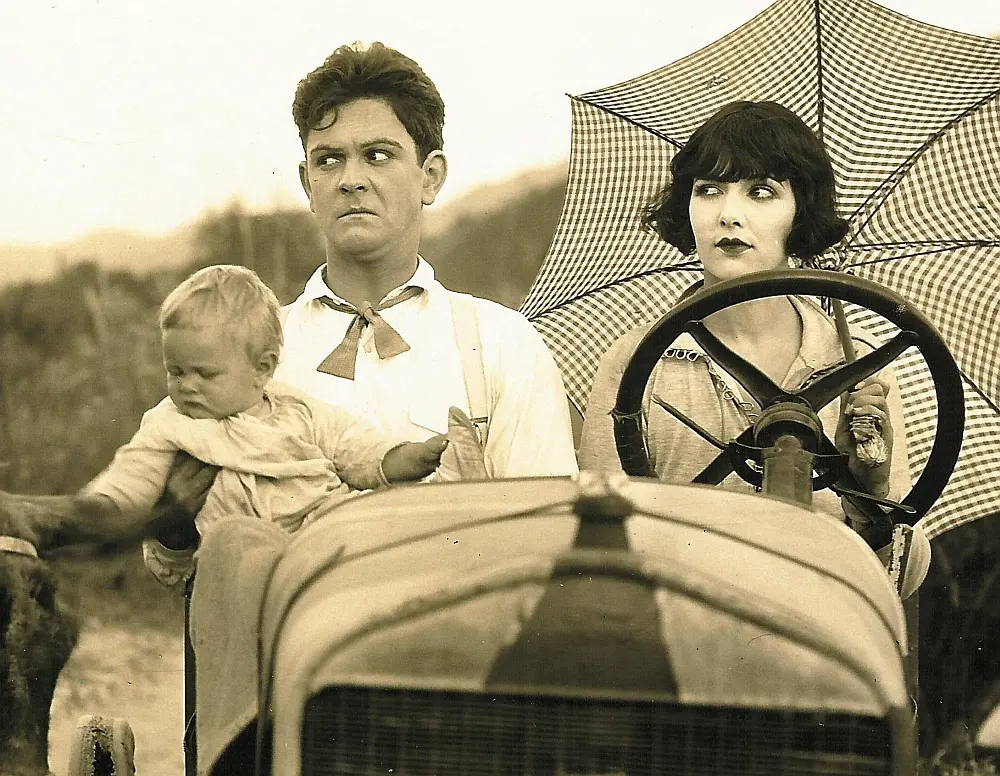
This kind of plot, where the journey itself is the primary antagonist and source of gags, was a staple of the era. Think of the frantic car chases or train sequences in Buster Keaton films, albeit Flaming Flappers operates on a far more modest scale. The film doesn't aim for grand philosophical statements or deep character arcs; its ambition is purely to entertain through visual gags and the escalating absurdity of its premise. It works. But it’s flawed.
What it captures, however, is a certain unfiltered innocence of the era. The 'flapper' title, while perhaps misleading given the film's focus on domestic comedy rather than overt social rebellion, hints at the burgeoning freedoms and lightheartedness associated with the 1920s. It’s a world where an impulsive decision to adopt a baby on a road trip is treated with a comedic shrug rather than deep moral introspection.
In silent cinema, acting is a different beast entirely. It relies on exaggerated facial expressions, broad physical comedy, and clear, often pantomimed gestures to convey emotion and intent without the aid of dialogue. The cast of Flaming Flappers largely delivers on this front, though with varying degrees of success and memorability.
Glenn Tryon, as Glen, carries much of the film’s comedic burden. His performance is a masterclass in frantic exasperation, particularly when wrestling with the recalcitrant automobile. Tryon's wide eyes and flailing limbs are perfectly suited for the slapstick demands, embodying the everyman protagonist caught in an escalating spiral of misfortune. He's not as iconic as a Keaton or Chaplin, but he holds his own in this particular comedic framework.
Perhaps the most recognizable face for silent film aficionados will be James Finlayson, a character actor whose distinctive walrus mustache and exasperated expressions became famous for his later work with Laurel and Hardy. While his role here isn't as central as in some of his other films, his presence adds a touch of seasoned comedic timing. Even in a minor capacity, Finlayson’s ability to convey frustration with a mere glance or a slight tilt of the head is evident. It's a shame his screen time isn't more substantial, as his reactions often provide some of the film's sharper comedic moments.
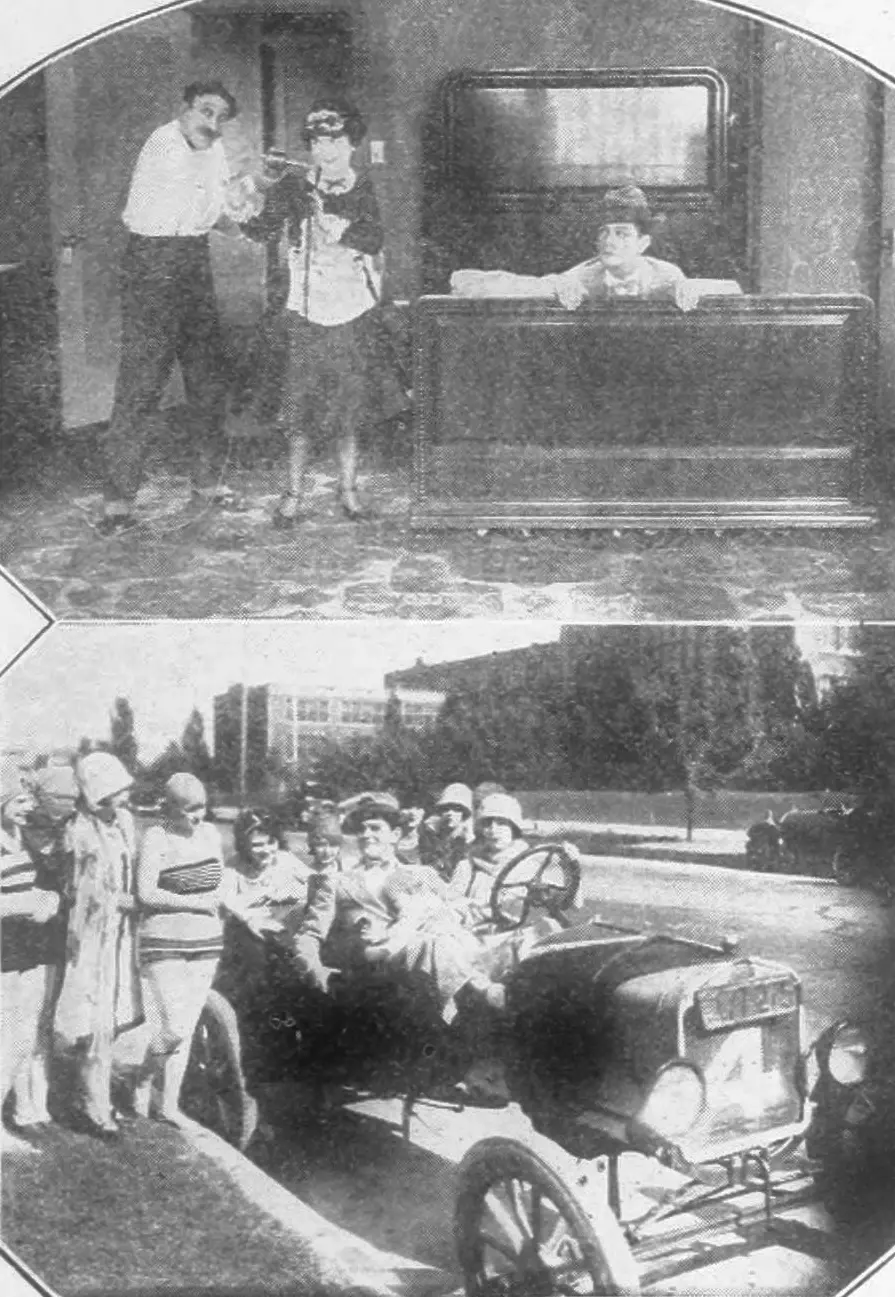
The female leads, including Sally Long and a young Janet Gaynor (in what appears to be an early, uncredited, or very minor role), primarily serve as foils or catalysts for Glen's predicaments. Their performances are competent within the stylistic confines of the era, offering the necessary reactions of sweet innocence or bewildered amusement. However, they are rarely given the opportunity to truly shine or develop beyond their archetypal roles. This isn't a criticism of their talent, but rather a reflection of the film's narrative priorities, which firmly center on Glen's physical struggles.
The entire ensemble, particularly the family members awaiting Glen's return, contribute to the escalating chaos. Their reactions upon seeing the baby are precisely what the script demands: a mixture of shock, confusion, and eventual, if bewildered, acceptance. It’s a testament to the actors’ ability to communicate complex emotional shifts without a single spoken word.
The direction in Flaming Flappers, while not groundbreaking, is effective in serving its comedic purpose. The camera is largely static, focusing on wide shots that allow the physical comedy to unfold within the frame. This approach is typical of the era, prioritizing clarity of action over dynamic camera work. The staging of gags, such as Glen's ceaseless battle with the flivver, is straightforward and functional.
Pacing is where modern audiences will likely find the most difficulty. Silent comedies often had a different internal rhythm. Gags would be built up, played out, and milked for maximum effect, sometimes to the point of repetition. The sequences involving the car breaking down, while initially amusing, tend to overstay their welcome. There’s a distinct lack of the rapid-fire editing that would become standard in later comedies, or even in some of the more sophisticated silent films of the time. This deliberate pacing can feel sluggish, especially during the arduous journey home.
Cinematically, the film is unremarkable but competent. The black-and-white photography is clear, capturing the expressions and physical comedy with sufficient detail. There are no grand visual flourishes or innovative techniques to speak of; the focus is purely on capturing the action. This isn't a film designed to be a visual spectacle like The Golem or Mania. Die Geschichte einer Zigarettenarbeiterin. Its visual language is utilitarian, serving the gags above all else. The charm lies in its simplicity, a stark contrast to the often elaborate sets and effects seen in more ambitious productions of the period.
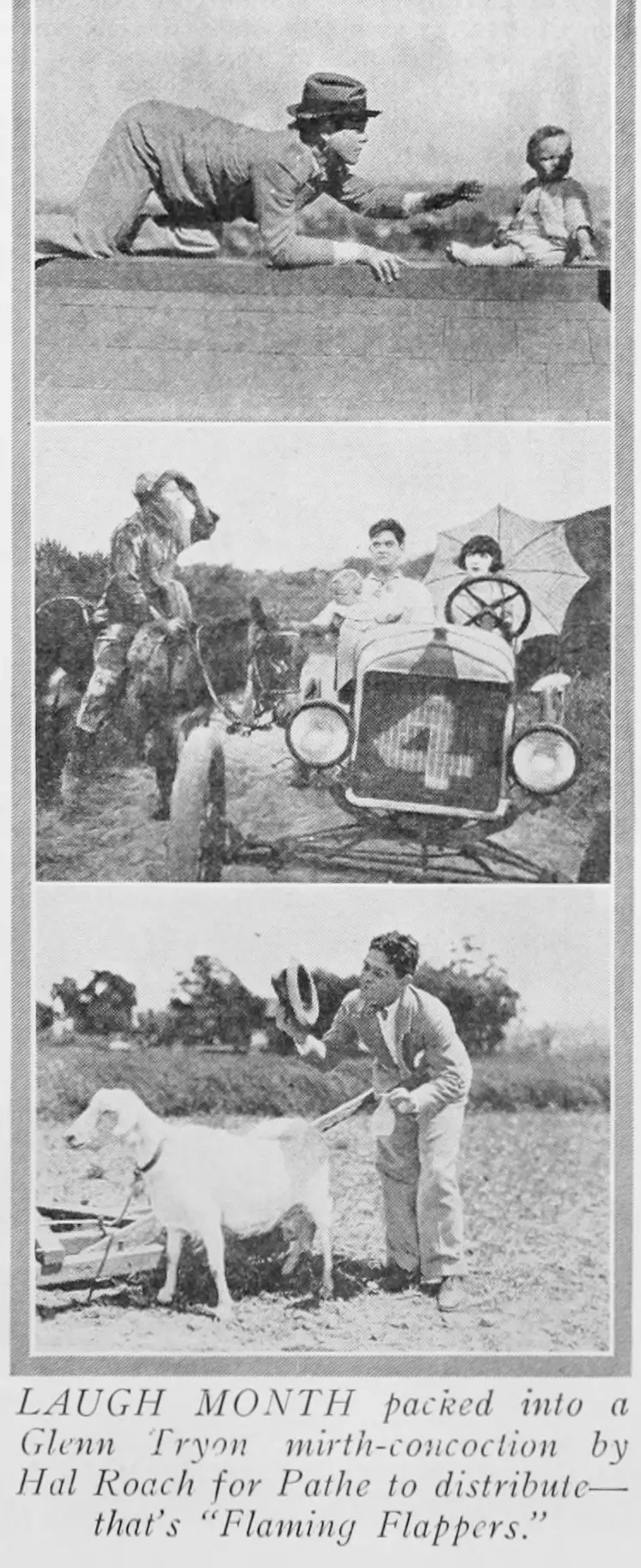
The humor in Flaming Flappers is almost exclusively slapstick and situational. It derives its laughs from physical mishaps, escalating misunderstandings, and the sheer absurdity of its premise. The car trouble, the unexpected baby, and the family's reaction are all classic comedic tropes. It's the kind of humor that doesn't require deep thought; it's designed for immediate, visceral reaction.
However, this also means much of the humor feels decidedly dated. What elicited guffaws in 1926 might only provoke a mild chuckle today. The comedic timing, built around specific silent film conventions, often feels elongated to modern sensibilities. One moment that might surprise contemporary viewers is the casualness with which the baby is acquired and integrated into the plot; it reflects a different cultural attitude towards such matters, adding an almost surreal layer to the comedic chaos.
There's an undeniable sweetness to the film's tone. Despite the comedic predicaments, there's no real malice or cynicism. It's a light, frothy confection, aiming to leave audiences with a smile rather than a profound message. This lightheartedness is perhaps its most enduring quality, offering a gentle escape into a bygone era of innocent amusement. It’s a film that genuinely believes in the power of a good pratfall.
In an age dominated by CGI blockbusters and complex television narratives, Flaming Flappers feels like a whisper from another dimension. Its simple charms are easily overshadowed by the sheer volume and sophistication of modern entertainment. Yet, its existence is valuable. It serves as a crucial historical document, illustrating the foundations upon which all subsequent cinematic comedy was built.
Watching it today is less about finding a new favorite film and more about engaging in an archaeological dig. You're unearthing the roots of a genre, observing the nascent forms of comedic storytelling. It allows for an appreciation of how far filmmaking has come, and perhaps, how some fundamental comedic principles remain timeless, even if their execution has evolved dramatically.
It also offers a fascinating contrast to other films from the same period, whether it's the more dramatic fare like The Mysterious Stranger or the experimental nature of The Power God. Each film contributes to our understanding of the diverse cinematic landscape of the 1920s.
Flaming Flappers is not a film that will set the world alight today, nor was it likely a groundbreaking masterpiece in its own time. What it is, however, is an endearing, if somewhat creaky, piece of cinematic history. It’s a testament to the enduring appeal of simple physical comedy, even when that comedy has to work harder to bridge the gap of a hundred years. For those willing to adjust their expectations and approach it with an appreciation for its historical context, there are certainly moments of charm and a quiet fascination to be found.
It serves as a valuable reminder that not every film needs to be a profound artistic statement to hold value. Sometimes, a rickety car, a bewildered family, and an unexpected baby are all you need for a good, if antiquated, laugh. It's a film for the curious, a gentle nod to a past era of filmmaking, rather than a recommendation for casual viewing. Consider it a light snack from cinema's distant past.

IMDb —
1932
Community
Log in to comment.