DbcultAccessing Vault...
7.1/10
Senior Film Conservator
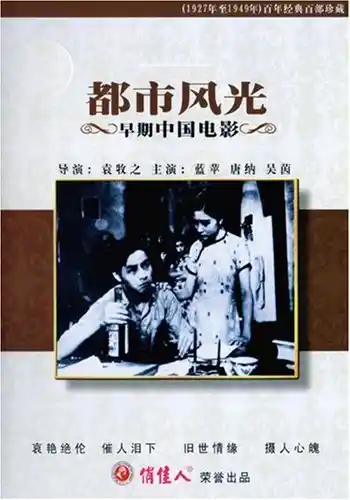
A definitive 7.1/10 rating for a film that redefined the boundaries of cult cinema. Dushi fengguang remains a cornerstone of transgressive art.
Okay, so Dushi fengguang, or City Scenes, is one of those films you kinda stumble upon if you're really digging into older cinema. If you're someone who loves silent films, especially from early Chinese cinema, then yeah, this is worth a look. For anyone else expecting, oh, *any* kind of modern storytelling or even just a clear narrative path, you'll probably be pretty lost and maybe even a little annoyed. It's a curiosity more than a blockbuster experience.
The film's core is simple enough: a scholar (played by Muzhi Yuan, who also wrote this thing!) falls for a shop owner's daughter, who seems to have a whole other thing going on with a tea house manager. It’s that classic triangle setup, but it plays out in a way that feels… well, *old*. And not always in a charming way.
What really struck me, though, isn't so much the love story itself, but these little glimpses of the city. There’s a scene early on where people are just moving, bustling about, and it feels like a genuine window into a past time. The title isn't lying, you do get city scenes. It’s not just a backdrop; sometimes it feels like a character all its own, just watching these human dramas unfold.
Our scholar, he’s got this intense, earnest look about him. You can feel him falling hard for this young woman. But she, the shop owner's daughter (Ying Wu), she's a bit harder to read. Her expressions often hint at something just beneath the surface, a slight smile that doesn't quite reach her eyes, or a quick glance that shifts away. Is it shyness? Or is she just playing both sides? The movie keeps you guessing, perhaps *too* much.
The tea house manager, he’s got a certain swagger. A bit slicker, maybe? You see him interacting with her, and there's a definite spark, or at least a different kind of connection than with the scholar. The film doesn't exactly spell out who's "right" for her. It mostly just *shows* these interactions.
Sometimes, the way they framed a shot just made me pause. There's this one moment, I think it's in the tea house, where the camera just sits for a bit, letting the background action unfold. It's not a big dramatic reveal, just a quiet corner of life happening. It kinda reminds you that film used to be a lot more patient.
The pacing is, as you'd expect for something from this era, pretty deliberate. Long takes are common. You have to adjust your expectations. If you're used to quick cuts and constant dialogue, this is gonna feel like watching paint dry. But if you settle in, you can appreciate the *tableau* of it all. The actors really have to rely on their expressions, their body language. There's no voice to help them along.
And sometimes, that silence becomes its own character. There are moments where a character just *looks* at another for a long time, and you’re trying to figure out what they’re thinking. Is it longing? Frustration? A little bit of both, maybe. It’s not always clear, and that can be a bit frustrating. You want to know more, but the film just moves on to the next silent exchange.
I did notice some scenes felt a tad disjointed. Like maybe they were trying to tell a very specific story, but then got distracted by just showing what life was like around them. It doesn't always flow perfectly. One minute you're deep in the love triangle, the next you're watching a street vendor for a few beats too long. It gives it a certain charm, I suppose, this kind of wandering eye.
The ending isn't neat either. Don't go in expecting a tidy bow. It kinda just… finishes. Like life does sometimes, I guess. It leaves you with questions, which for some, is a good thing. For others, it'll feel unfinished.
I wouldn't call Dushi fengguang a forgotten masterpiece everyone needs to see. It’s not trying to be Waxworks or some other big, dramatic silent. Instead, it’s a quiet piece, a snapshot. It’s for the folks who enjoy digging into the archives, who like seeing how stories were told before all the modern bells and whistles. It's a bit rough around the edges, sure, but it has these little flashes of something honest.
For those who love early cinema, especially Chinese films, this is a solid watch. It’s got that raw, immediate feel. But if you prefer your films to explain themselves clearly, or move at a brisk pace, you might find it a bit of a slog. It’s a film that asks you to meet it halfway, to appreciate its slowness and its sometimes unclear intentions. A bit like a fleeting moment in a busy city, really. 🏙️
IMDb 7.3
1931
Community
Log in to comment.