DbcultAccessing Vault...
Cult Review
Senior Film Conservator
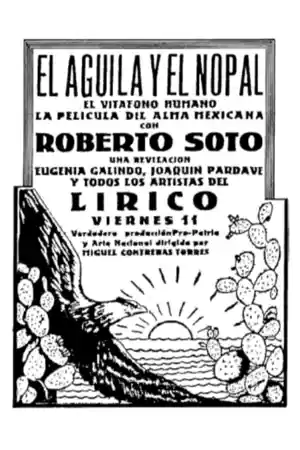
Okay, so "El águila e el nopal" — The Eagle and the Nopal Cactus — from way back in 1929. Is it worth watching today? Honestly, for most people, probably not a casual Sunday night flick. But if you’re into digging into early Mexican cinema, or just curious about silent films beyond the usual suspects, then yeah, definitely. You’ll hate it if you need constant explosions or snappy dialogue. This one's for the patient, the curious, the folks who don’t mind a bit of film history dusting.
This film, it’s a whole *vibe*. It feels like a time capsule, you know? It’s not some grand epic trying to outdo Hollywood. It’s more like a local story, told with a lot of heart and some surprisingly sharp edges for its time. You follow these two families, I guess, kind of embodying the "eagle" and "nopal" — one side all tradition, maybe a bit stiff, the other more earthy, rebellious. Or something like that. The intertitles try to make it clear, but sometimes they just… *get there*.
The acting, oh man. Ramón Armengod, as one of the leads, he’s got this intense stare that could drill holes in the screen. Every emotion is dialled up to eleven, which is standard for silent films, of course. But sometimes, it feels so genuine, like when his character is just *agonizing* over a decision. You can practically hear the dramatic music swelling, even if you’re watching it silent on your laptop at 2 AM. Then there’s Carlos López, playing the more boisterous character. He gets a lot of the broad comedic bits, which are hit-or-miss. One scene, he’s chasing a chicken across a dusty yard, and it goes on for what feels like an eternity. 🐔 It’s funny at first, then just kinda awkward, then funny again because it’s so *committed*.
Joaquín Pardavé and Roberto Soto, they play the older generation, I think. Pardavé, he’s got this wonderfully stern face. He delivers these super dramatic gestures, hands flying around like he’s conducting an invisible orchestra. One shot of him just *glares* for a good ten seconds, then he slowly nods. It’s supposed to be menacing, but it just made me smile. Soto, on the other hand, seems to be the one who gets to be a bit more nuanced. He has this scene where he’s just sitting by himself, looking out a window. No big gestures, just a quiet sadness. It really stood out.
The cinematography, for 1929, is pretty solid. Lots of static shots, sure, but then there's this one tracking shot — I think it was when a character is riding a horse through a field — and it's surprisingly smooth. You don’t expect that. And the landscapes! They really show off the Mexican countryside. Dusty roads, big cacti, mountains in the distance. It feels authentic, not just some studio backlot. It made me wanna go there, honestly. 🏜️
There's a scene involving a marketplace, and the extras are just… *doing their thing*. Some are clearly performing for the camera, but others are just walking by, looking utterly confused or bored. One lady in the background just keeps adjusting her rebozo, over and over. It's a tiny thing, but it made the whole scene feel really lived-in. Almost like a documentary for a split second.
The story itself, it deals with patriotism and national identity, which is obviously a big deal for Mexico, especially post-Revolution. The "eagle and nopal" imagery, straight from the flag. Sometimes it’s a bit heavy-handed, like when a character gives a *really* long intertitle speech about national pride. You can almost feel the movie trying to convince you this moment matters. But then, there are these small, tender moments, like a shared glance between two lovers that says more than any title card could. That’s where the film really shines.
Pacing can be a real trip here. Some bits drag, especially the setup. Then suddenly, a chase scene breaks out, and it’s all frantic cuts and quick movements. It’s like the filmmakers remembered they had to keep things exciting. One particular fight scene felt like it was sped up, just a little. Not sure if that was intentional or just how the print survived. Either way, it’s… *vigorous*.
This film isn't perfect. The sound of a projector clacking away in my head probably helped me enjoy it more than if it were pristine. And yeah, some of the melodramatic parts are really melodramatic. But there’s a charm to it. A definite heartbeat. It’s not just some historical artifact; it's a story that still manages to connect, even across almost a century. Give it a shot if you're in the mood for something genuinely different.
IMDb —
1926
Community
Log in to comment.