DbcultAccessing Vault...
Cult Review
Senior Film Conservator
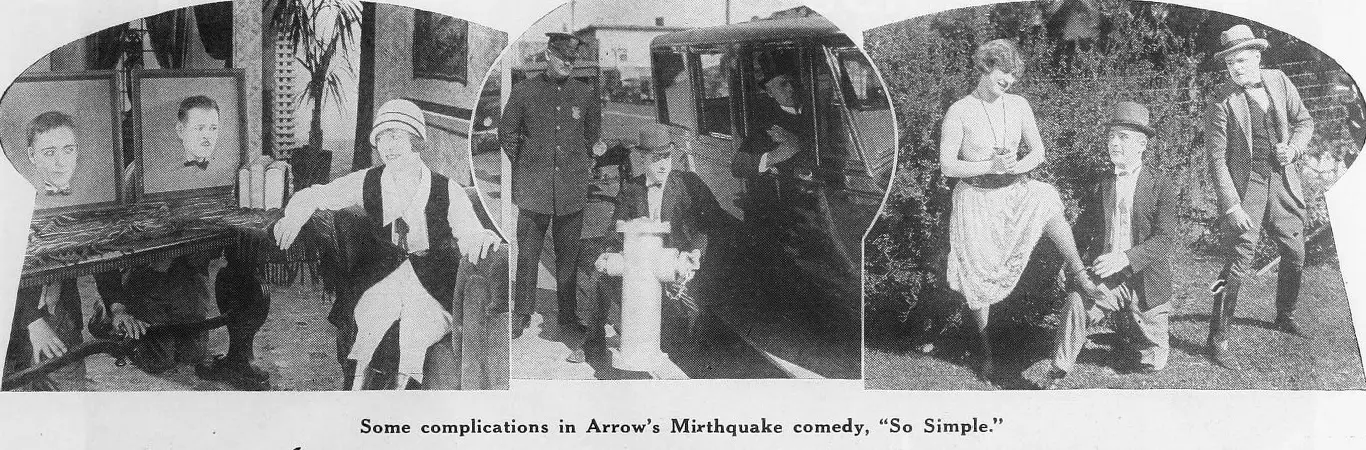
Is 'So Simple' worth watching today? Short answer: yes, but with significant caveats that demand a certain cinematic palate. This silent-era relic, while undeniably charming in its own anachronistic way, is a film best approached not as a casual evening's entertainment, but as a fascinating artifact for those deeply invested in film history, the nuances of early comedy, or the unique performance styles of its time.
It works. But it’s flawed. This film is unequivocally for the dedicated cinephile, the academic, or anyone who finds genuine joy in dissecting the foundational elements of storytelling on screen. It is decidedly NOT for the viewer seeking fast-paced plots, complex character arcs, or the polished production values of contemporary cinema. If your patience for intertitles runs thin, or if you require constant auditory stimulation, 'So Simple' will test your resolve.
'So Simple' emerges from an era where narrative clarity often took a backseat to visual gags and overt emotional expression. Its title, in retrospect, feels like both a promise and a gentle warning. The film's primary strength lies in its unpretentious approach to storytelling, focusing on a singular, relatable conflict that allows its performers, particularly Bobby Dunn, to shine through the medium of exaggerated physicality and expressive pantomime. It’s a testament to the power of pure visual storytelling.
The film’s central conceit, as its title suggests, revolves around the seemingly straightforward path. Dunn’s character, an optimistic but often bewildered young man, consistently opts for the most direct solution to every problem, often with disastrously comedic results. This recurring motif provides the backbone for much of the film’s humor, demonstrating a kind of universal truth about human nature’s tendency to overcomplicate things, even when attempting to simplify them.
One could argue that the film's 'simplicity' is its most profound artistic statement. In an era of burgeoning technology and rapid social change, 'So Simple' offers a refreshing, almost quaint, look at human foibles. It doesn't aspire to grand narratives or moralizing; instead, it finds its footing in the everyday struggles and minor triumphs of its characters, rendered with a light touch that prevents it from ever feeling overly sentimental or melodramatic.
This film works because of its charming lead performance by Bobby Dunn and its commitment to a clear, albeit basic, comedic premise. Dunn's ability to convey a wide range of emotions and physical comedy without dialogue is genuinely impressive, showcasing the raw talent that defined silent-era stars.
This film fails because its narrative can feel repetitive and its pacing, by modern standards, is undeniably slow. The reliance on broad gags, while historically significant, may not land with contemporary audiences accustomed to more sophisticated humor and rapid-fire editing.
You should watch it if you have a deep appreciation for silent cinema, enjoy character-driven physical comedy, or are studying the evolution of film techniques. It offers a valuable glimpse into the foundational elements of cinematic storytelling and performance.
Bobby Dunn, a fixture of early cinema, carries much of 'So Simple' on his small, expressive shoulders. His performance is a masterclass in silent-era acting, relying heavily on exaggerated facial expressions and precise physical comedy. There's a particular scene where his character attempts to 'simply' fix a leaking pipe, only to be drenched repeatedly, his wide-eyed astonishment and escalating frustration perfectly articulated through movement and gesture alone. It's a foundational piece of slapstick, executed with a charming earnestness that transcends time.
Dunn’s ability to convey both a guileless optimism and a bewildered exasperation without a single spoken word is the film’s beating heart. He doesn’t just perform; he embodies the spirit of the era, where the body was the primary vehicle for narrative and emotion. His timing, even in seemingly rudimentary gags, is sharp, demonstrating an innate understanding of comedic rhythm.
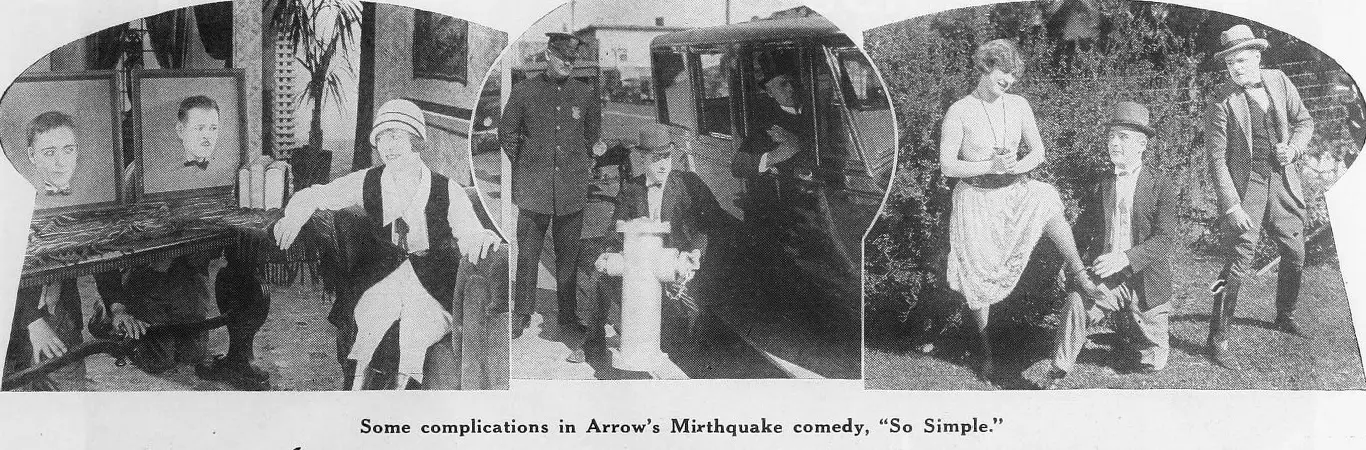
Bobby Ray, likely cast as a foil or a secondary character, complements Dunn’s energy with a different brand of silent performance. While Dunn often plays the innocent, Ray’s role might lean into the more cynical or mischievous, providing a necessary counterpoint. Imagine a scene where Ray’s character, witnessing Dunn’s latest mishap, delivers a knowing smirk or a dismissive wave – these subtle contrasts in performance styles enrich the film's visual language, even if Ray's screen time is more limited. Their dynamic, however simple, is crucial to the film's comedic engine, establishing a clear protagonist-antagonist or protagonist-sidekick relationship.
The direction in 'So Simple' is, fittingly, quite straightforward. The filmmakers prioritize clear sightlines for the comedic action, often utilizing medium shots and wide frames to capture the full scope of Dunn’s physical comedy. Close-ups are employed sparingly but effectively, usually to emphasize a character’s reaction – Dunn’s bewildered stare after a particularly messy gag, for instance – drawing the audience into the emotional beat of the moment. This judicious use of closer framing adds depth to the otherwise broad strokes of the narrative.
Cinematographically, the film adheres to the standards of its time. Lighting is functional, designed to illuminate the action rather than create complex atmospheric effects. The composition is generally balanced, ensuring that the audience's attention is directed precisely where the director intends. While it lacks the groundbreaking visual experimentation seen in some of its contemporaries, like the more artistic German Expressionist films or the innovative tracking shots of F.W. Murnau in a film such as Forever, 'So Simple' delivers its story with an admirable clarity and efficiency.
The editing, too, serves the narrative’s comedic timing. Cuts are often made to punctuate a punchline or to transition quickly between reaction and action, maintaining a brisk (for the era) pace during its more active sequences. This functional, unflashy approach to direction and cinematography is precisely what makes 'So Simple' feel so, well, simple – a deliberate choice that paradoxically enhances its charm by not overcomplicating its visual grammar.
The pacing of 'So Simple' is undoubtedly a product of its time. It’s a gentle stroll rather than a breathless sprint, allowing scenes to unfold with a deliberate rhythm that can feel languid to modern viewers. Gags are often set up with ample exposition, and reactions are held for longer than one might expect today. This measured pace, however, allows the audience to fully appreciate the intricacies of the physical comedy and the subtle shifts in character expression, a luxury rarely afforded in today's rapid-fire editing.
The tone is overwhelmingly lighthearted and optimistic, even in moments of comedic despair for Dunn’s character. There's an inherent innocence to the film, a lack of cynicism that is refreshing. It's a world where problems, no matter how comically catastrophic, are ultimately surmountable, and the human spirit, however clumsy, prevails. This unwavering optimism is a hallmark of many silent comedies, distinguishing them from the often darker, more complex narratives that would emerge in later decades. It’s a tonal choice that risks being perceived as naive by some, yet offers a comforting, almost nostalgic, embrace for others.
Contrast this with the more audacious and often morally ambiguous narratives found in some early dramas like The Tiger Woman, and 'So Simple' stands out for its steadfast commitment to joyous, if slightly chaotic, entertainment. The film never tries to be anything it’s not, and that honesty in its tonal delivery is a quiet strength. Its ability to maintain a consistent, feel-good atmosphere throughout its runtime is commendable, even if it means sacrificing some narrative tension.
Absolutely, but with a clear understanding of its historical context and the unique demands it places on a contemporary audience. 'So Simple' is not a film that will captivate everyone, particularly those unaccustomed to the silent era's distinct cinematic language. However, for those willing to engage with its particular brand of charm, it offers a delightful glimpse into the foundational elements of film comedy and the expressive power of its performers.
It's a valuable educational tool for students of film, a nostalgic trip for silent film enthusiasts, and a surprisingly effective mood-lifter for anyone seeking a break from the relentless complexity of modern blockbusters. Its 'simplicity' is both its greatest asset and its most significant liability, depending entirely on the viewer's expectations and appreciation for the medium's nascent form.
'So Simple' is a delightful, if somewhat dated, journey into the heart of silent-era comedy. It’s a film that demands patience and an appreciation for its historical context, but rewards those who offer it with genuine smiles and a charming glimpse into the roots of cinematic humor. Bobby Dunn's performance alone makes it a worthwhile watch for anyone interested in the artistry of silent acting. While it won't redefine your understanding of film, it serves as a wonderful reminder of the enduring power of a well-executed gag and the simple joy of storytelling. It’s far from a masterpiece, but it possesses an undeniable, understated charm that resonates, however faintly, even a century later. Give it a chance, but adjust your expectations accordingly. You might just find yourself surprised by its quiet, unassuming appeal, much like discovering a forgotten treasure from a simpler time, perhaps akin to the understated beauty of Wisp o' the Woods. It’s not for everyone, but for its intended audience, it’s a small, satisfying pleasure.
IMDb —
1926
Community
Log in to comment.